
Method and system for co-operative charging of electric vehicles
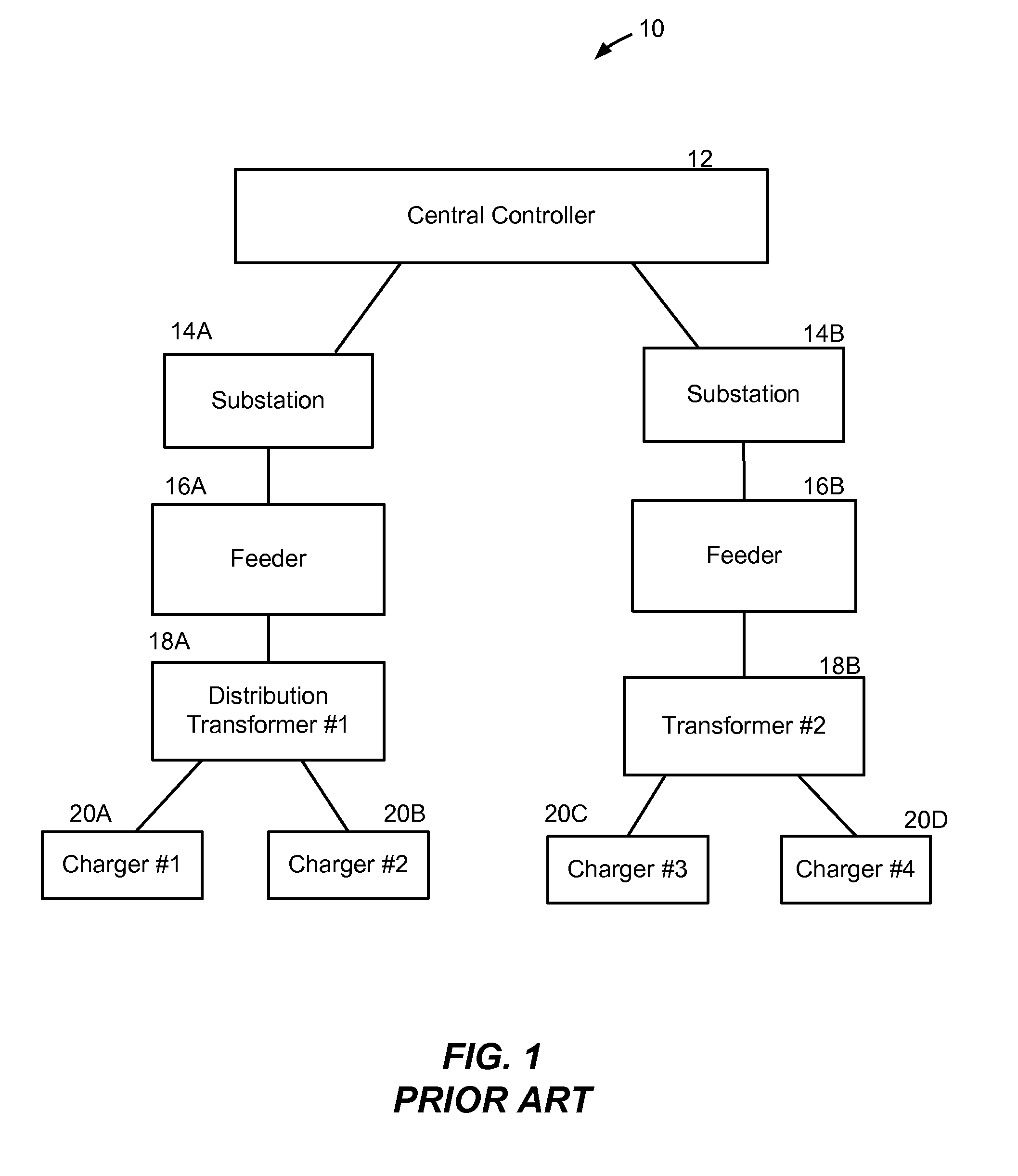
a technology of electric vehicles and charging methods, applied in the direction of electrochemical generators, capacitors, electric devices, etc., can solve the problems that the charger coupled to a first transformer will likely not be able to detect or communicate with other chargers who are coupled to a second transformer, so as to prevent overloading and avoid possible failure of a distribution transformer
- Summary
- Abstract
- Description
- Claims
- Application Information
AI Technical Summary
Benefits of technology
Problems solved by technology
Method used
Image

Examples
Embodiment Construction
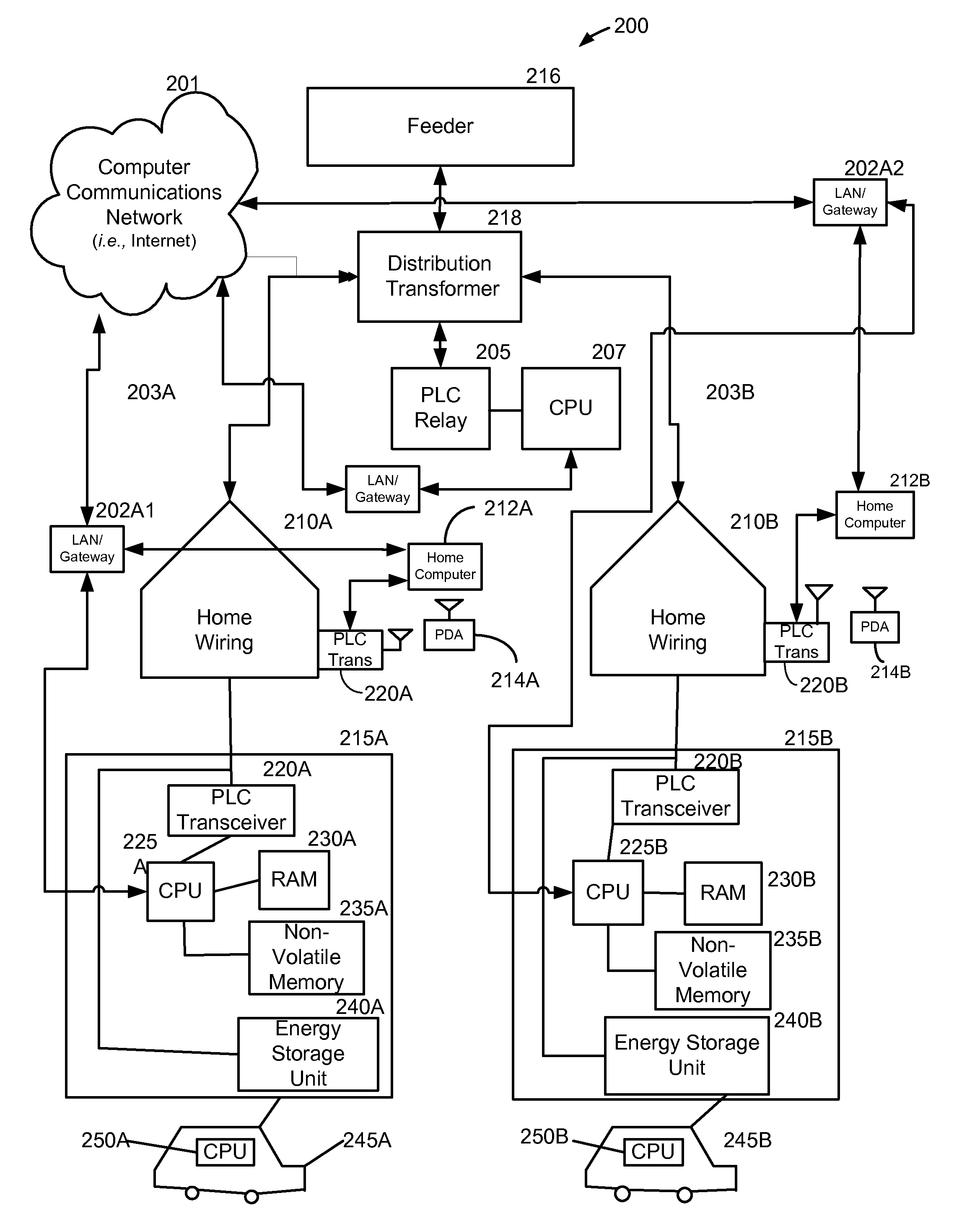
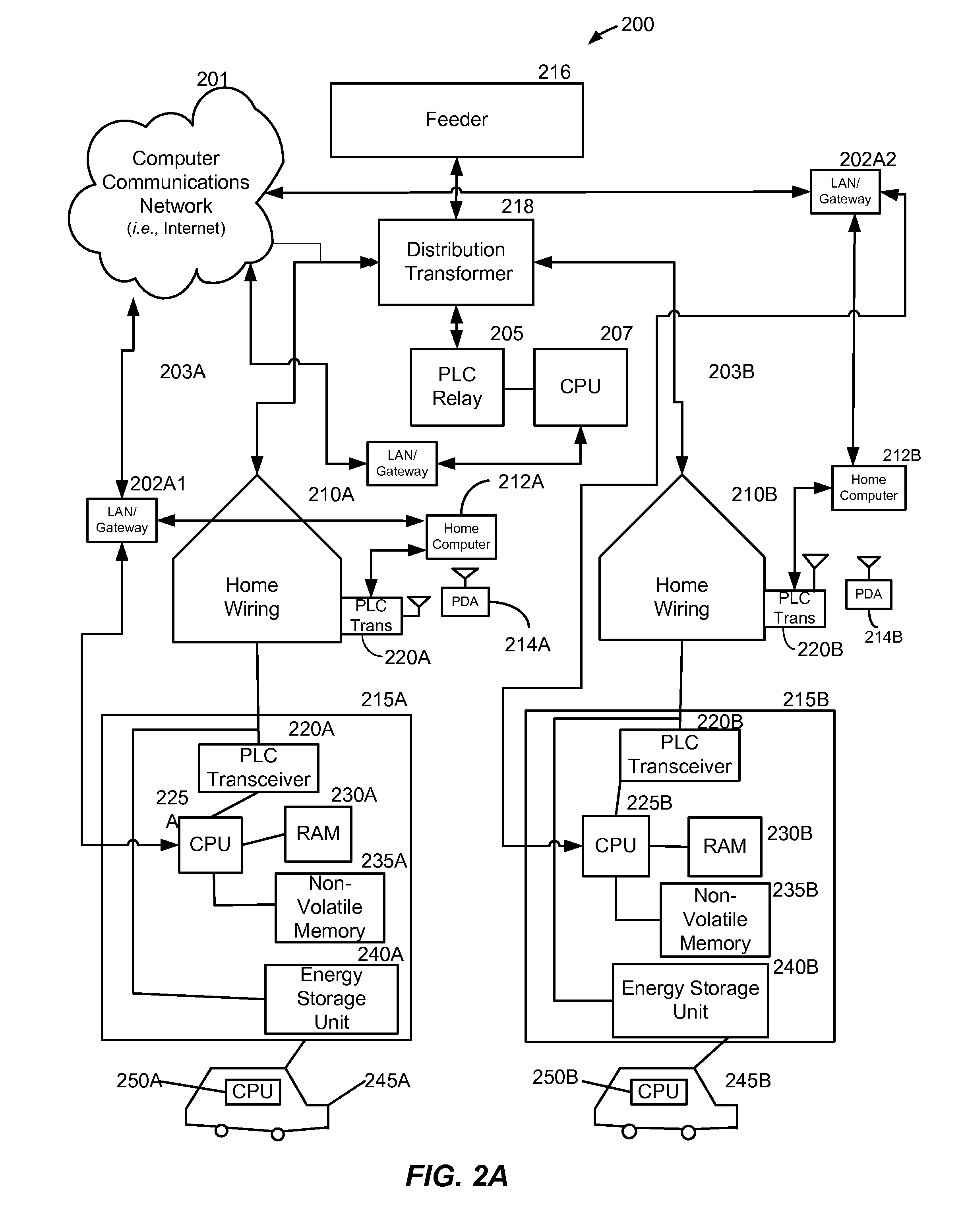
A method and system provide for the cooperative and coordinated charging and discharging of electric vehicles. By using power line communications, chargers of the electric vehicles who are serviced by the same distribution transformer can form self-contained local area networks due to the nature of power line communications. After the chargers of the electric vehicles are coupled to one another through power line communications, they can form a token ring network. According to this token ring network, a predetermined number of tokens can be assigned within the token ring network for permitting chargers with tokens to charge respective electric vehicles while chargers without tokens must wait until they receive a token to initiate charging. By limiting the number of vehicles who are charging simultaneously, the load on a particular transformer which services several vehicles (households) is restricted to safe levels.
Turning now to the drawings, in which like reference numerals refer ...
PUM
 Login to View More
 Abstract
Description
Claims
Application Information
 Login to View More