
Body-worn monitor for measuring respiratory rate
- Summary
- Abstract
- Description
- Claims
- Application Information
AI Technical Summary
Benefits of technology
Problems solved by technology
Method used
Image

Examples
Embodiment Construction
[0070]Sensor Configuration
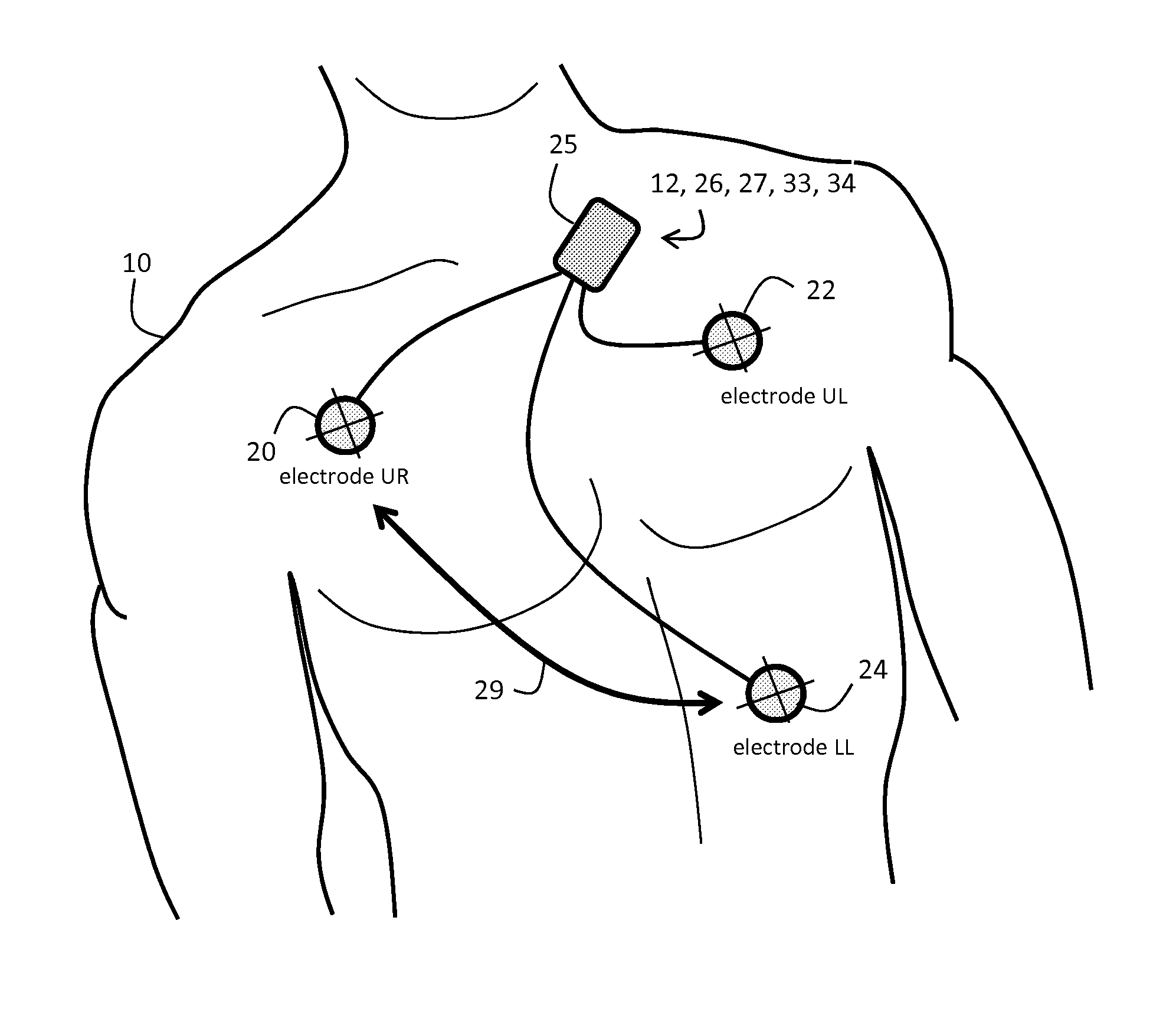
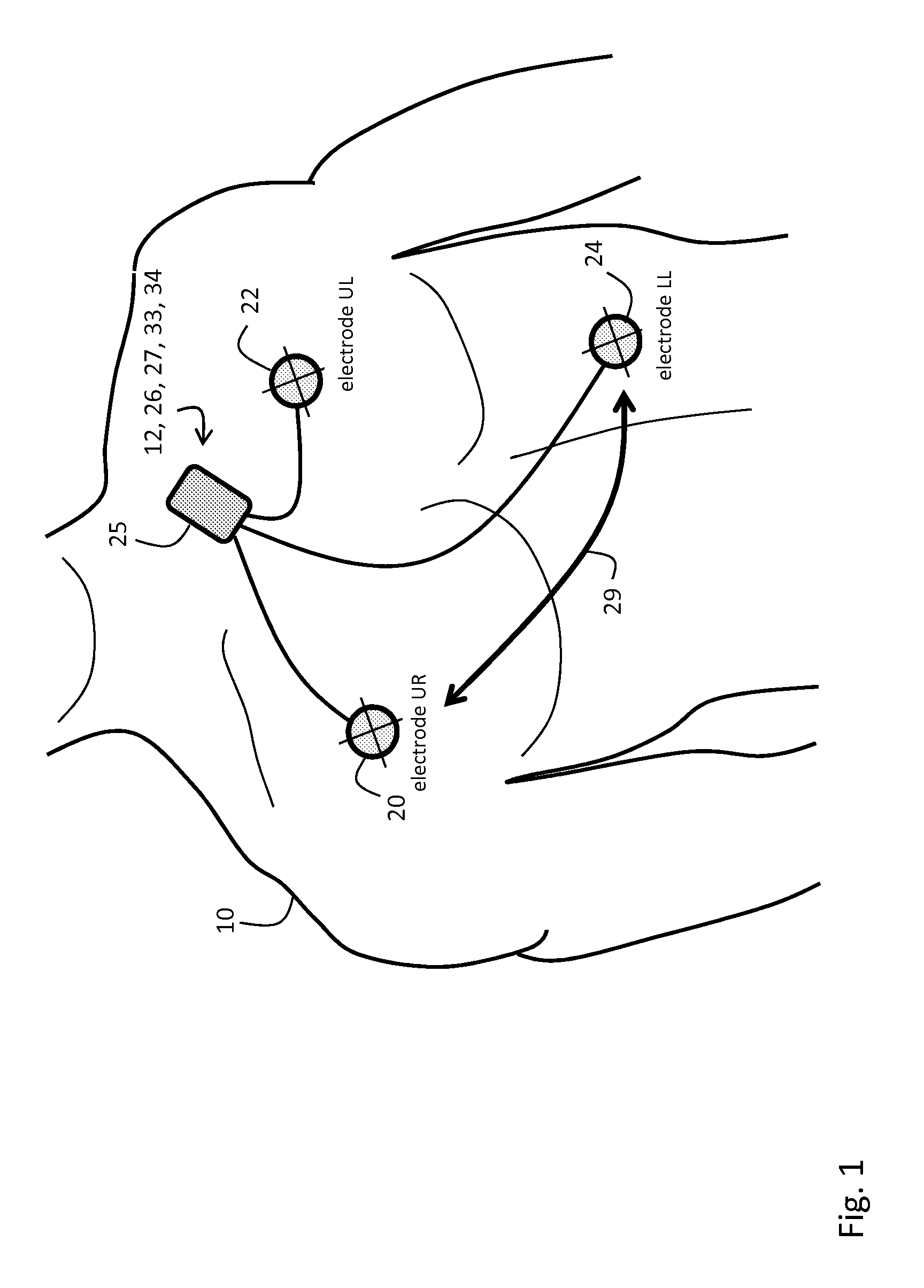
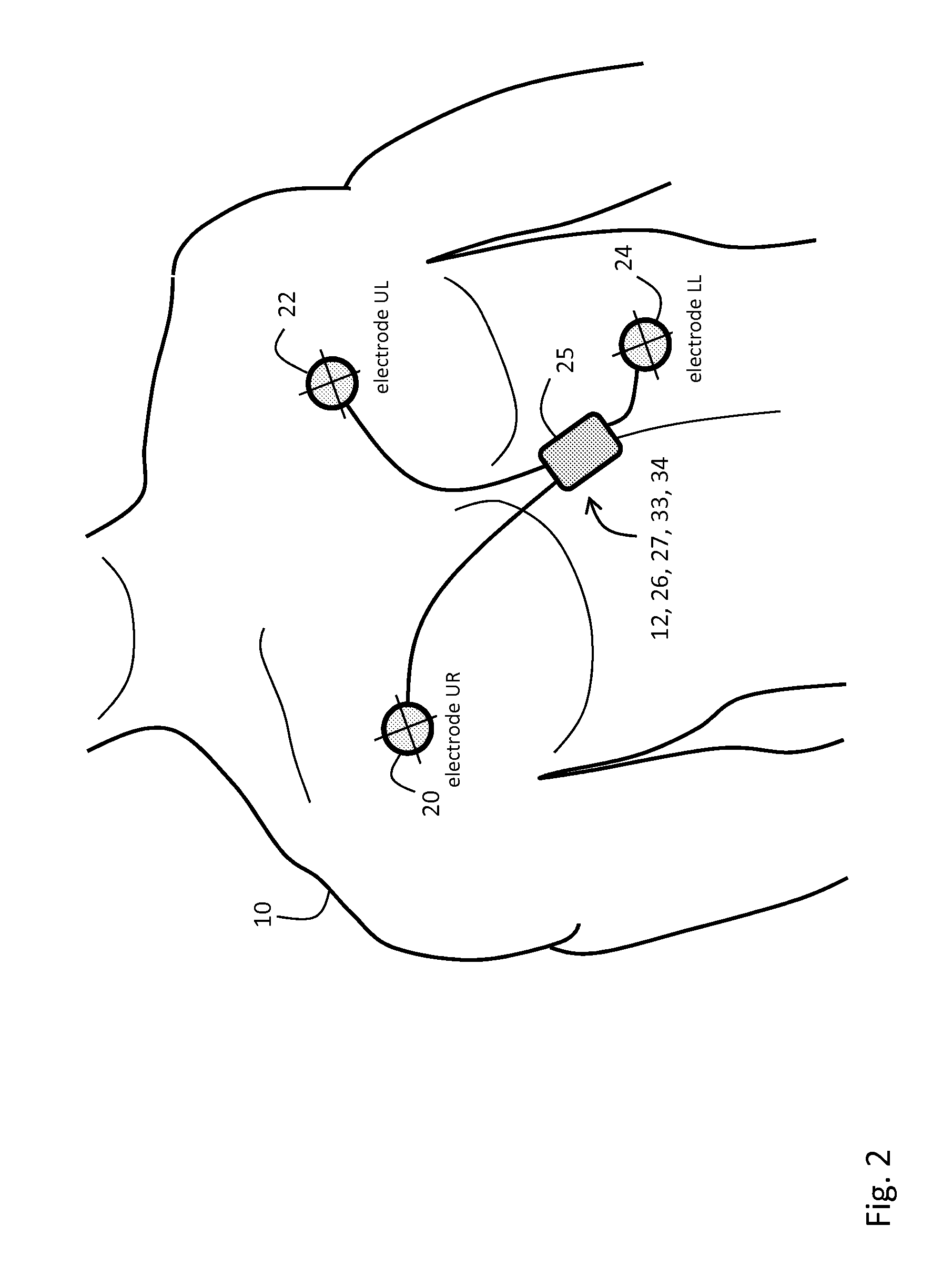
[0071]Referring to FIGS. 1 and 2, a sensor module 25 featuring an IP circuit 27 and accelerometer 12 is mounted on the chest of a patient 10 to simultaneously measure IP and ACC waveforms. A multi-component algorithm, featuring specific algorithms based on simple peak counting, FFT analysis, and adaptive filters processes these waveforms to accurately measure RR even when the patient 10 is moving. During a measurement, both the IP 27 and an ECG circuit 26 within the sensor module connect to a trio of electrodes 20, 22, 24 typically positioned on the patient's torso in an Einthoven's triangle configuration. Each electrode 20, 22, 24 measures a unique analog signal that passes through a shielded cable to the ECG circuit 26. This component typically includes a differential amplifier and a series of analog filters with passbands that pass the high and low-frequency components that contribute to the ECG waveform, but filter out components associated with electri...
PUM
 Login to View More
 Abstract
Description
Claims
Application Information
 Login to View More