[0014]The present technology provides improved approaches for providing secure monitoring, restriction and control over user access to resources maintained in the cloud (to be referred to here as “a protected resource”). “Cloud” as used herein refers to web-based applications and services delivered to multiple users connected to
the Internet or other
computer network. The applications and services being protected by the invention are referred to here as the “Protected Services” and the authorised user of the Protected Services is referred to as the “User”. The secure
monitoring and control can be provided through a public or
private network or from a
public network to a private network using a standard network browser. Multiple remote users are able to
gain monitored, restricted and controlled access to and use of at least portions of protected resources, through a browser Plugin, which retrieves requisite
access control information and
user profile information from a common resource on the network.
[0020]According to one embodiment, a
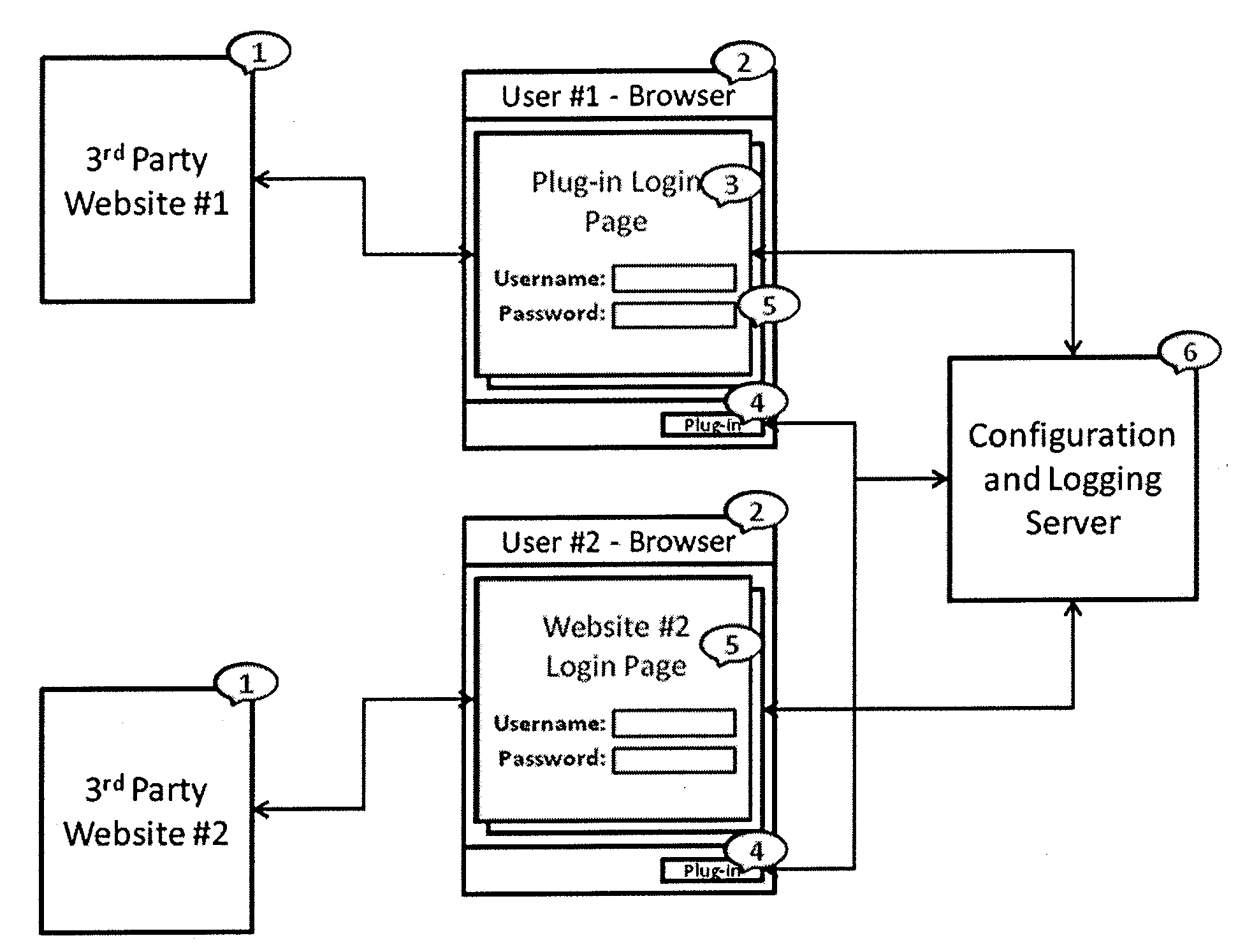
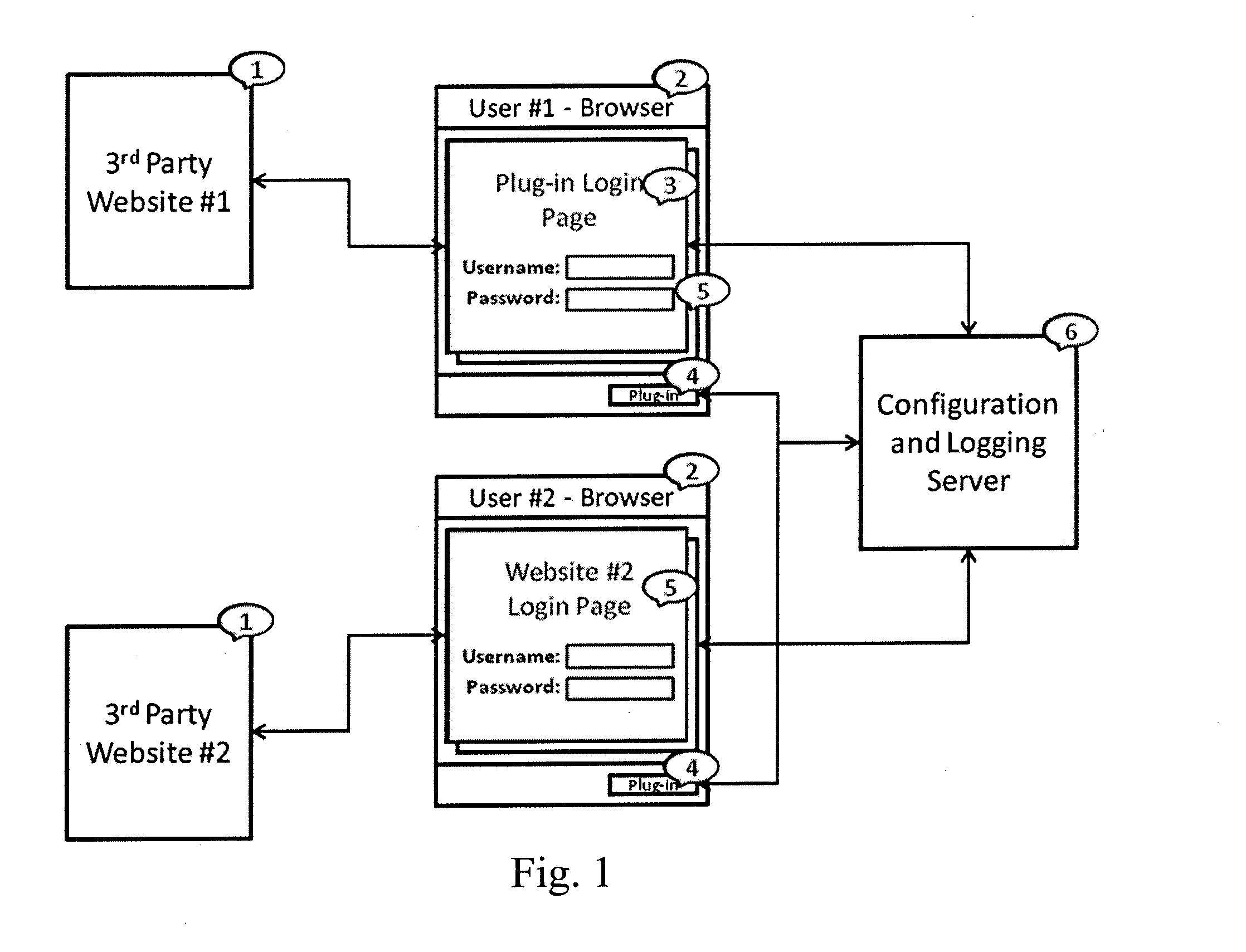
web service application is provided which intermediates between the User and the Protected Services. The application controls, by the secure means, the User's access to resources and or applications in the “Cloud” on one or more servers in diverse locations. The security application is, for example, implemented by a browser “
plug in” which is, for example, downloaded from a controlled server, to the User's computer and installed to operate within and / or in conjunction with a browser. The Plug-in is preferably embedded with the addresses of the
Authentication Server, defined below. The application allows the Protected Services to be configured such that the User will at any time not know the full identifiers required to access the User's Protected Services as the User's identifiers to access the Protected Services are downloaded to the Plug-in only on successful login to the
Authentication server, thereby ensuring that only browsers with the Plug-in installed and a User who has successfully authenticated themselves may be able to access the Protected Services.
[0021]To provide the User with secure
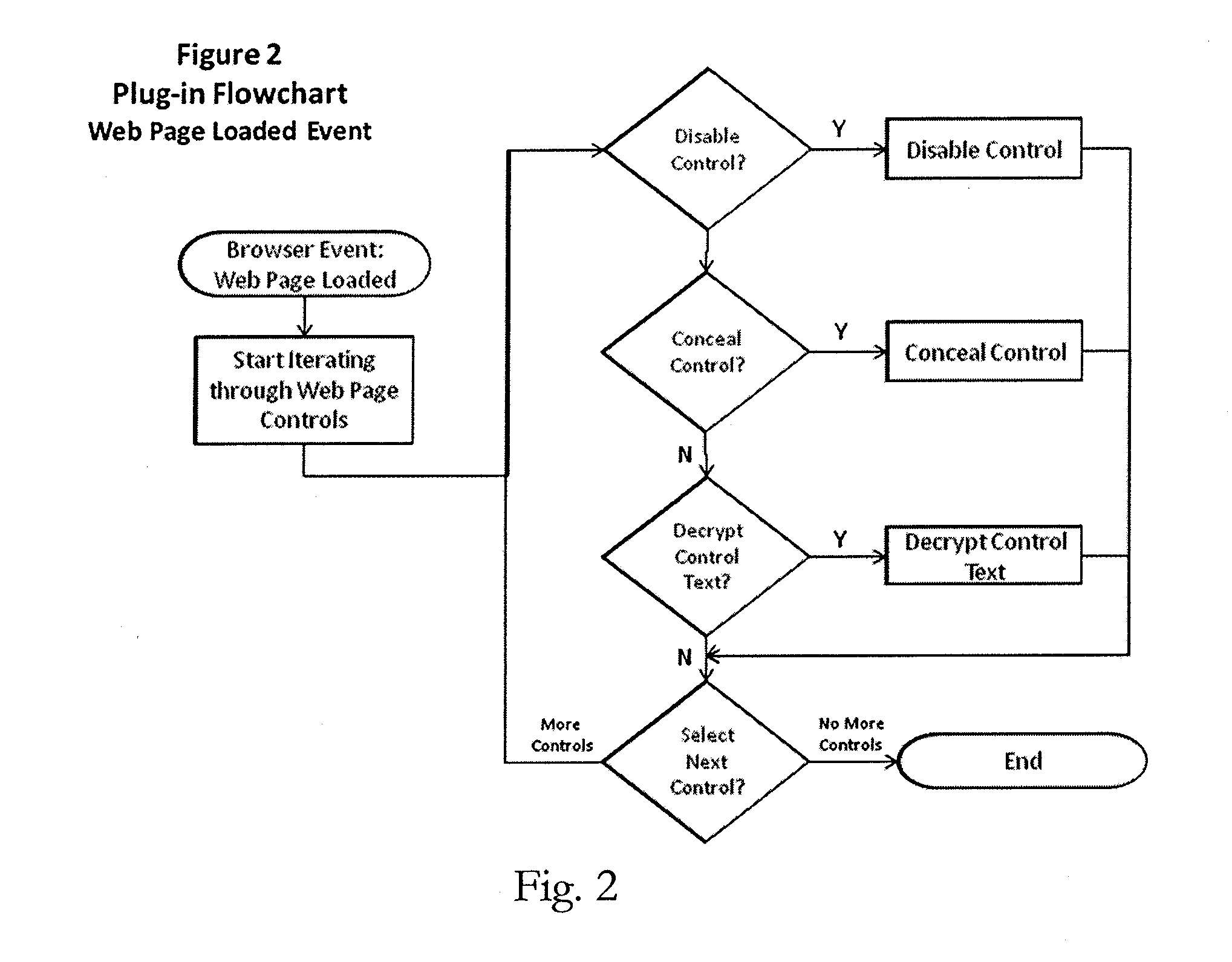
data entry into, and retrieval from one or more fields in the Protected Services,
encryption and decryption of such data may be provided within the Plug-in, and the keys corresponding to the User's identifiers held in the
Authentication Server. One benefit of this aspect is that it allows the User (and perhaps the User's employer) to secure such data for compliance with laws of the User's jurisdiction regardless of the user of Protected Services in the “Cloud” that may be provided from servers outside the User's jurisdiction, for example, adequate security for personal data under the UK Data Protection Act where personal data is being held on a computer in the United States.
[0025]any file containing the user's identifiers for the resource or the
Authentication Server saved to storage media; the benefit of this being to foil attempts by spyware to derive the identifiers and circumvent the secure means;
[0026]the servers hosting the resource (e.g.
access control identities and passwords held on a
web service server); one significant benefit of avoiding this aspect of the secure application co-residing with the resource servers is that the controller of the resource can achieve locally required
information assurance standards and compliance with legislation in its own jurisdiction without requiring the provider of the resource to locate the resource in its own jurisdiction (for example, data that is covered by privacy laws which may not be transferred outside the originating jurisdiction unless it is secure);
[0027]A server (“
Authentication Server”), preferably situated in a physically secure location, provides
verification of the user's identity and, upon successful
authentication, permits download of the user's access control identifiers as well as information defining the current unique resource locator (URL)
lexicon for the resource to the Plugin for the resource, together with data comprising a profile of the user's access restrictions to the resource; a benefit of the
Authentication Server, apart from the security afforded to the user's identifiers on the resource, is that
authentication data for the resource (and any
encryption keys for data encrypted by the Plugin on the resource) can be located independently of the control of the resource servers, (e.g. within the jurisdiction of the user or the controller of the account on the resource).



 Login to View More
  Login to View More