Pattern detection for partial networking

a partial networking and pattern detection technology, applied in the field of bus systems, can solve the problems of unnecessarily using power, consuming energy, unwanted wake-up events, etc., and achieve the effect of reducing the probability of unwanted wake-up and useful wake-up detection

US20120297105A1Active Publication Date: 2012-11-22NXP BV
1 Cites 9 Cited by

Patent Information

Authority / Receiving Office
US · United States
Patent Type
Applications(United States)
Current Assignee / Owner
Publication Date
2012-11-22

Smart Images

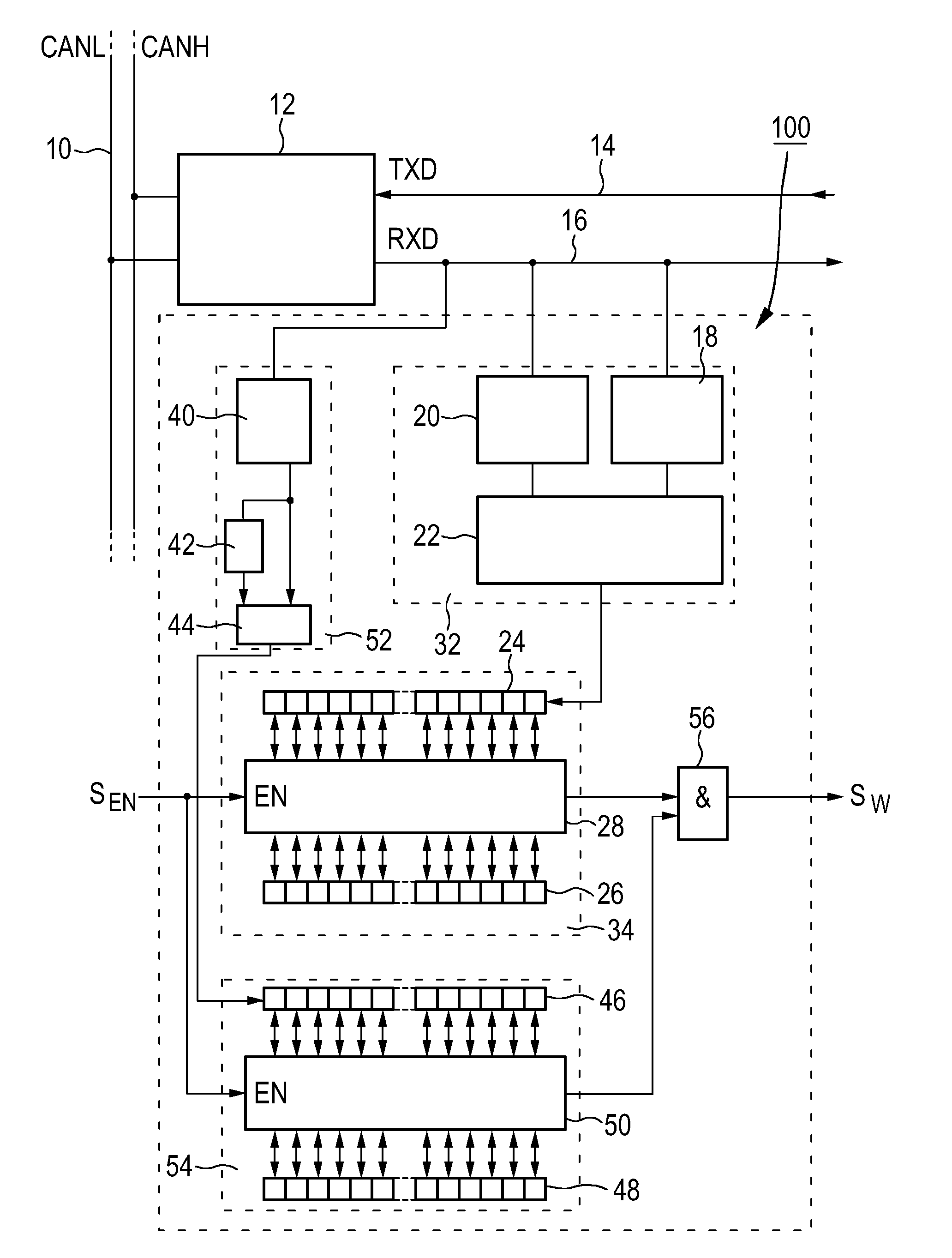
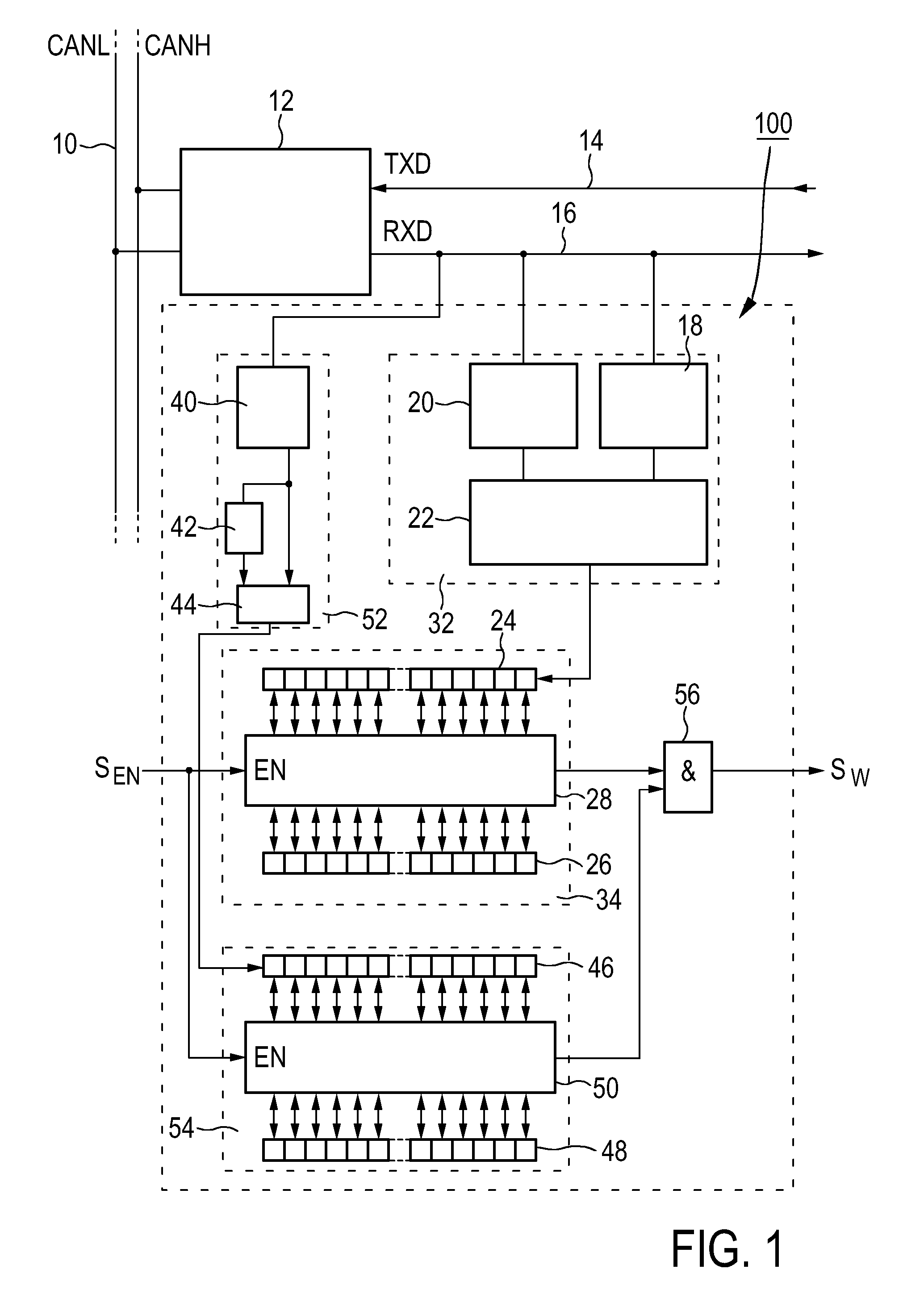
  • Figure 1
    Figure 1
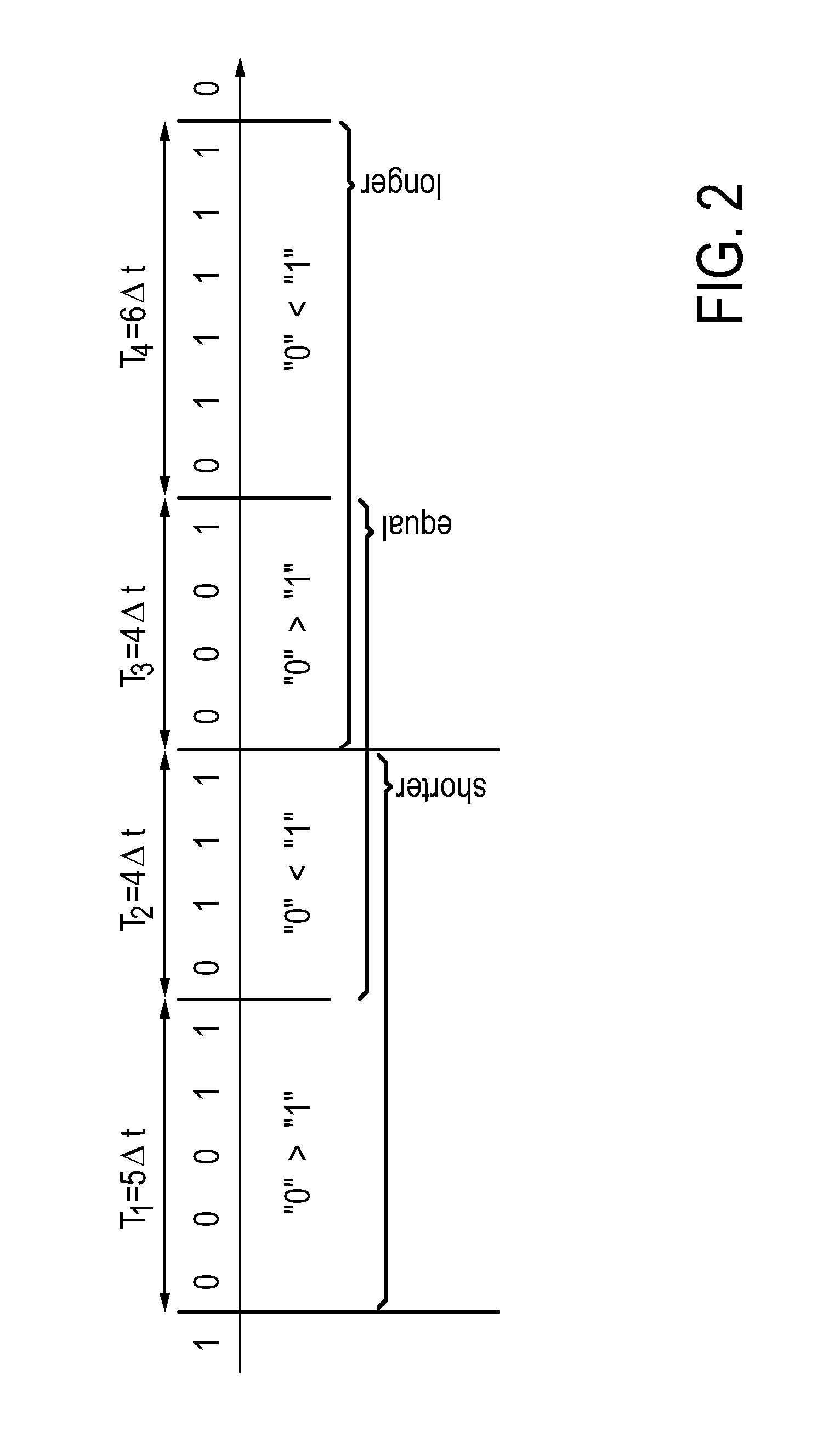
  • Figure 2
    Figure 2
  • Figure 3
    Figure 3
Patent Text Reader

Abstract

A pattern detector for a bus node for a system bus having a plurality of stations that are coupled together by means of an arrangement of bus lines, the bus node comprising: decoding circuitry configured for an analysis of sub-patterns in a stream of data on at least one bus line, and analysing circuitry configured to determine a series of digital relative length information of said sub-patterns, wherein said relative length information is generated by comparison of an actual sub-pattern with a preceding sub-pattern in the stream of data on said at least one bus line. A corresponding method of encoding digital bus message information on a bus system in which the digital bus message comprises at least one part that is by means of sub-patterns to be transmitted in a stream of data on at least one bus line, wherein the method comprises: encoding a series of digital relative information by means of the sub-patterns in the stream of data, wherein said relative information is generated by adapting each sub-pattern carrying one bit of the bus message information with respect to an preceding sub-pattern. A corresponding digital bus messages may be encoded in accordance with the method, which bus messages are of particular use in a bus system, in which communication takes place on arbitrarily manner.
Need to check novelty before this filing date? Find Prior Art

Description

FIELD OF THE INVENTION

[0001] The invention relates to a bus system having a plurality of bus nodes that are coupled together by an arrangement of bus lines, each bus node comprising at least a transceiver and a bus protocol controller.

[0002] Further, the invention relates to a method of encoding and / or decoding a digital bus message on such a bus system in which the digital message comprises at least one part that is encoded by sub-patterns in the bus signal. More particularly, the invention relates to improved pattern detection in such a bus system, the message pattern being adapted for the improved detection.

[0003] Furthermore, the invention also relates to such a bus node for use in such a bus system, in particular such bus node may comprise a transceiver, a bus protocol controller, and a pattern detector for decoding a digital message on such a bus system in which the digital message comprises at least one part that is encoded by sub-patterns in the bus signal.BACKGROUND OF THE INV...

Examples

Embodiment Construction

[0050]In the following by way of example the herein disclosed method for encoding particular bus messages and the improved pattern detector are described with respect to a controller area network (CAN). However, it will be appreciated that the invention is not limited to such a network but may be applied to a local interconnect network (LIN) or FlexRay network or the like as well.

[0051]FIG. 1 shows a transceiver 12 connected to a CAN bus line 10 having CANL and CANH wires and coupled to a pattern detector 100. It is noted that the transceiver 12 and the pattern detector 100 may be combined to one single device or chip and integrated into system basis chips or other suitable configured ASICs. The rest of the bus node is connected to the CAN transceiver 12 by a data transmission (TXD) line 14 and a data reception (RXD) line 16.

[0052]A first decoder 32 comprises electronic circuits 18 and 20, connected to the RXD line 16, configured for measuring the length of successive recessive phas...