Check patentability & draft patents in minutes with Patsnap Eureka AI!

Systems and methods for limb treatment

a technology of system and method, applied in the field of system and method for limb treatment, can solve the problems of high risk of lower limb amputation, so as to minimize the exposure of the rest of the body, minimize the risk of limb amputation, and maintain the oxygenation of the limb.

Active Publication Date: 2013-03-28
OSPREY MEDICAL
View PDF3 Cites 29 Cited by
  • Summary
  • Abstract
  • Description
  • Claims
  • Application Information

AI Technical Summary

Benefits of technology

The patent describes devices and methods for treating infections in the lower limbs by delivering high doses of antibiotics and other therapeutic drugs in a selective and minimally invasive manner. These devices can improve clinical outcomes and promote wound healing, reduce hospitalization length of stay, and enhance quality of life. They may be used in combination with other therapies to address acute occlusions and improve blood flow.

Problems solved by technology

During this period it is also expected that there will be a concomitant rise in the incidence of the complications of diabetes, including heart and blood vessel disease and lower limb infection.
In many cases, the first presentation is with advanced disease, which is accompanied by a high risk of lower limb amputation.
In addition to the resultant disability, lower limb amputations are extremely costly to the healthcare system.
While existing antibiotics are effective in treating the majority of milder infections, infections that are more severe (particularly those infections involving bone—i.e., osteomyelitis), fail to respond to standard treatment approaches.
This results in the need for hospitalization and surgery, including major debridement and amputation.
Standard therapies in this group of patients are often ineffective because adequate antibiotic levels cannot be achieved at the site of infection by simple oral or intravenous administration.
Furthermore, co-existing complications (such as chronic kidney disease) render some more common drugs toxic or unable to be given in sufficient doses.
Specifically, Methicillin-Resistant Staphylococcus Aureus (MRSA) infections have been reported to present in significantly higher rates among diabetic individuals undergoing amputation as compared to those without amputation, further complicating wound healing and infection management.
Delivery of existing antibiotics by current means still results in treatment failures, as evidenced by the high rates of major amputation, or death.
In the diabetic foot, treatment may be made difficult by numerous contributing factors, including (but not limited to) the anatomy of the foot; the often compromised blood supply to the region; the immuno-suppression associated with diabetes; and, increasingly the nature of the infection with multi-drug resistant strains.
Ultimately, treatment failure may be characterized by the failure to deliver, distribute and sustain therapeutic agents (i.e., antibiotics) in the infected tissue.
Thus, management and cure of infections of diabetic wounds represent a significant unmet clinical need characterized by the complexity of the diabetic foot.
However, these techniques may be inadequate if used in the treatment of the morbid, diabetic limb.
The low flow rates that increase the risk of thrombosis, coupled with the lack of sufficient oxygen to the limb, make this procedure unattractive for diabetic patients.
Although the technique may be relatively simple and provide for more effective delivery of antibiotics (i.e., selective versus systemic injection), it is often limited in its use due to a lack of appropriate access vessels in many patients, no provision for limb oxygenation, and the confounding effects of concomitant venous disease in patients.
Treatment of superficial wounds has also been reported in clinical literature although the various techniques do not address deep-seated infection.
Moreover, other techniques described to treat limbs do not generally allow for selective antibiotic treatment.
At present, there are no devices in routine clinical practice that enable sustained high doses of appropriate antibiotics and / or other therapeutic drugs to be specifically administered to the leg of individuals with foot infections, while maintaining oxygenation of the limb and providing the capacity to minimize exposure of the rest of the body to the potentially adverse effects of the drugs (e.g., in patients with diabetic nephropathy).

Method used

the structure of the environmentally friendly knitted fabric provided by the present invention; figure 2 Flow chart of the yarn wrapping machine for environmentally friendly knitted fabrics and storage devices; image 3 Is the parameter map of the yarn covering machine
View more

Image

Smart Image Click on the blue labels to locate them in the text.
Viewing Examples
Smart Image
  • Systems and methods for limb treatment
  • Systems and methods for limb treatment
  • Systems and methods for limb treatment

Examples

Experimental program
Comparison scheme
Effect test

example

Delivery of Timentin Using PILP in a Large Animal Model

[0051]The antibiotic Timentin (composed of ticarcillin sodium and potassium clavulate) was administered to the hind limb of sheep using a Percutaneous Isolated Limb Perfusion procedure (PILP) at the dose administered systemically in the clinical setting, to evaluate the safety of the antibiotic.

Method

[0052]A total number of 10 crossbred sheep were used for this study. Under general anesthesia (induction, 2 mg / kg propofol; maintenance, isoflourane 2% in oxygen), vascular sheaths were placed in the carotid artery and jugular vein to allow positioning of balloon catheters in the femoral artery and vein of the sheep under fluoroscopic guidance. The support device was placed in the femoral vein catheter and the PILP system connected to capture venous blood which is oxygenated with a membrane oxygenator. The re-oxygenated blood is then returned to the femoral artery via a roller pump. In the sheep model, balloon catheters were employe...

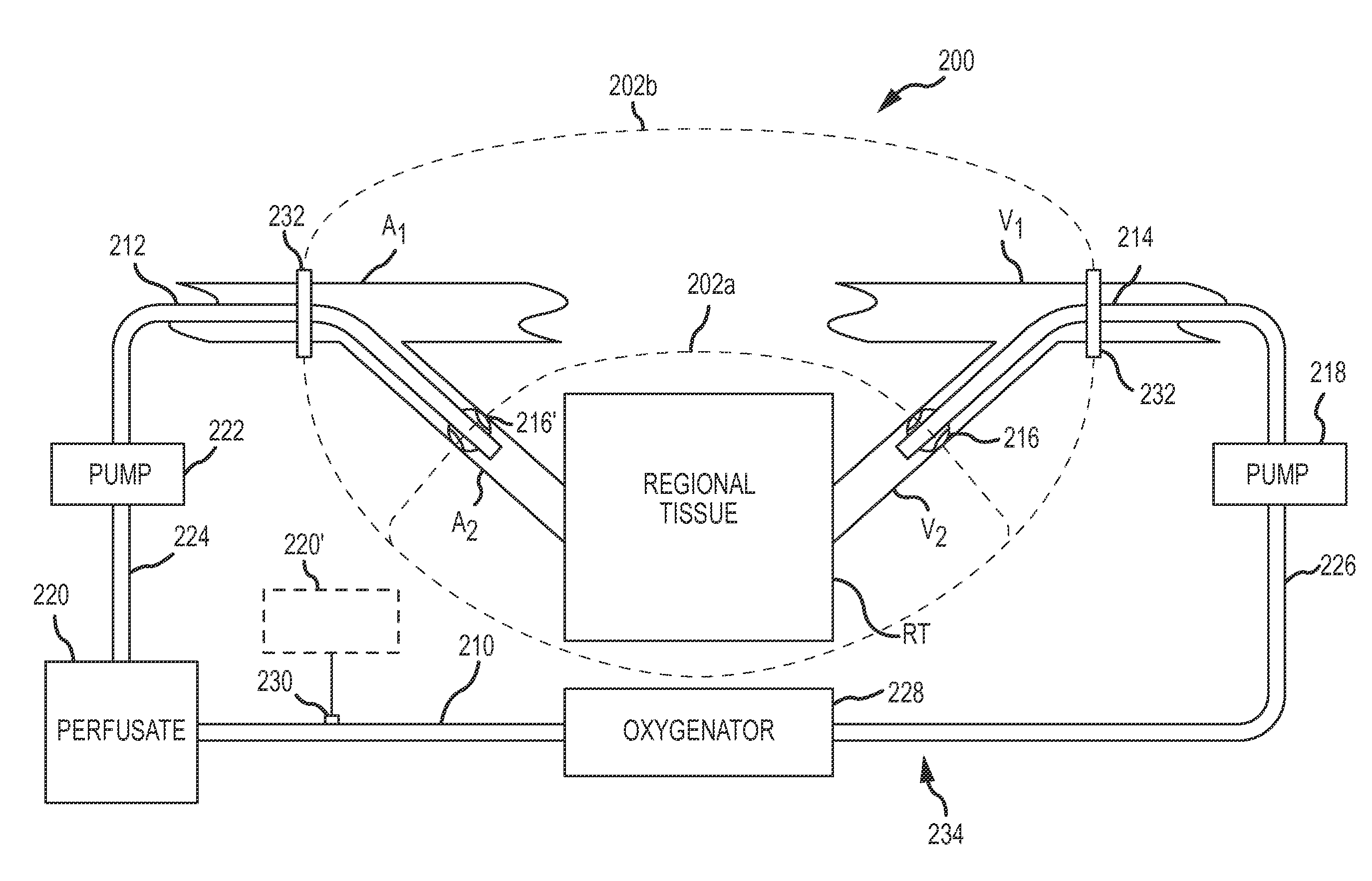
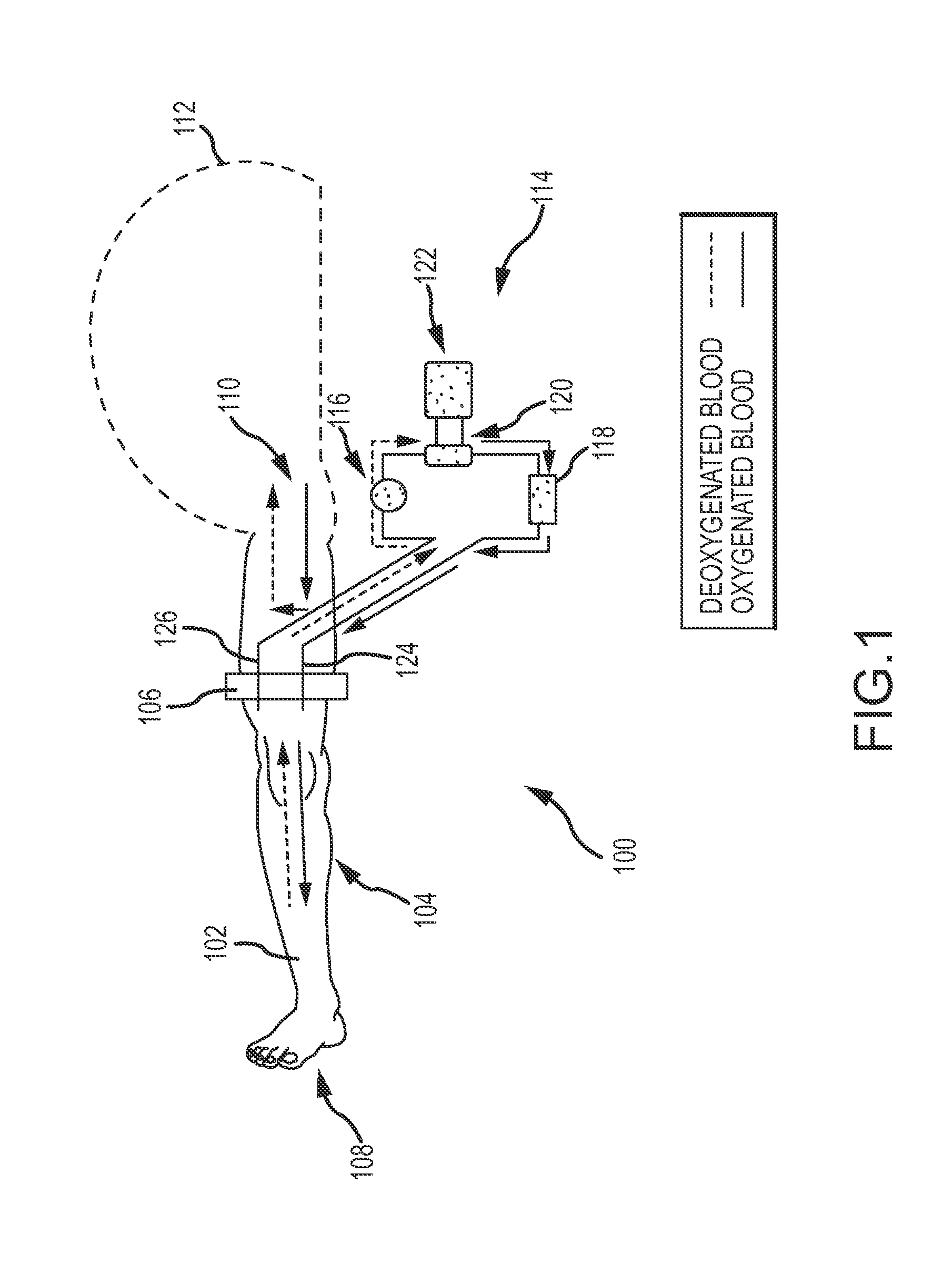
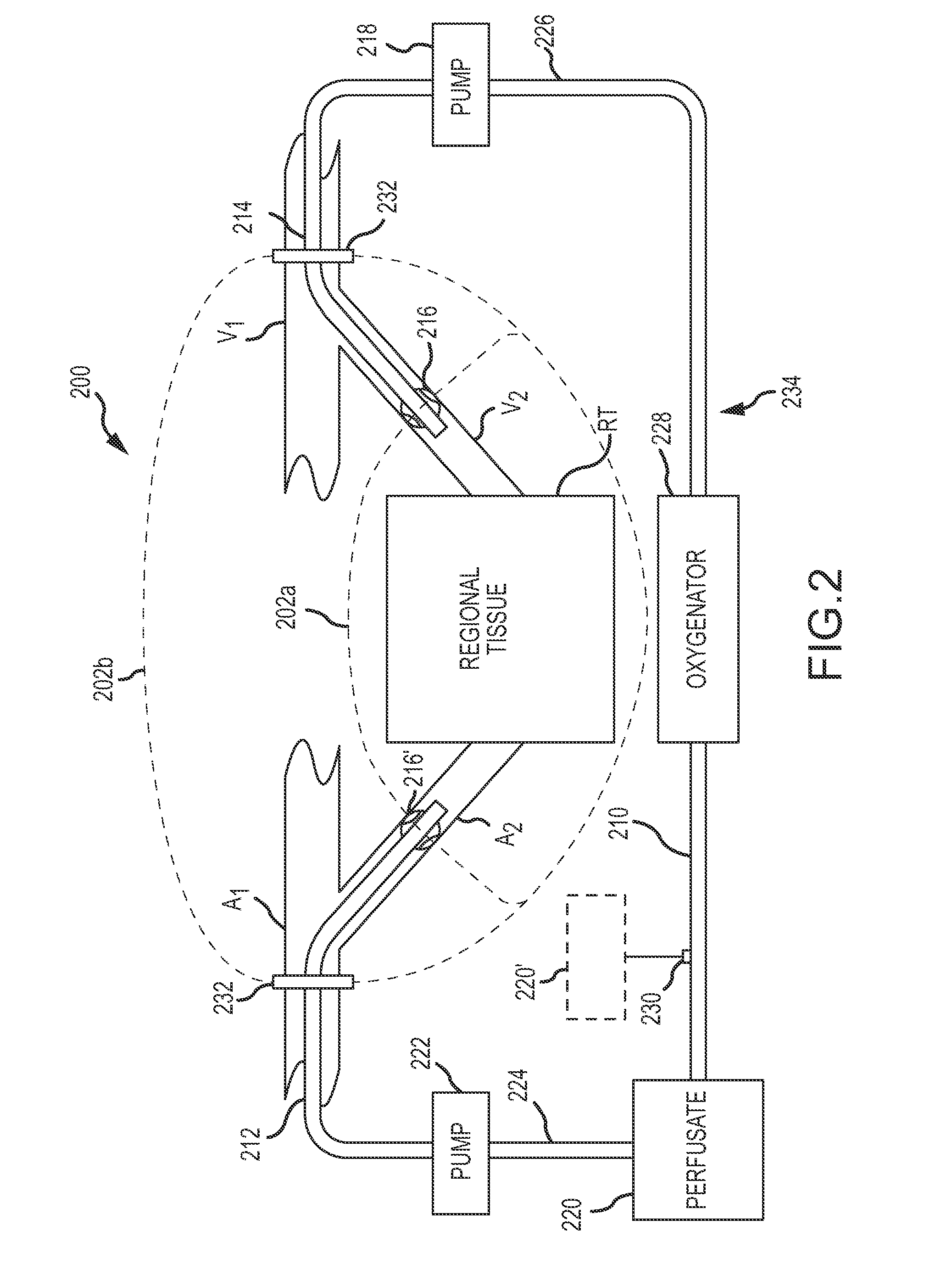
the structure of the environmentally friendly knitted fabric provided by the present invention; figure 2 Flow chart of the yarn wrapping machine for environmentally friendly knitted fabrics and storage devices; image 3 Is the parameter map of the yarn covering machine
Login to View More

PUM

No PUM Login to View More

Abstract

A method of delivering a medicament to a limb of a patient body includes isolating a circulatory system of the limb from a circulatory system of the patient body, wherein the limb circulatory system is substantially all limb arteries and substantially all limb veins located between an isolation region and an end of the limb. A perfusion catheter is inserted into a limb artery in an antegrade position, while a collection catheter is inserted into a limb vein in a retrograde position. The blood flow of the limb circulatory system is then circulated by collecting the blood flow with the collection catheter and delivering the blood flow with the perfusion catheter. A medicament is perfused into the limb circulatory system with the perfusion catheter.

Description

CROSS-REFERENCE TO RELATED APPLICATIONS[0001]This application claims priority to and the benefit of U.S. Provisional Application Ser. No. 61 / 522,605, filed Aug. 11, 2011, entitled “Methods and Devices for Isolated Limb Treatment”; and U.S. Provisional Application Ser. No. 61 / 523,042, filed Aug. 12, 2011, entitled “Methods and Devices in Limb Retroperfusion Treatment”; the disclosures of which are hereby incorporated by reference herein in their entireties.INTRODUCTION[0002]The need for improved patient outcomes in the treatment of regional tissue diseases continues to drive innovative systems, agents, and therapies in targeted delivery of therapeutic agents and / or media to selected organs and anatomical structures. Systems and methods have been previously described that may target, as an example, coronary circulation from the rest of the body, allowing the delivery of therapeutic substances to ischemic or otherwise morbid tissue, as described in U.S. Patent Application Publication N...

Claims

the structure of the environmentally friendly knitted fabric provided by the present invention; figure 2 Flow chart of the yarn wrapping machine for environmentally friendly knitted fabrics and storage devices; image 3 Is the parameter map of the yarn covering machine
Login to View More

Application Information

Patent Timeline
no application Login to View More
Patent Type & Authority Applications(United States)
IPC IPC(8): A61M1/36
CPCA61M1/3621A61M2210/086A61M5/142A61M1/1698A61M1/3623A61M2202/0021A61M1/3659A61M2210/12A61M25/10A61M2025/1095
Inventor KAYE, DAVID MARTIN
Owner OSPREY MEDICAL
Features
  • R&D
  • Intellectual Property
  • Life Sciences
  • Materials
  • Tech Scout
Why Patsnap Eureka
  • Unparalleled Data Quality
  • Higher Quality Content
  • 60% Fewer Hallucinations
Social media
Patsnap Eureka Blog
Learn More