
Quantum key distribution
a quantum key and computer technology, applied in the field of quantum key distribution, can solve the problems of error correction, loss within the receiver node, and inability to directly determine an outside entity or eavesdropper, and achieve the effects of simplifying network security, increasing the rate, and enhancing network security
- Summary
- Abstract
- Description
- Claims
- Application Information
AI Technical Summary
Benefits of technology
Problems solved by technology
Method used
Image

Examples
Embodiment Construction
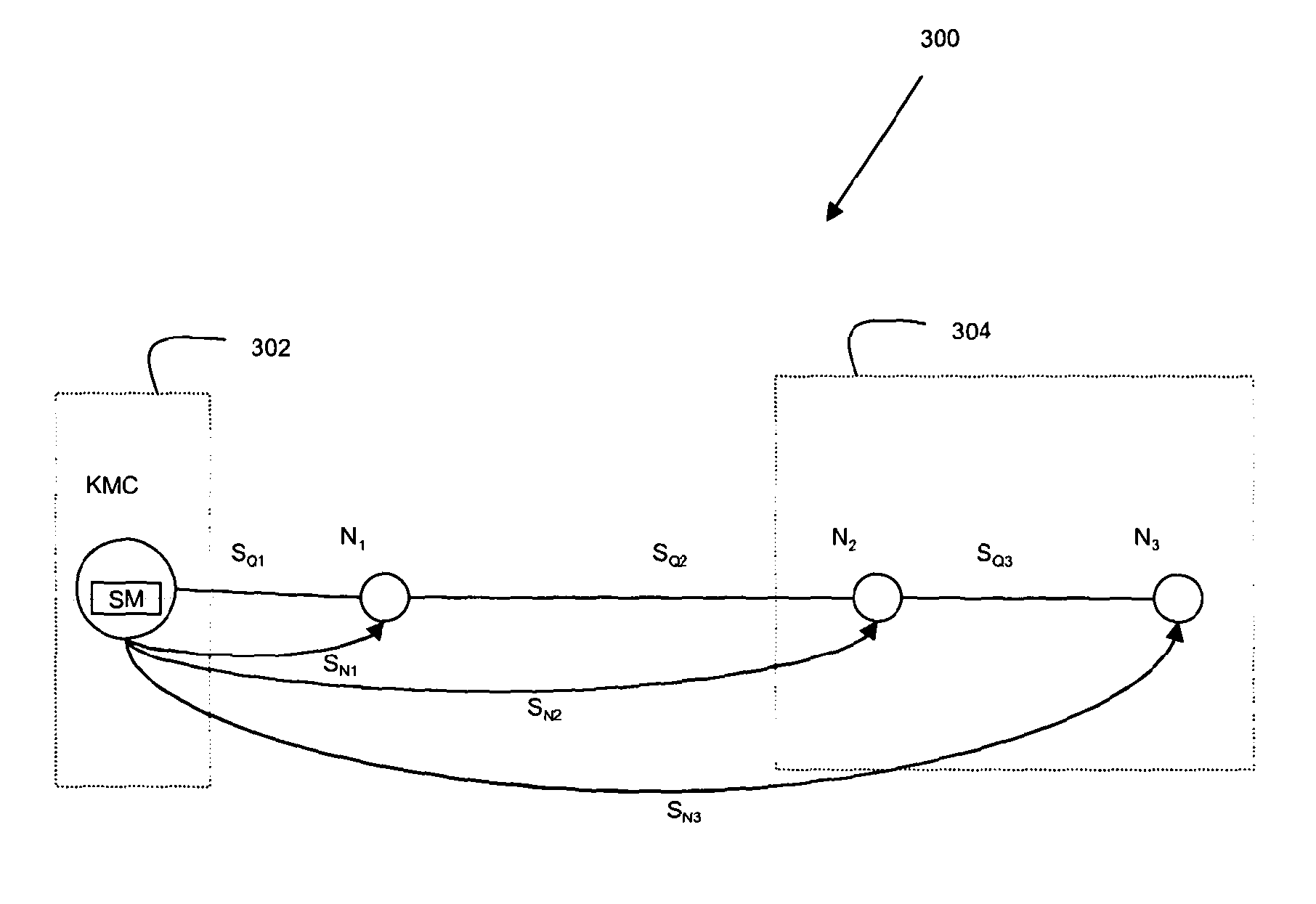
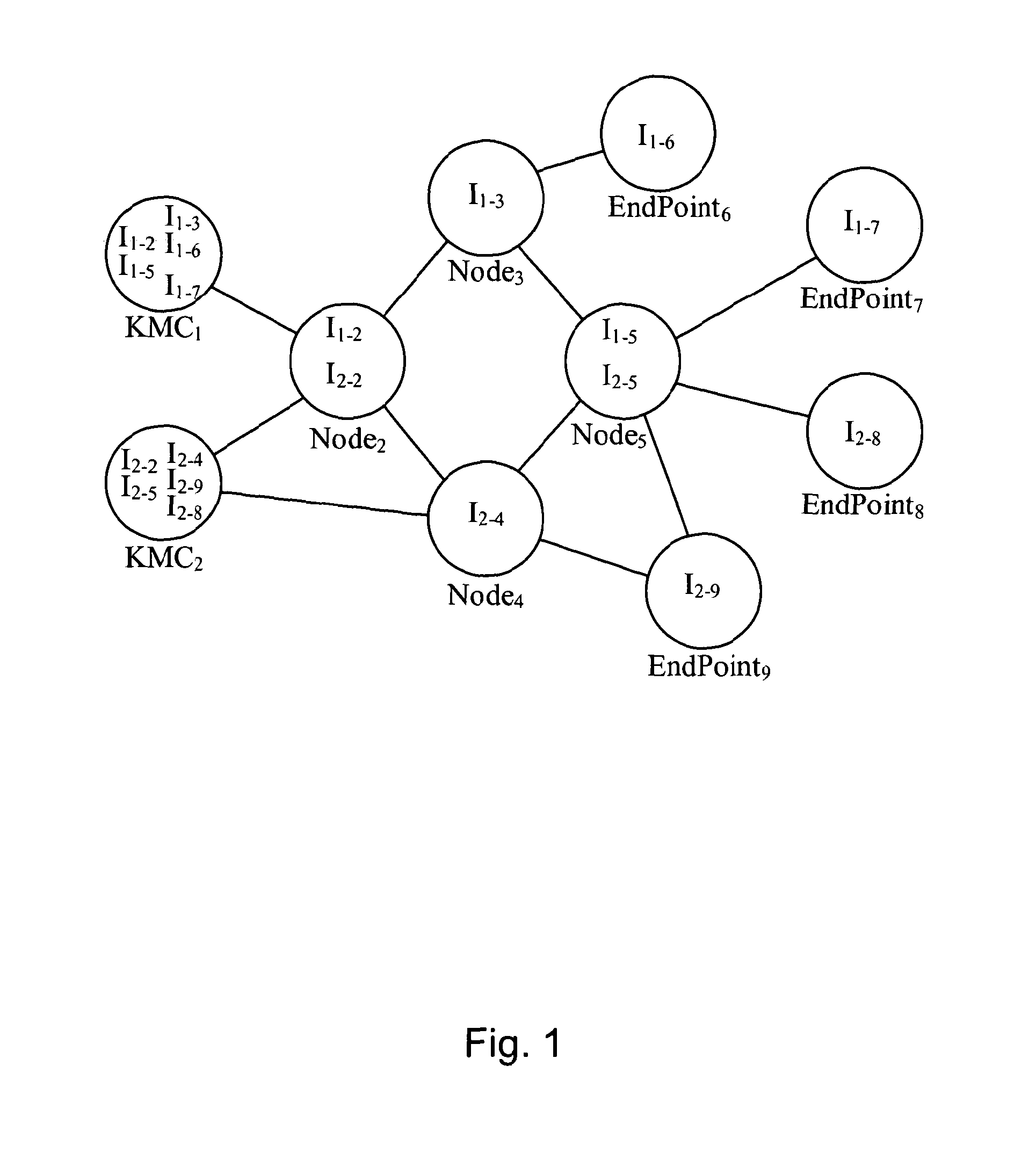
[0082]Some embodiments of the invention utilise a distributed or serial QKD model to improve downstream security. In traditional QKD, data hops between adjacent nodes. If access to a node can be obtained, it is possible to understand all of the information going through a network and therefore break network security.
[0083]Known QKD systems rely on physical security to ensure that access to a node cannot be obtained or, if the physical security of the node has been compromised, an error message is generated indicating that the security had been compromised (or in some systems, a node will generally transmit a message indicating that its security is not compromised, and the absence of such a message provides an alert). However, it may the case that not all the nodes are under the control of a trusted organisation. In particular, it may be that in practical embodiments, one or more of the intermediate nodes are provided by an entity or organisation which cannot be trusted to forward an...
PUM
 Login to View More
 Abstract
Description
Claims
Application Information
 Login to View More