
Glass substrate having fine structures on the surface thereof
a technology of glass substrate and surface, applied in the direction of optical radiation measurement, instruments, lighting and heating apparatus, etc., can solve the problems of anti-fouling function deterioration, attract dust, anti-fouling coating,
- Summary
- Abstract
- Description
- Claims
- Application Information
AI Technical Summary
Benefits of technology
Problems solved by technology
Method used
Image

Examples
Embodiment Construction
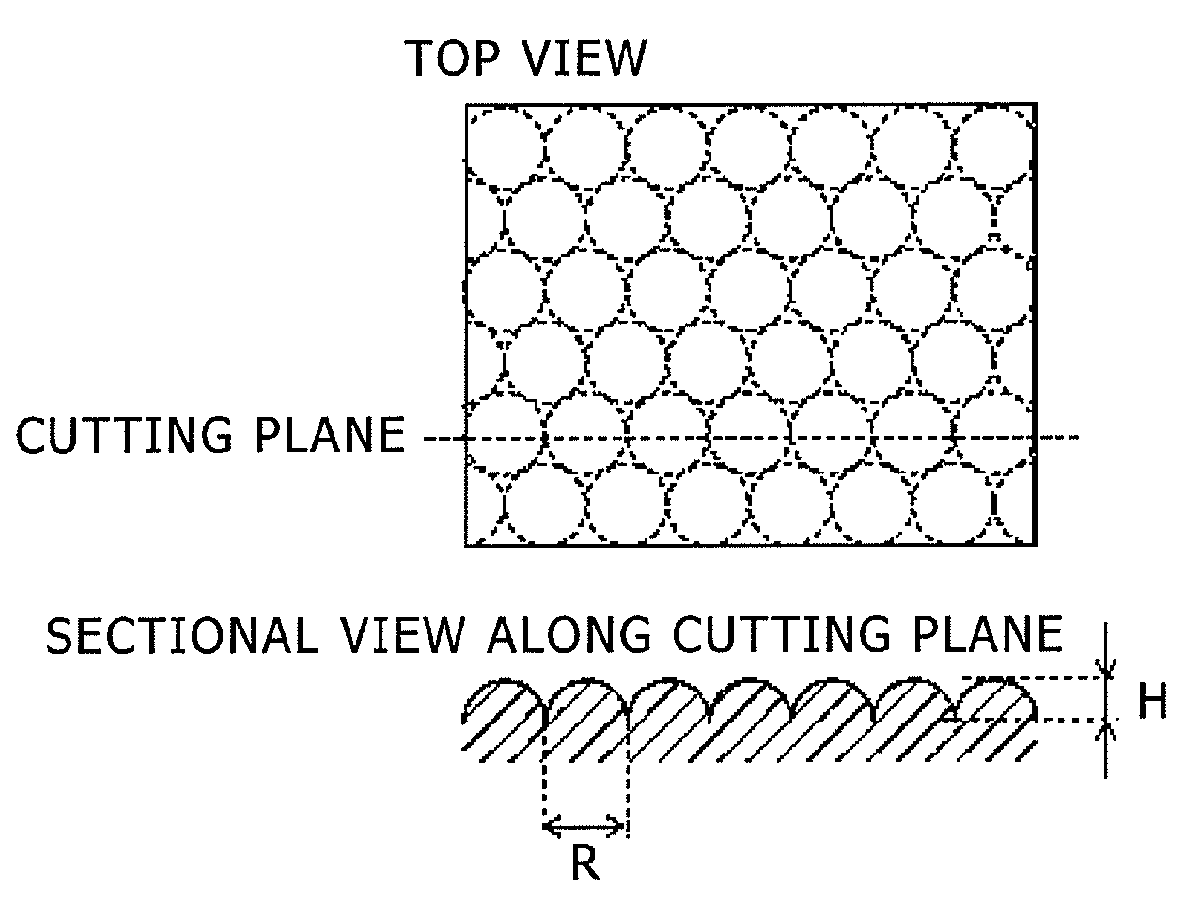
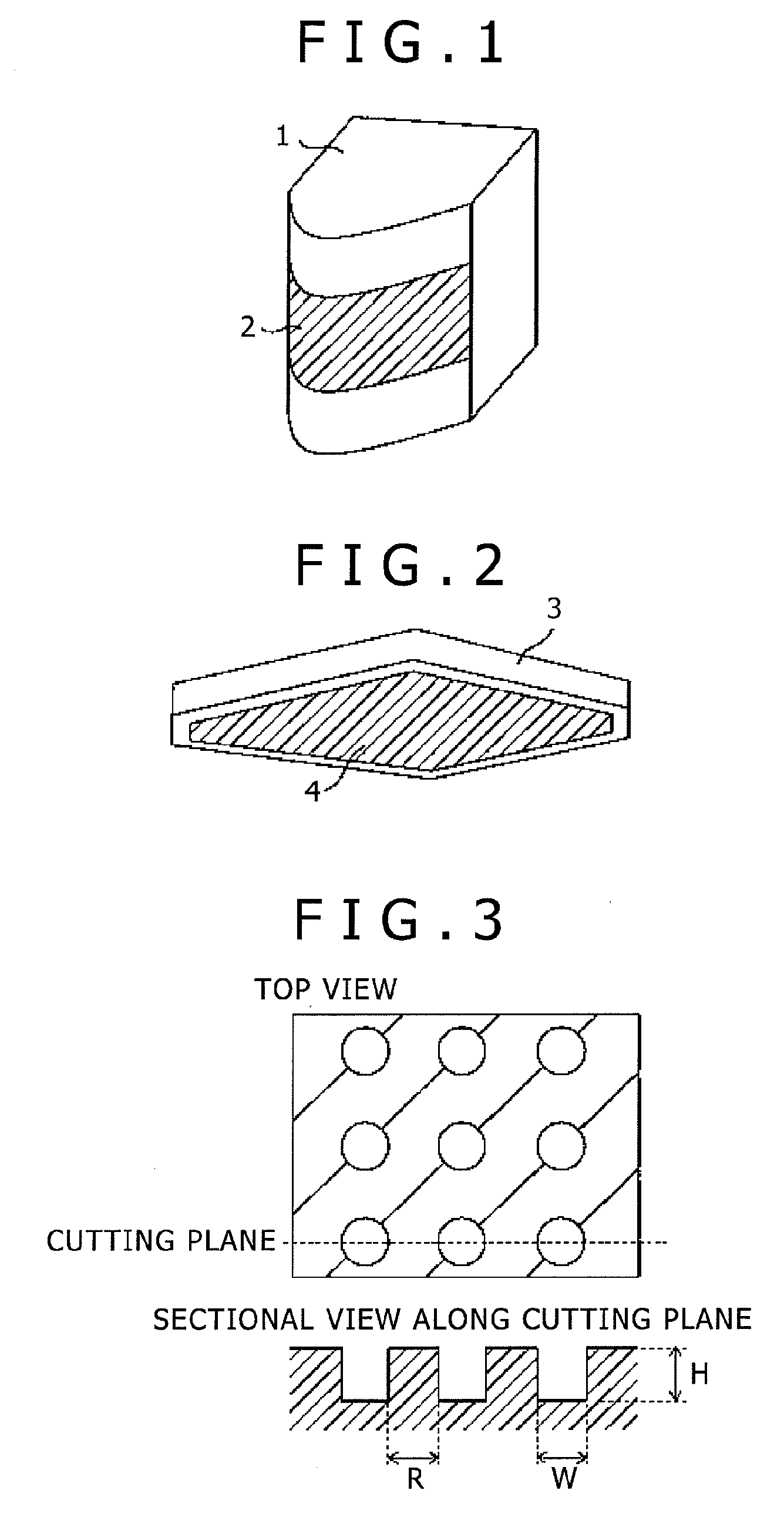
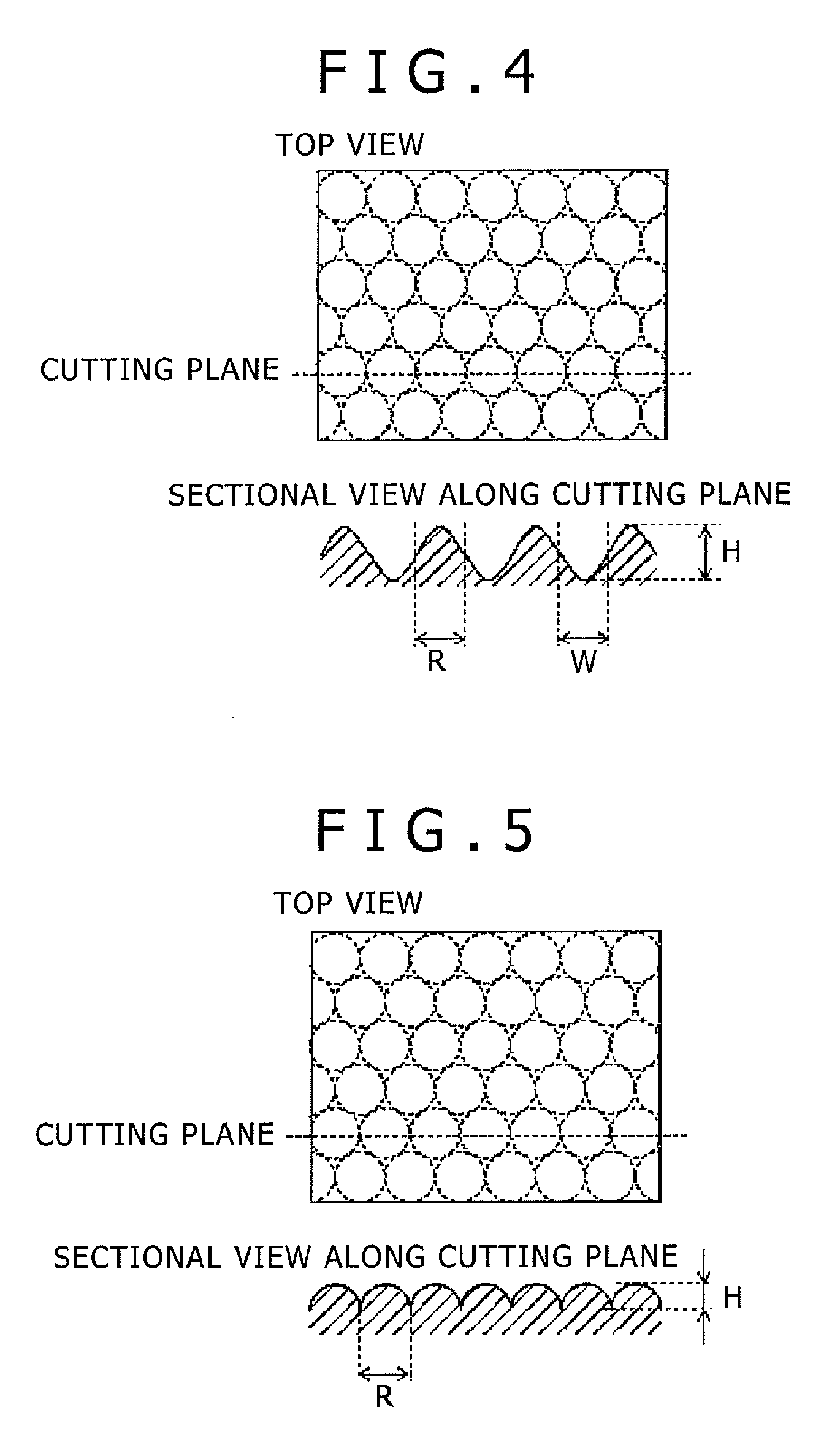
[0021]The glass substrate according to the present invention is composed of a base of vanadium-containing glass and a surface layer with fine structure. The vanadium-containing glass is not specifically restricted so long as it is hydrophilic and has a resistivity no higher than 109 Ω·cm. If the vanadium-containing glass has a resistivity higher than 109 Ω·cm, the resulting glass substrate tends to generate static electricity on its surface, which leads to easy dust attraction. In addition, the vanadium-containing glass should preferably contain V2O5 in an amount no less than 10 wt % and no more than 60 wt %. A V2O5 content less than 10 wt % is not enough to produce sufficient conductivity and hence tends to generate static electricity on the surface of the glass substrate. This leads to easy dust attraction. A V2O5 content more than 60 wt % makes the glass substrate prone to moisture absorption to such an extent that it is of no practical use. Moreover, the vanadium-containing glas...
PUM
| Property | Measurement | Unit |
|---|---|---|
| resistivity | aaaaa | aaaaa |
| size | aaaaa | aaaaa |
| size | aaaaa | aaaaa |
Abstract
Description
Claims
Application Information
 Login to View More