Unlock instant, AI-driven research and patent intelligence for your innovation.

Temperature-dependent insertion of genetic material into genomic DNA

a genetic material and temperature-dependent technology, applied in the field of temperature-dependent insertion of genetic material into genomic dna, can solve the problems of not being deemed compatible with the fda requirements, unable to prevent many human pathogens, and unable to replace the original sequence with the target gene,

Inactive Publication Date: 2014-07-10
ARIZONA STATE UNIVERSITY
View PDF3 Cites 10 Cited by
  • Summary
  • Abstract
  • Description
  • Claims
  • Application Information

AI Technical Summary

Benefits of technology

This patent is about a method for inserting genetic material into genomic DNA by using a recipient viral vector and a donor nucleic acid vector. The method involves incubating host cells containing the recipient viral vector and the donor nucleic acid vector under conditions that promote recombination between the two. The donor nucleic acid vector contains a gene and unique recombination sites that match those in the recipient viral vector. The host cell contains a promiscuous DNA polymerase capable of synthesizing the recipient viral vector DNA. By selectively culturing the host cells at different temperatures, viruses that grow at the second temperature, in which the donor gene has been inserted into the recipient viral vector, replacing the toxic gene, can be isolated. The patent also provides nucleic acid cassettes, recombinant viral vectors, and recombinant viral particles containing the recombinant viral vectors of the invention. These vectors can be used for gene therapy and research applications.

Problems solved by technology

Though progress has been made in making vaccines available to prevent human disease, we still lack preventive measures for many of the human pathogens.
Current methods to ensure that only viruses having replaced the original sequence with the target gene will survive are very time consuming and are not deemed compatible with the FDA requirements.

Method used

the structure of the environmentally friendly knitted fabric provided by the present invention; figure 2 Flow chart of the yarn wrapping machine for environmentally friendly knitted fabrics and storage devices; image 3 Is the parameter map of the yarn covering machine
View more

Image

Smart Image Click on the blue labels to locate them in the text.
Viewing Examples
Smart Image
  • Temperature-dependent insertion of genetic material into genomic DNA
  • Temperature-dependent insertion of genetic material into genomic DNA
  • Temperature-dependent insertion of genetic material into genomic DNA

Examples

Experimental program
Comparison scheme
Effect test

examples

[0068]Our current methods of selection rely on requiring the parental virus genome to incorporate a new gene that will protect the host cells from toxicity of reagents we then add to the cells. The concept has always been to eliminate the host cells in which the parental virus replicates. Conversely, recombinant viruses which have taken up a resistance gene rescue the host cells from toxicity and are thus able to replicate. Since these toxic reagents can be harmful to humans, the current selection methods are not acceptable for use in constructing human vaccines.

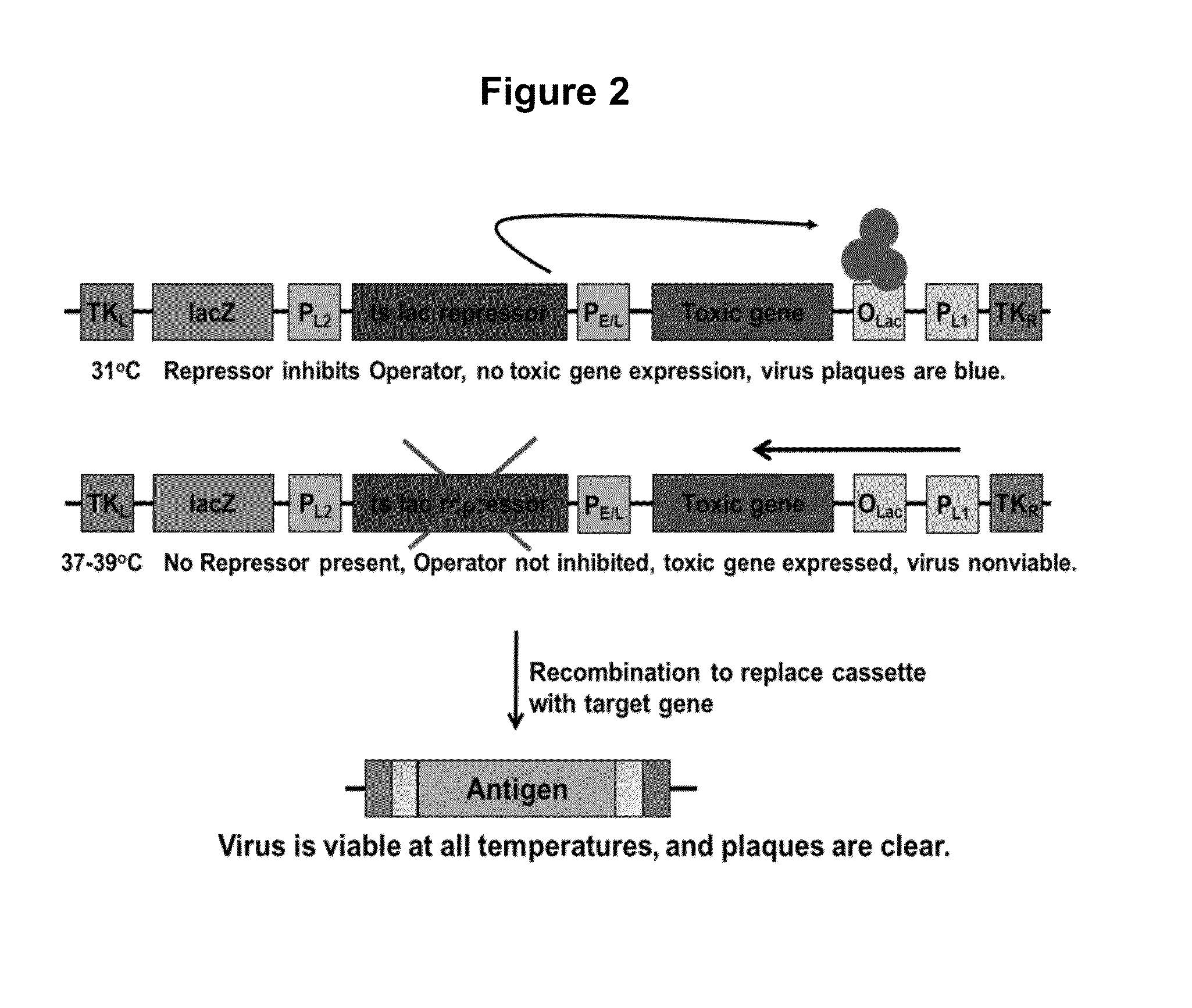
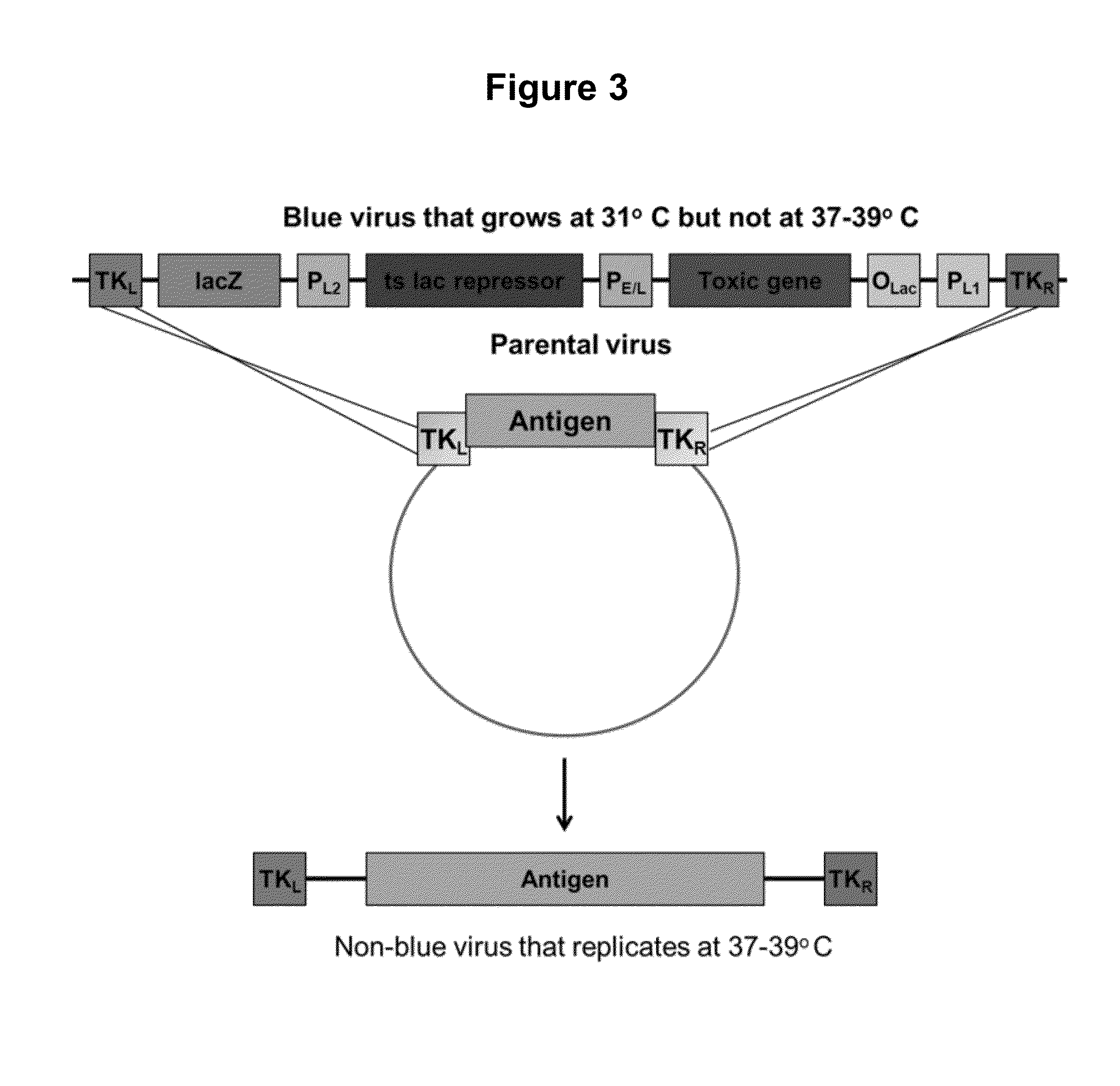
[0069]The method of the present invention is a shift in concept: the parental virus itself is nonviable unless it has undergone recombination to replace the DNA encoding a toxic system, with DNA encoding a target antigen. There are no substances that are toxic to the cells, and no substances that increase the rate of mutation in the virus. There are no materials utilized that pose a risk to humans; the entire selection is fo...

the structure of the environmentally friendly knitted fabric provided by the present invention; figure 2 Flow chart of the yarn wrapping machine for environmentally friendly knitted fabrics and storage devices; image 3 Is the parameter map of the yarn covering machine
Login to View More

PUM

PropertyMeasurementUnit
temperatureaaaaaaaaaa
Login to View More

Abstract

The present invention provides improved methods and reagents for insertion of genetic material into genomic DNA.

Description

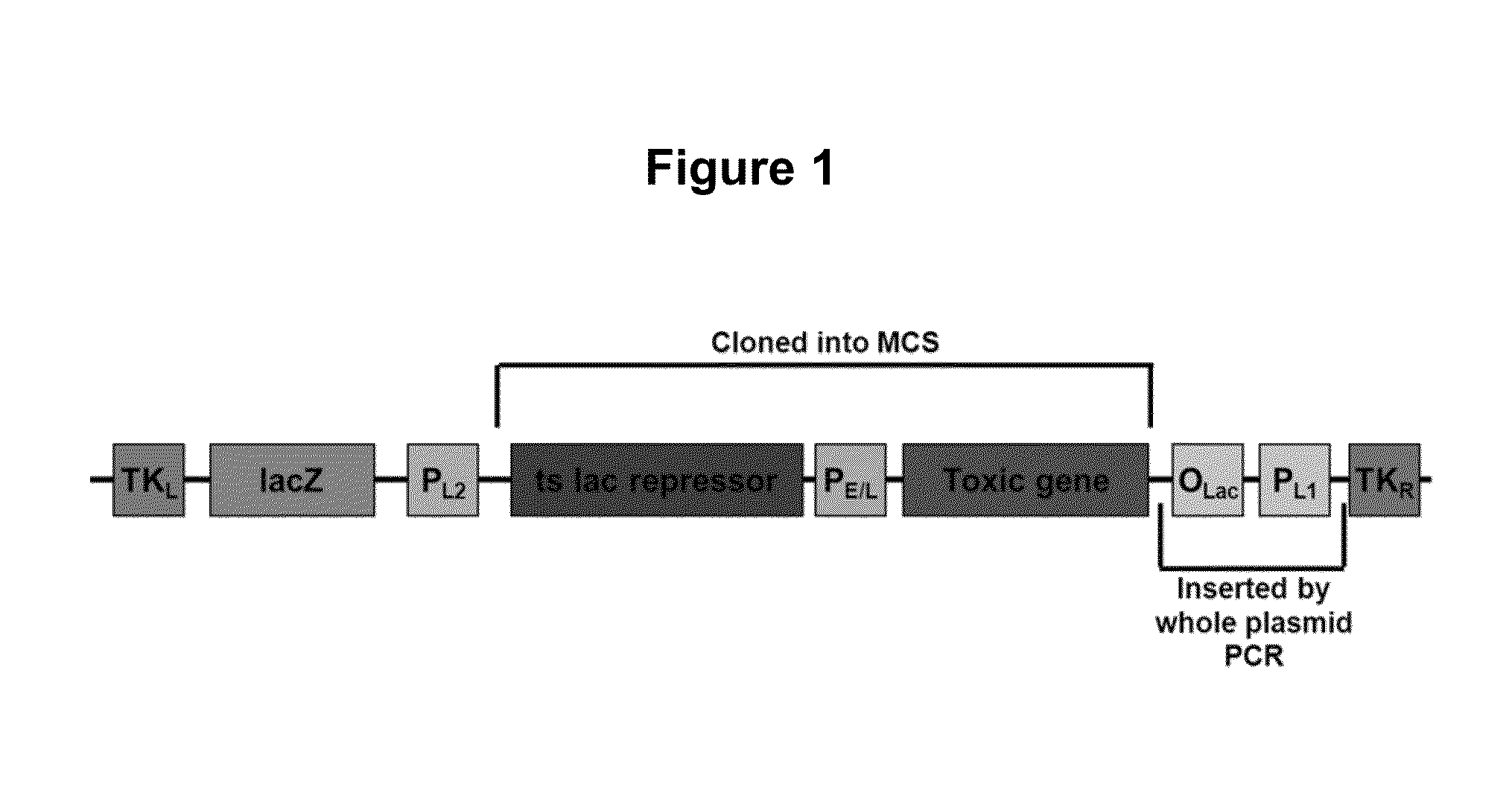
CROSS-REFERENCE[0001]This application claims priority to U.S. Provisional Patent Application Ser. No. 61 / 750,194 filed Jan. 8, 2013, incorporated by reference herein in its entirety.BACKGROUND[0002]Though progress has been made in making vaccines available to prevent human disease, we still lack preventive measures for many of the human pathogens. For decades, we have seen pox viruses go through many revisions as vaccine vectors: they have been attenuated, made replication-competent, and modified to alter immune response. Each time a new vector is prepared, technology must be used to insert the antigen of interest. Current methods to ensure that only viruses having replaced the original sequence with the target gene will survive are very time consuming and are not deemed compatible with the FDA requirements.SUMMARY OF THE INVENTION[0003]In a first aspect, the invention provides methods for insertion of genetic material into genomic DNA comprising[0004](a) incubating host cells compr...

Claims

the structure of the environmentally friendly knitted fabric provided by the present invention; figure 2 Flow chart of the yarn wrapping machine for environmentally friendly knitted fabrics and storage devices; image 3 Is the parameter map of the yarn covering machine
Login to View More

Application Information

Patent Timeline
no application Login to View More
Patent Type & Authority Applications(United States)
IPC IPC(8): C12N15/66
CPCC12N15/66A61K39/00C12N15/86C12N2710/24143C12N2800/40C12N2800/50C12N2830/002
Inventor JACOBS, BERTRAMKIBLER, KAREN
Owner ARIZONA STATE UNIVERSITY