
Engine starter with torque variator
- Summary
- Abstract
- Description
- Claims
- Application Information
AI Technical Summary
Benefits of technology
Problems solved by technology
Method used
Image

Examples
first embodiment
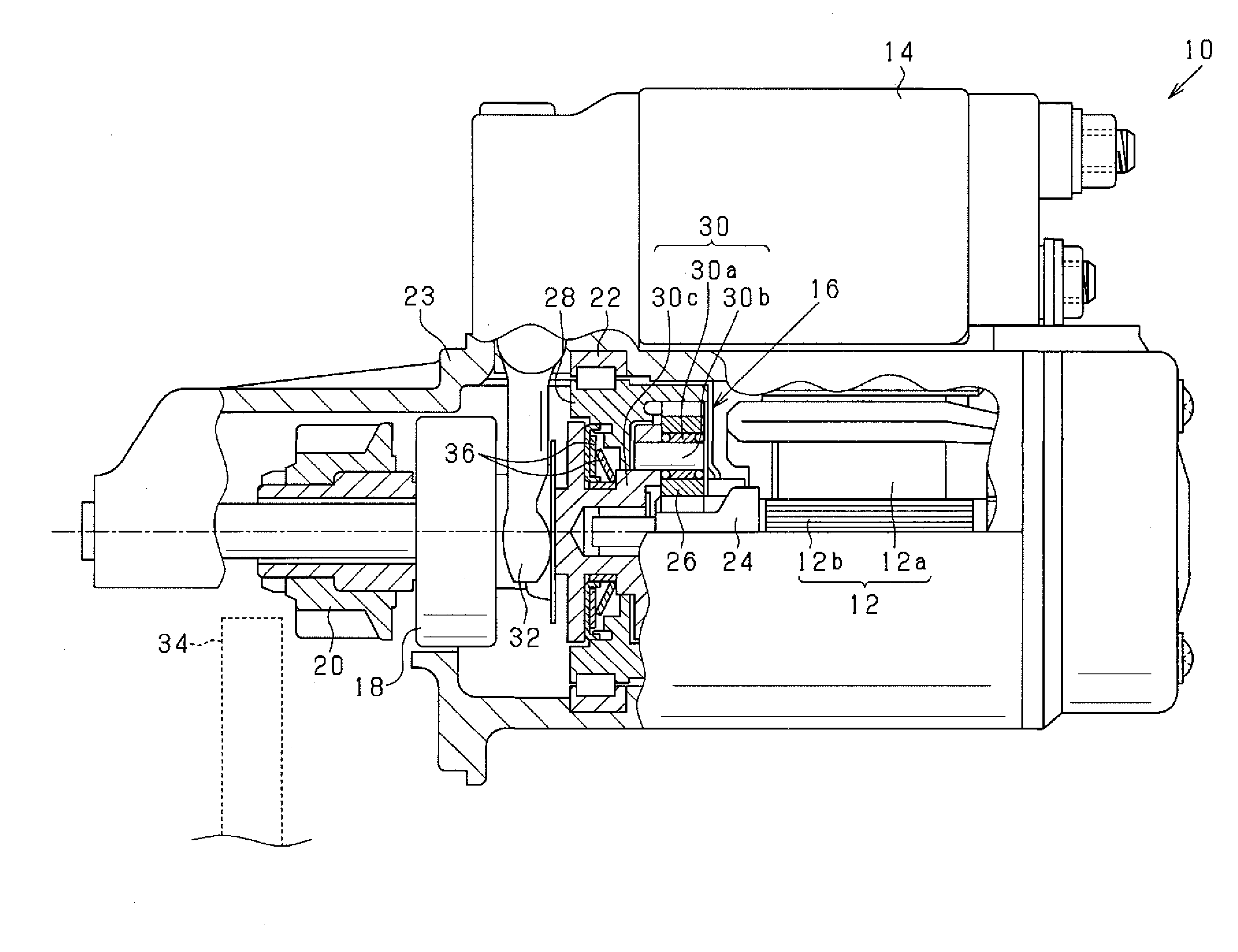
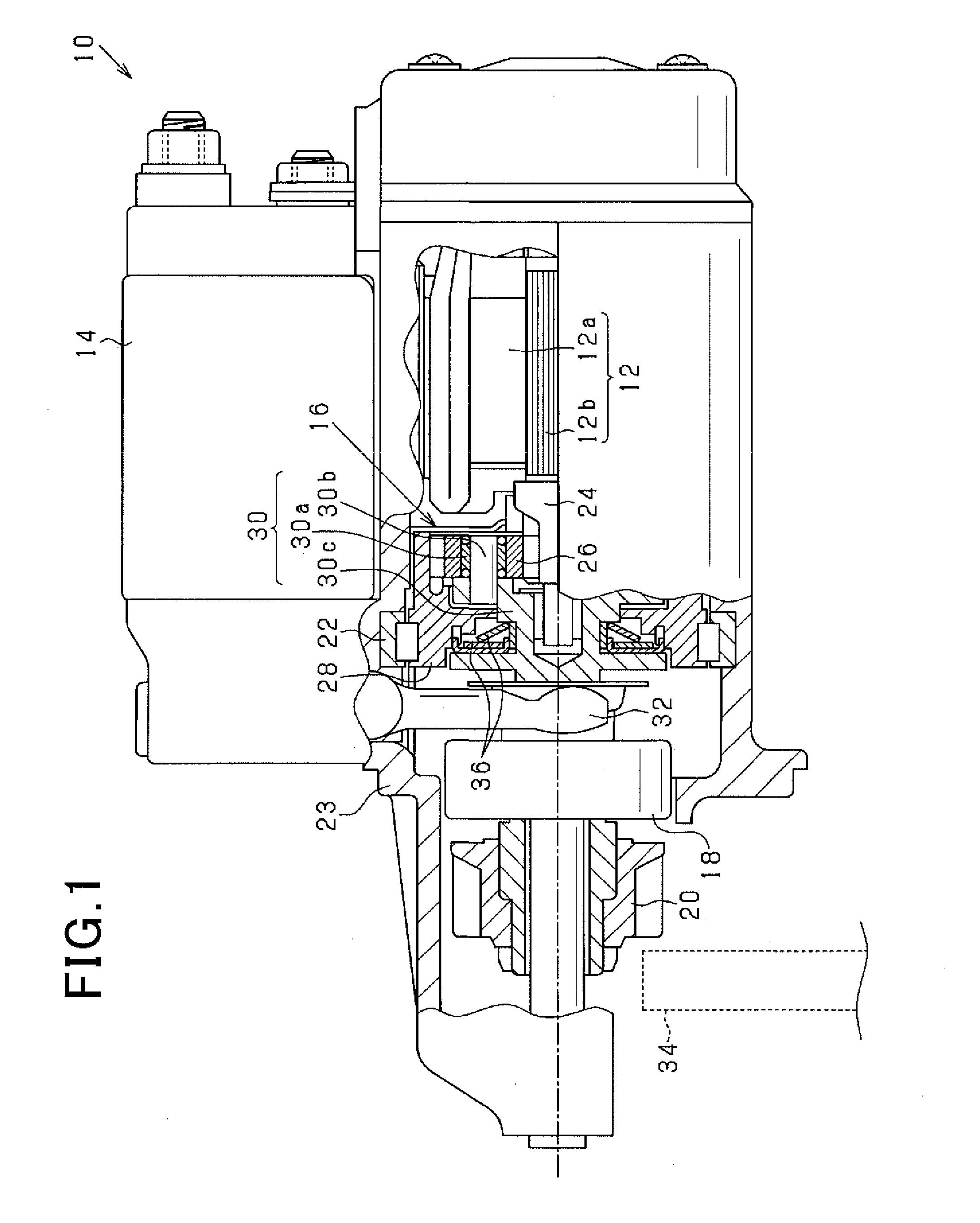
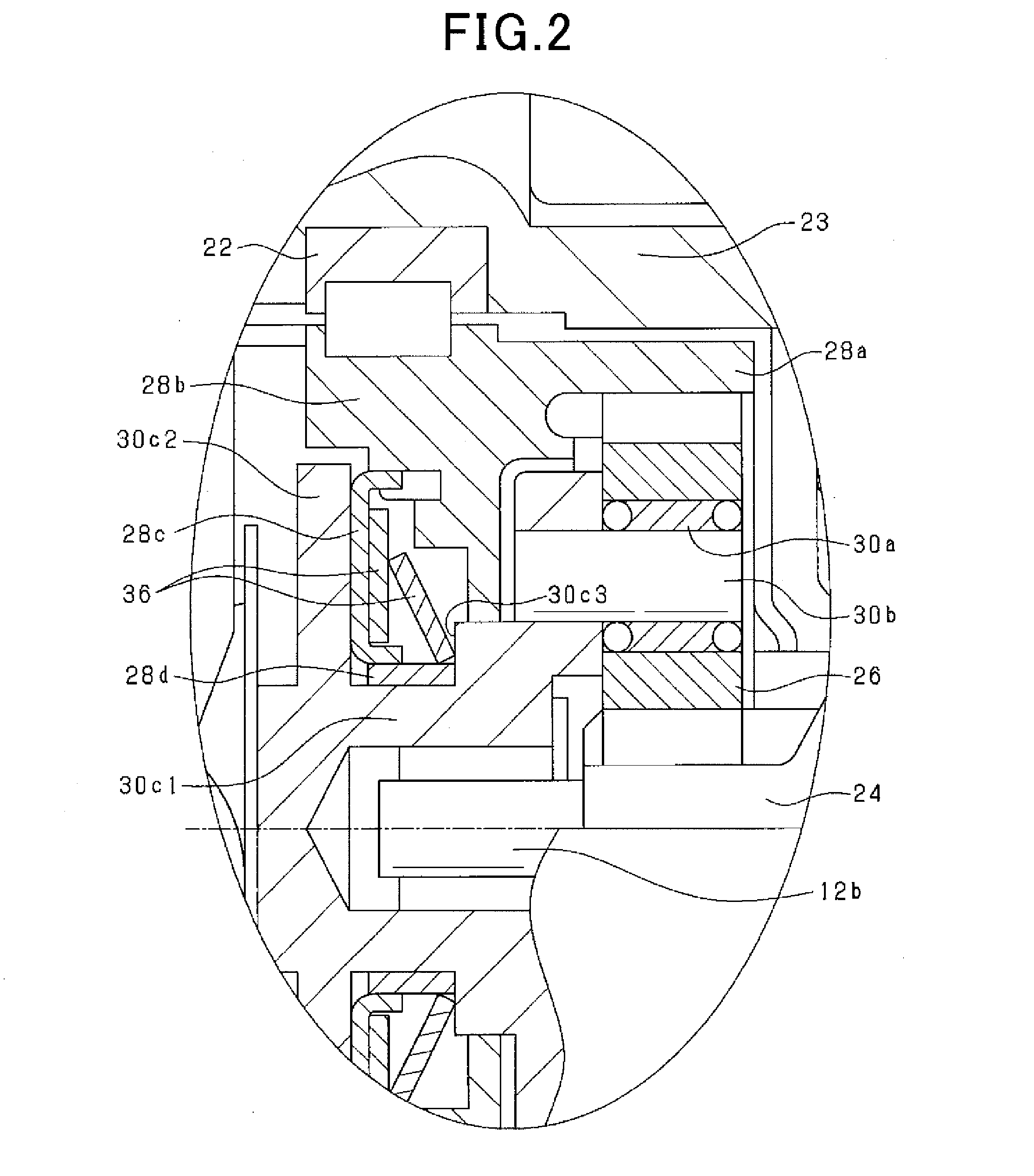
[0043]Referring to the drawings, wherein like reference numbers refer to like parts in several views, particularly to FIGS. 1 and 2, there is shown a starter 10 for an engine such as an automotive internal combustion engine according to the first embodiment.
[0044]The starter 10 includes an electric motor 12, a magnet switch 14, a planetary gear train 16, an overrunning clutch 18, a pinion gear 20, an one-way clutch 22, and a housing 22. The electric motor 12 works to produce torque. The magnet switch 14 controls an on-off operation of the electric motor 12. The overrunning clutch 18 is connected to an output of the planetary gear train 16. The pinion gear 20 works to output torque, as transmitted from the planetary gear train 16 through the overrunning clutch 18. The housing 23 stores the above components therein.
[0045]The magnet switch 14 is equipped with an exciting coil (not shown) and a plunger (not shown) disposed to be slidable within the exciting coil. The exciting coil is su...
second embodiment
[0072]FIG. 5 is a partial sectional view which illustrates the starter 10 according to the second embodiment which is different from the first embodiment in use of an electromagnetic clutch as a variable speed reducer also called a torque variator which includes the outer gear 28, the planetary carrier 30, and the spring mechanism 36 and works to vary the torque transmitted from the outer gear 28 to the planetary carrier 30 in the first embodiment. The same reference numbers as employed in the first embodiment of FIG. 1 will refer to the same parts, and explanation thereof in detail will be omitted here.
[0073]The electromagnetic clutch includes an exciting coil 38a which is energized by the current supplied from the battery, a housing 38b which forms a magnetic circuit around the exciting coil 38a, and a clutch plate 28e which faces an end surface of the housing 38b. The clutch plate 28e is made of an annular disc and movable in the axial direction of the starter 10 (i.e., the cente...
third embodiment
[0084]The starter 10 of this embodiment is different from that in the second embodiment only in the speed reduction ratio switching operation. Other arrangements are identical, and explanation thereof in detail will be omitted here.
[0085]FIG. 9 is a flowchart of a sequence of logical steps or program to execute the speed reduction ratio switching operation. The program is performed cyclically by the controller 10a at a given time interval. The same step numbers as employed in FIG. 7 refer to the same operations.
[0086]After the time elapsed since a YES answer was obtained in step S10 is counted up in step S12, the routine then proceeds to step S20 wherein the exciting coil 38a is deenergized to establish a speed reduction ratio of five in the planetary gear train 16. The routine then proceeds to step S22 wherein it is determined whether the elapsed time, as derived in step S10, has reached a reference time Ta or not. If a NO answer is obtained, then the routine repeats step S22. Alte...
PUM
 Login to View More
 Abstract
Description
Claims
Application Information
 Login to View More