
Method for controlling a dual-supercharged combustion engine
a technology of supercharged combustion engines and combustion engine control, which is applied in the direction of electric control, machines/engines, mechanical equipment, etc., can solve the problems of complex system to achieve and control, and does not take into account the physical behavior of gas flows
- Summary
- Abstract
- Description
- Claims
- Application Information
AI Technical Summary
Benefits of technology
Problems solved by technology
Method used
Image

Examples
application examples
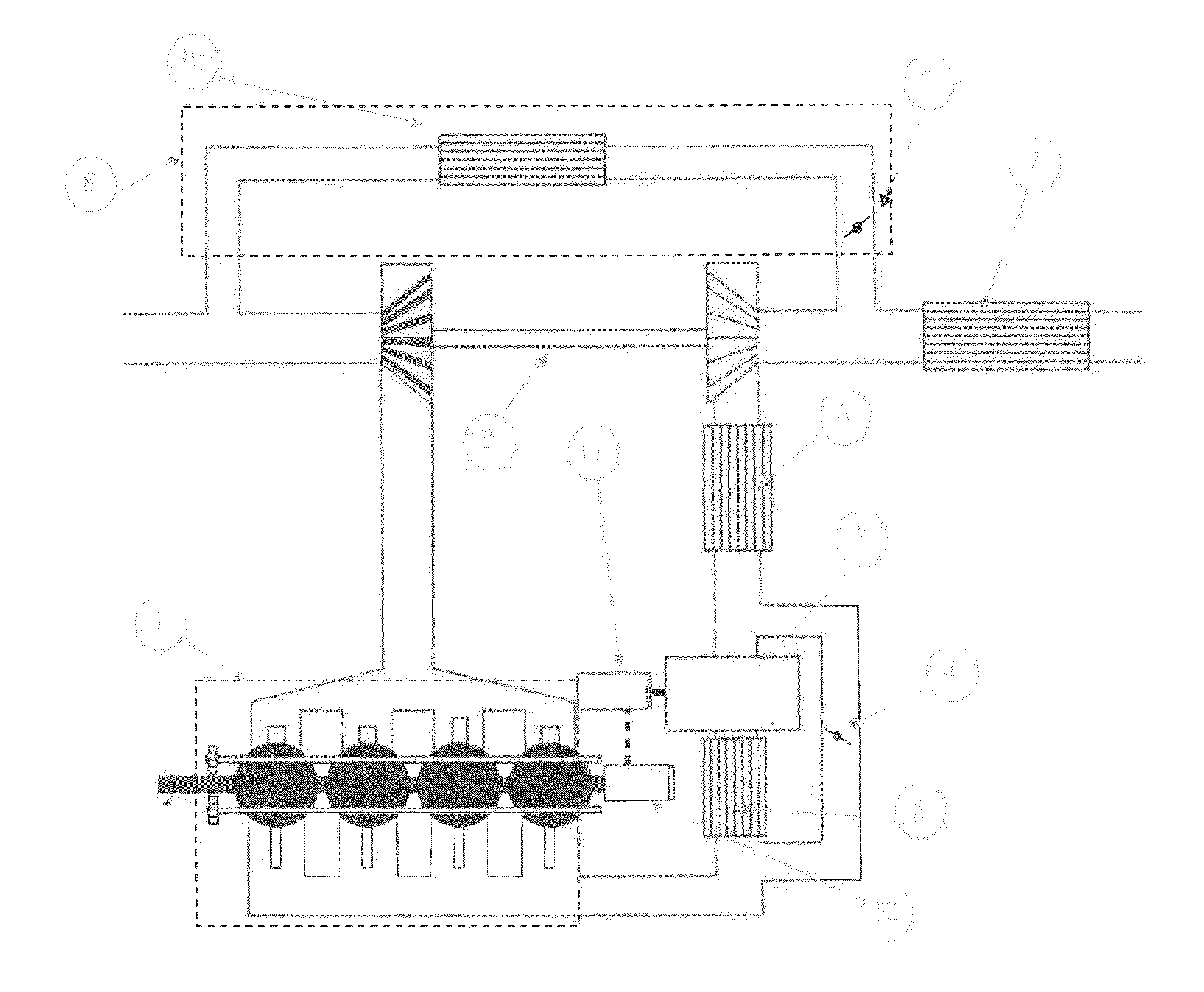
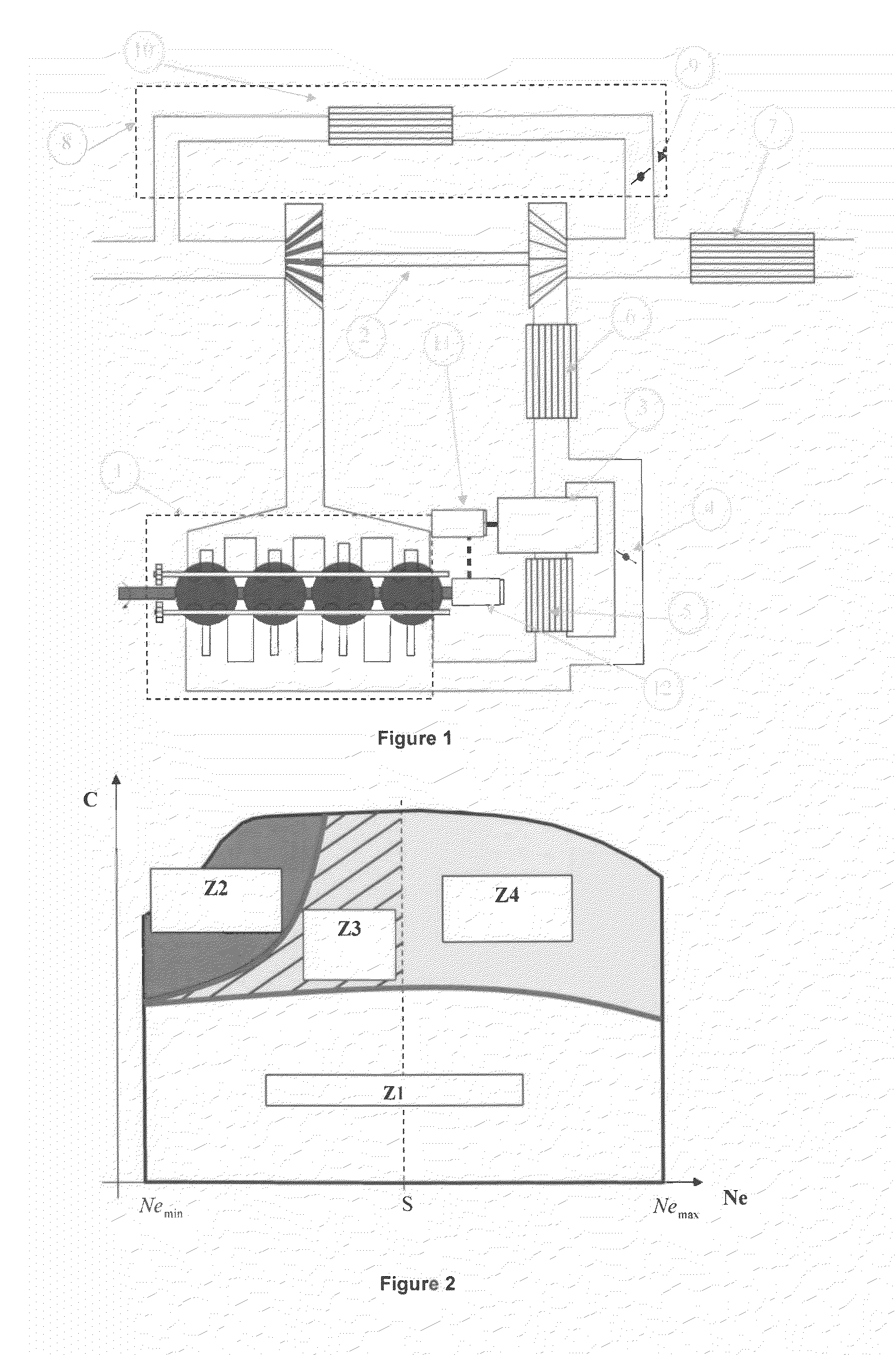
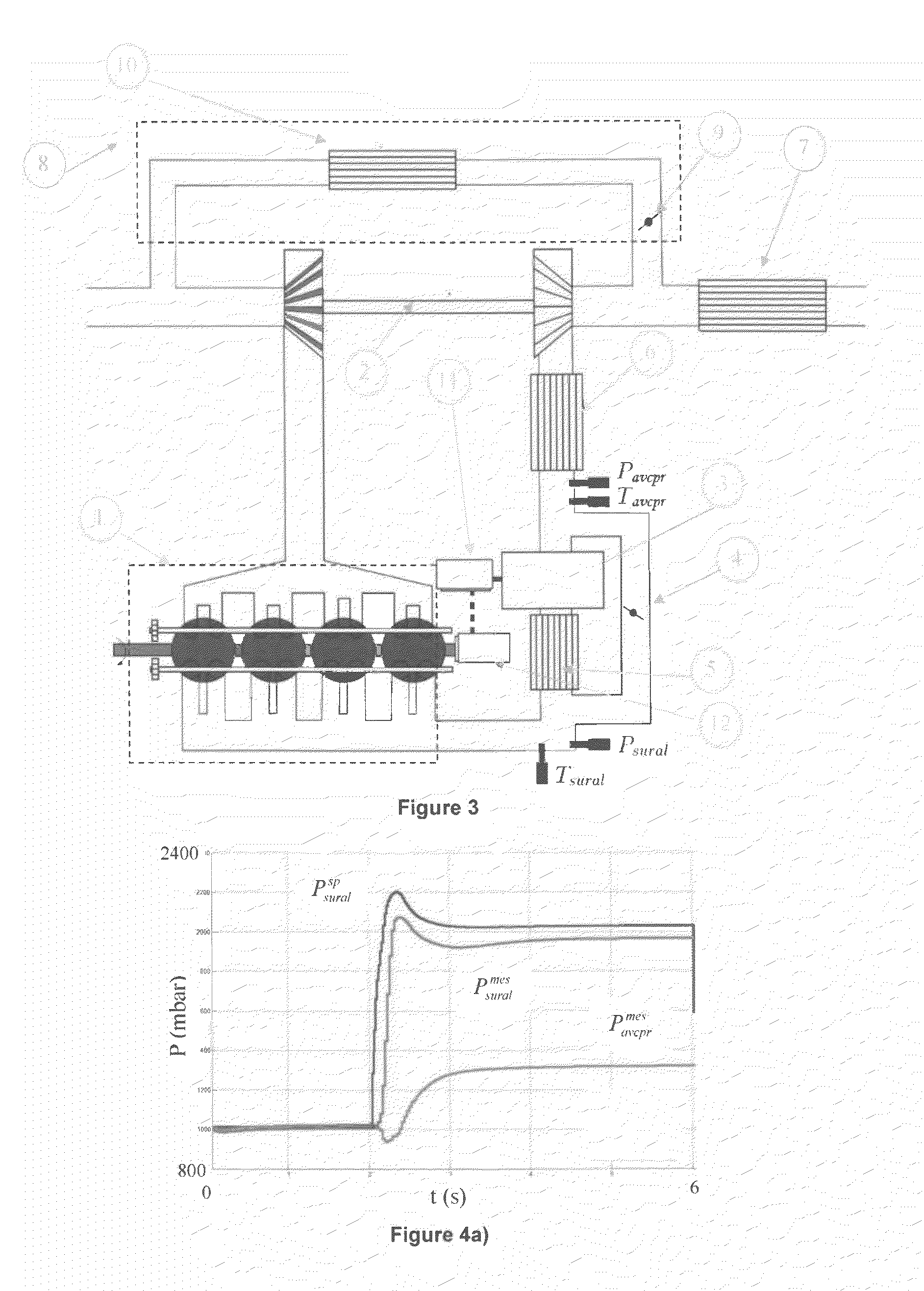
[0106]In order to check the behavior of the combustion engine with the method according to the invention, simulations were performed with the open-loop control and the closed-loop control for the combustion engine instrumented according to FIG. 3. For these simulations, the predetermined threshold S of use of the mechanical compressor is set at 3000 rpm. FIGS. 4 to 6 correspond to the open-loop control as described in stage 4) and FIGS. 7 and 8 correspond to the closed-loop control as described in the variant embodiments paragraph.
[0107]FIGS. 4a) to 4d) illustrate charging at an engine speed of 1000 rpm (zone Z2 in FIG. 2). FIG. 4a) shows the setpoint Psuralsp and measured Psuralmes boost pressure, as well as the pressure measured upstream from the positive-displacement compressor Pavcprmes. FIG. 4b) shows the setpoint and the measured value of positive-displacement compressor speed Ncpr. FIGS. 4c) and 4d) show the openings of the air actuators, of the by-pass valve and of the VGT (...
PUM
 Login to View More
 Abstract
Description
Claims
Application Information
 Login to View More