People have a natural expectation that their devices should work as well on a
train as anywhere else, but this is rarely the case.
The use of
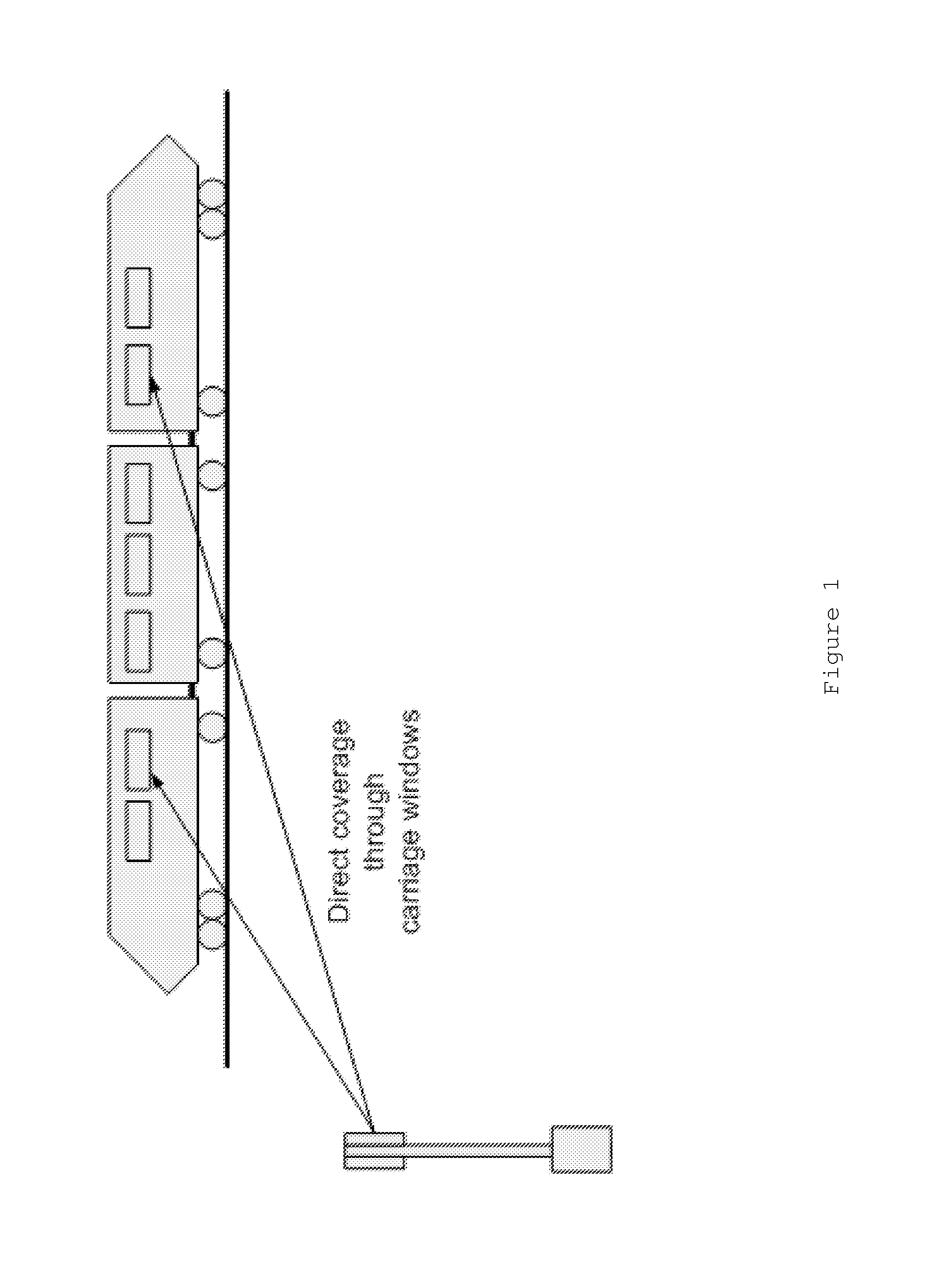
metallised film windows in railway carriages for the purposes of climate
control limits direct coverage by cellular networks, as these have a high penetration loss at
microwave frequencies.
Furthermore, cellular networks are usually not optimised for railway coverage, resulting in a very variable service.
Hence quality by direct coverage is generally poor, with voice calls unable to be maintained for long periods and
mobile internet only available in urban areas and with a lower than average speed.
However, backhaul rates are still typically limited to a few Mb / s which must be shared amongst an increasing number of users, whose individual demands are also rising.
Many of these applications are safety critical, and perhaps best served using fixed infrastructure.
Some of these “on
shore” applications may migrate to a
mobile broadband network in areas where, for example, cable theft is a problem or the provision of fixed infrastructure expensive.
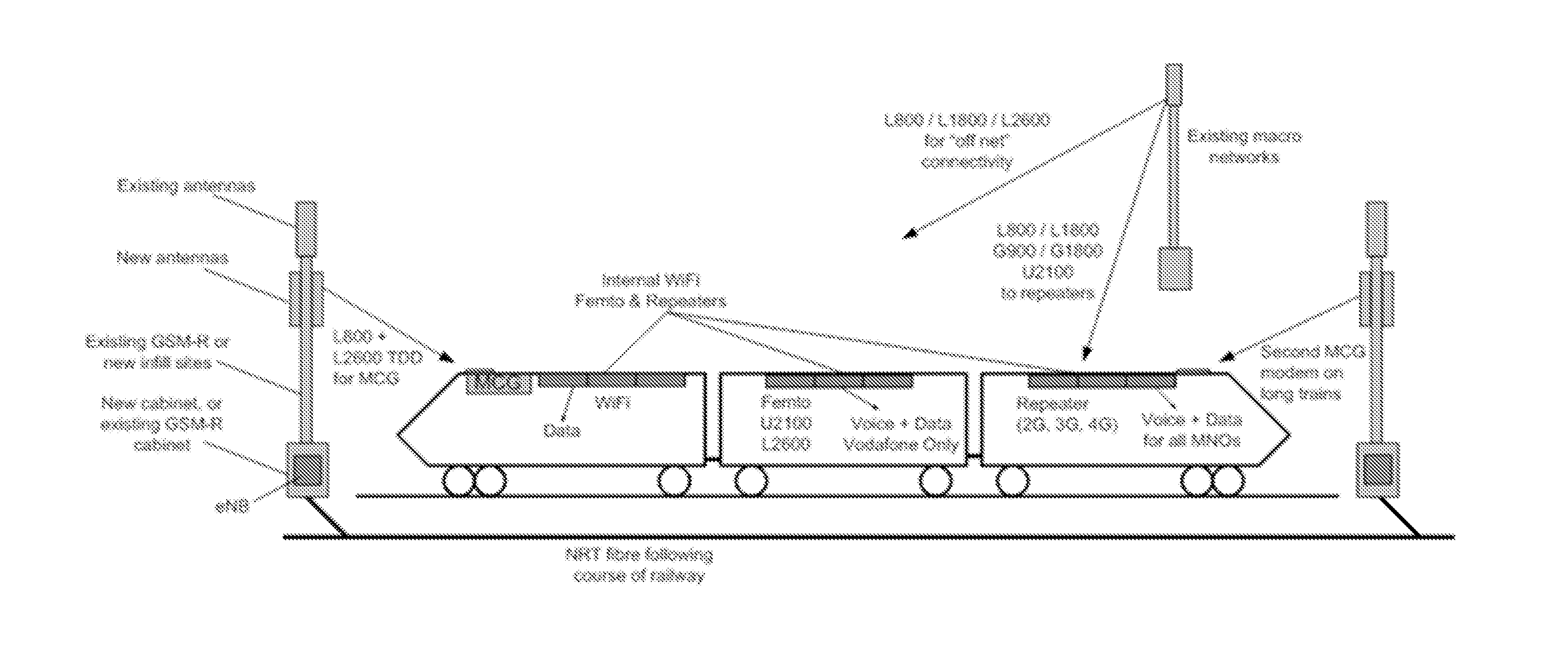
First, cellular coverage is generally not optimised for rail coverage.
Second, the introduction of metallised-film windows for climate control on the majority of railway carriages has significantly increased radio attenuation for direct coverage. Finally, coverage does not guarantee capacity, as the
macro network serves all cellular customers, not just railway passengers. Hence, even when adequate coverage is available by direct propagation, the capacity available cannot be guaranteed as this is shared with other users of the network. Hence adequate coverage does not guarantee an adequate service. This is especially true in urban areas where railway stations are usually located in densely populated town centres.
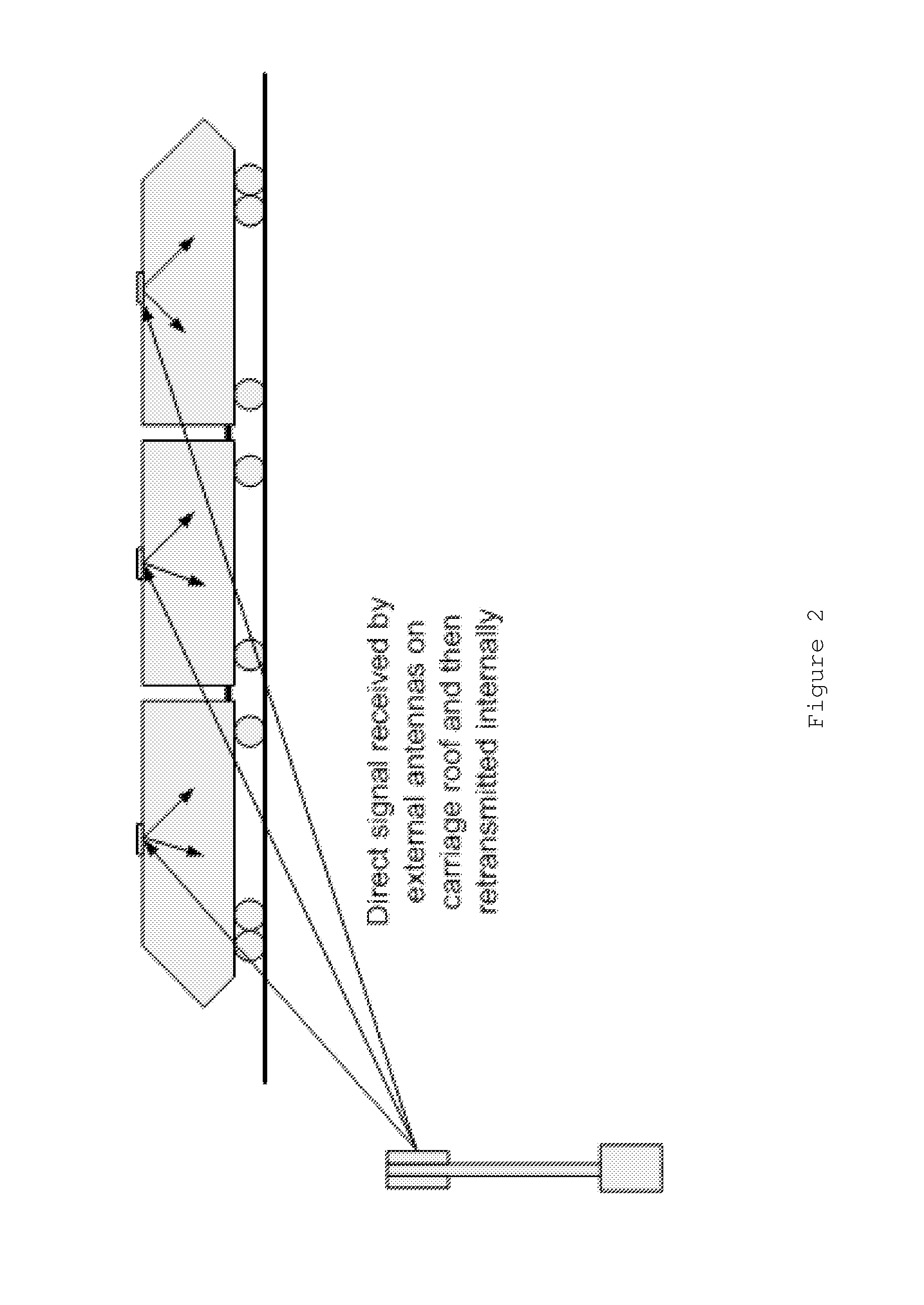
Although this solves the
carriage attenuation problem, it does not solve the problems of inadequate
macrocell density or capacity.
In addition, either a multi-band
repeater or a separate
repeater is required for each MNO, which increases costs.
These provide near ubiquitous coverage (tunnels and deep cuttings excepted), but are limited in capacity to around 2 Mb / s per
train.
Carrier aggregation may increase capacity compared to using a single operator, but coverage by different MNOs is usually reasonably correlated (particularly if site sharing), and hence this approach does not solve the problem of limited coverage.
In addition, the capacity available is still much lower than the requirement identified above.
Initial dedicated solutions have tended to use IEEE 802 standards, such as the use of
WiMAX or Wi-Fi (a problem with these is that their spectra are subject to low transmit
power limits and can suffer from interference), other solutions use proprietary OFDM-based solutions tailored to the requirements of the rail industry.


 Login to View More
  Login to View More