
Apparatus and method for forming three-dimensional objects using two-photon absorption linear solidification
a technology of linear solidification and apparatus, applied in the direction of additive manufacturing processes, manufacturing tools, instruments, etc., can solve the problems of resolution degrade, many of the foregoing devices are limited in size, and the laser based system that uses galvo mirrors typically have resolutions that are limited by laser energy per unit area
- Summary
- Abstract
- Description
- Claims
- Application Information
AI Technical Summary
Benefits of technology
Problems solved by technology
Method used
Image

Examples
Embodiment Construction
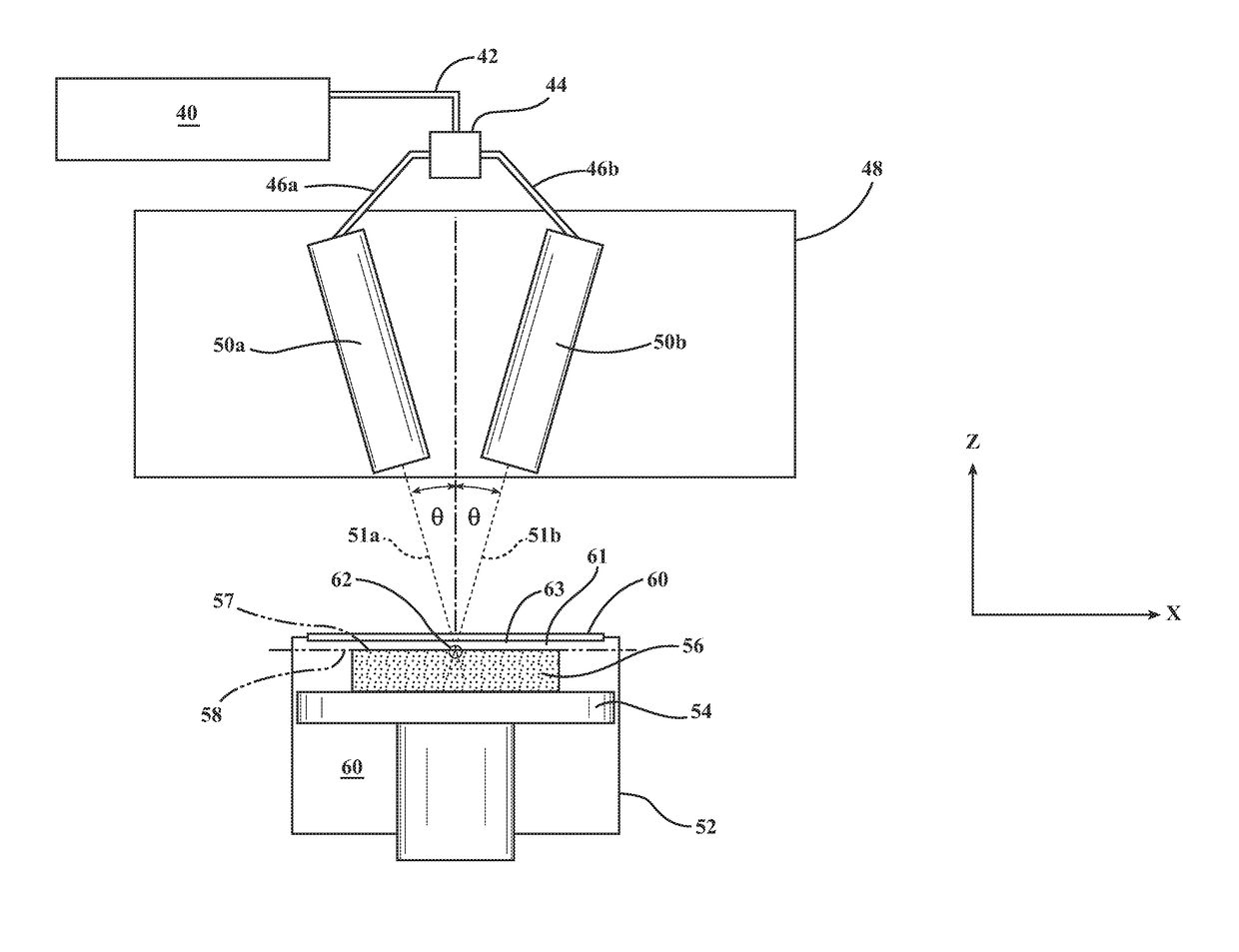
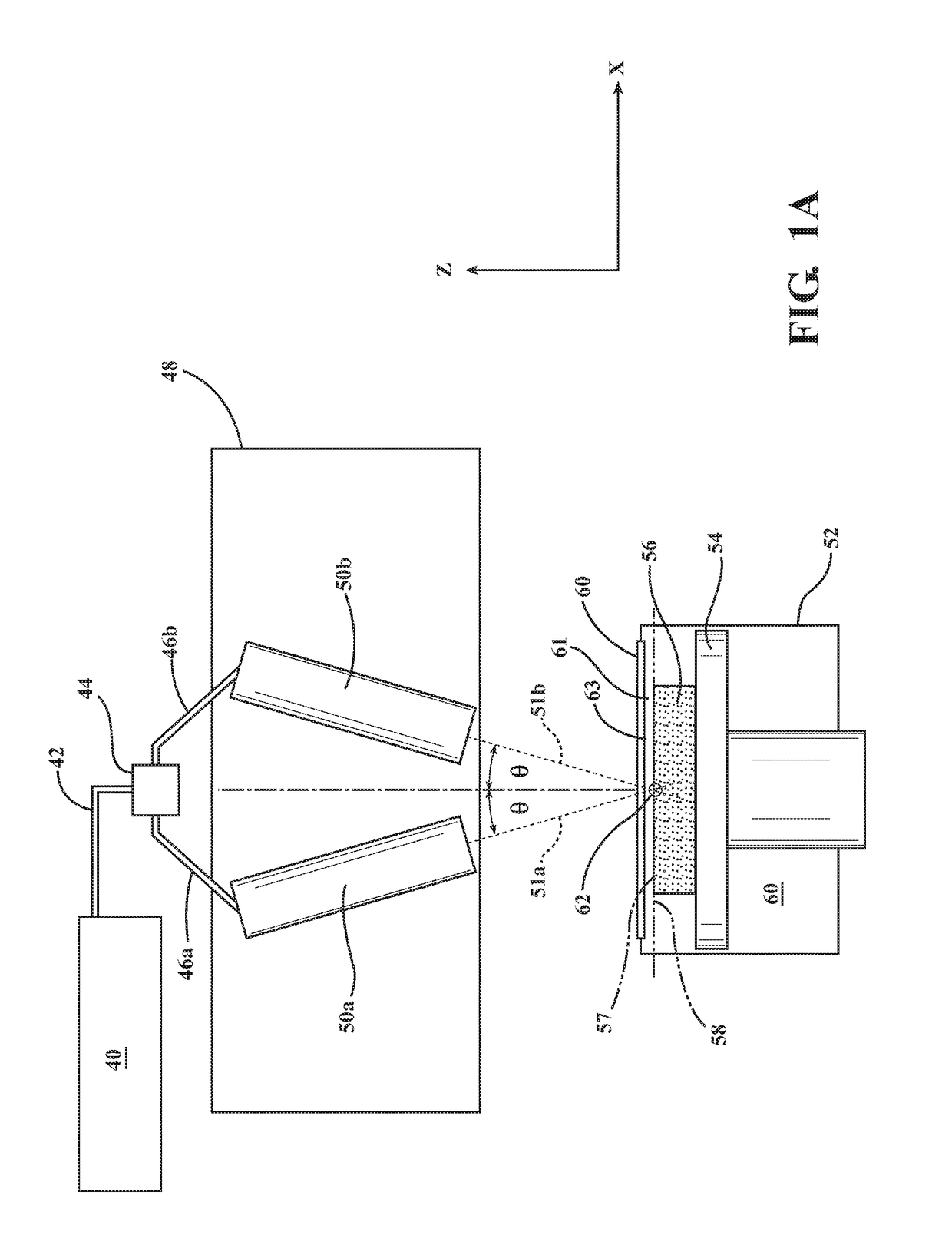
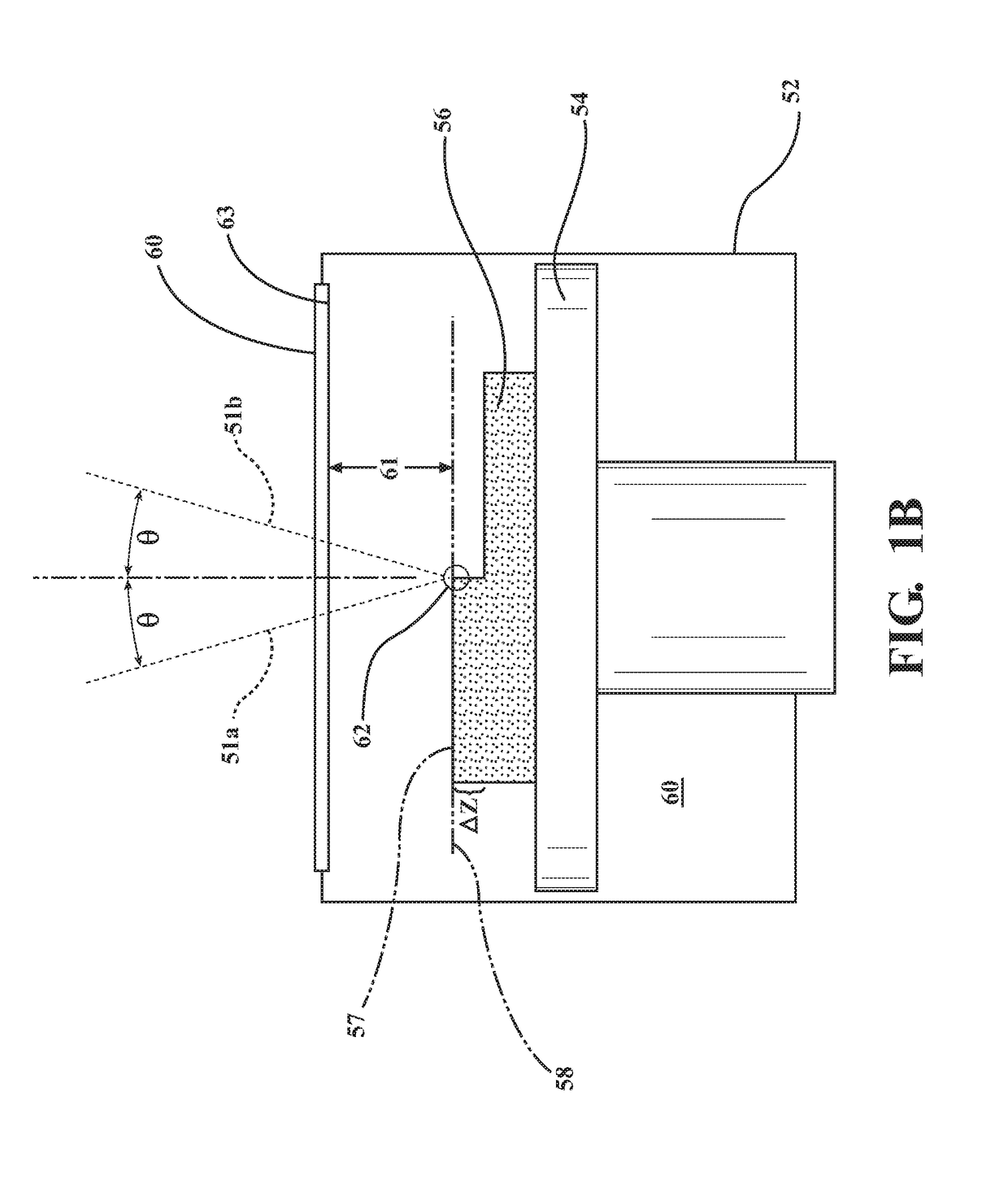
[0019]The Figures illustrate examples of an apparatus and method for manufacturing a three-dimensional object from a solidifiable material. Based on the foregoing, it is to be generally understood that the nomenclature used herein is simply for convenience and the terms used to describe the invention should be given the broadest meaning by one of ordinary skill in the art.
[0020]The apparatuses and methods described herein are generally applicable to additive manufacturing of three-dimensional objects, such as components or parts (discussed herein generally as objects), but may be used beyond that scope for alternative applications. The system and methods generally include a laser and at least one linear scanning device that applies solidification energy to a solidifiable material, such as a photohardenable resin with a photoinitiator, and optionally, a multiphoton sensitizer. The laser, the at least one linear scanning device, and the solidifiable material are configured such that s...
PUM
| Property | Measurement | Unit |
|---|---|---|
| Length | aaaaa | aaaaa |
| Fraction | aaaaa | aaaaa |
| Time | aaaaa | aaaaa |
Abstract
Description
Claims
Application Information
 Login to View More