System and Method for Polarization Compensation

US20170343716A1Inactive Publication Date: 2017-11-30AEVA INC
3 Cites 7 Cited by

Patent Information

Authority / Receiving Office
US · United States
Current Assignee / Owner
Publication Date
2017-11-30
Estimated Expiration
Not applicable · inactive patent

Smart Images

  • Figure 1
    Figure 1
  • Figure 2
    Figure 2
  • Figure 3
    Figure 3
Patent Text Reader

Abstract

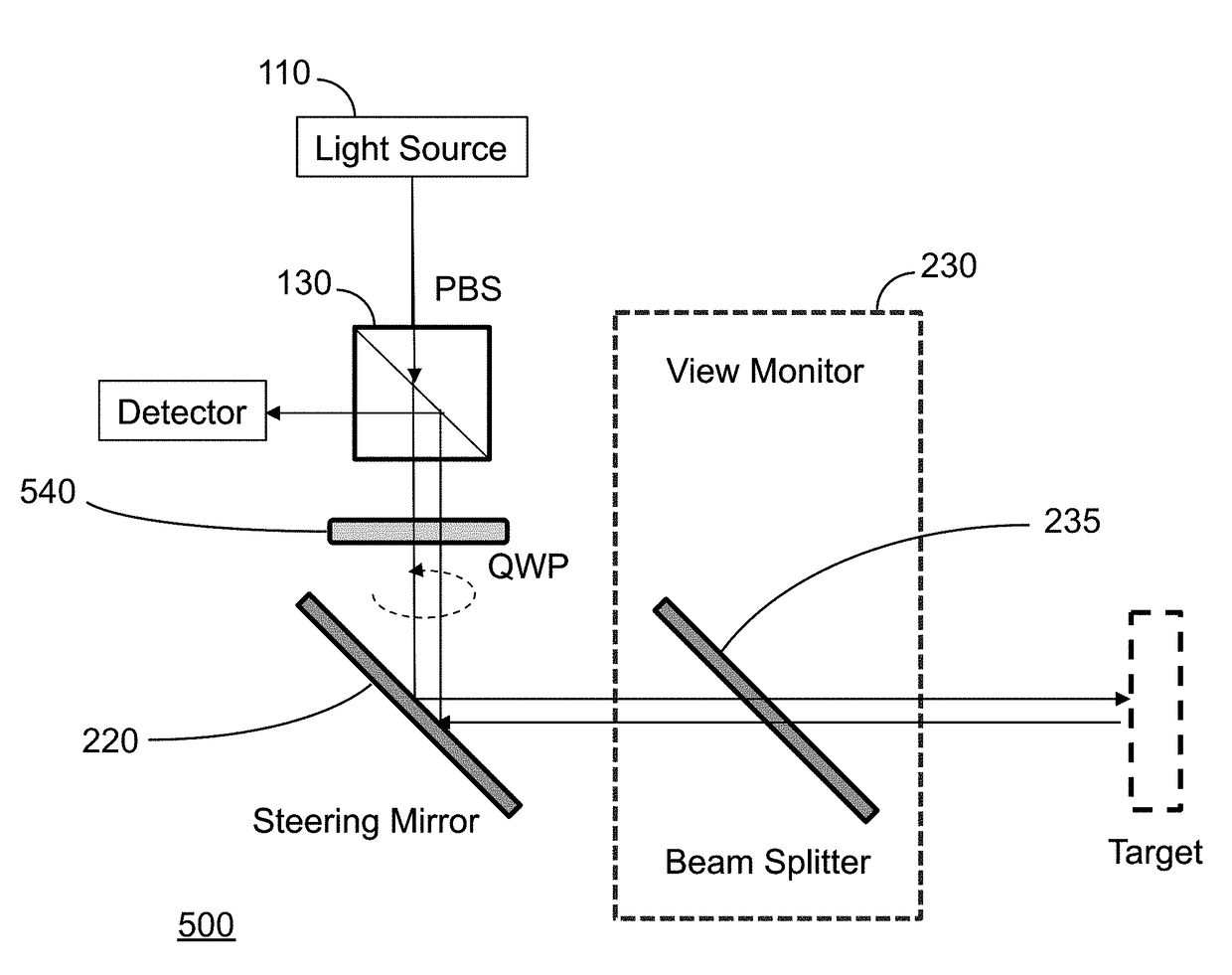
Various implementations of the invention, improve an optical efficiency of an optical path comprising a polarizing beam splitter and a quarter wave plate. In some implementations of the invention, where an additional optical component introduces a phase retardance into the optical path, the quarter wave plate may be adjusted away from its nominal orientation relative to the optical path to improve an optical efficiency of the optical path.
Need to check novelty before this filing date? Find Prior Art

Description

CROSS-REFERENCE TO RELATED APPLICATIONS

[0001] This Application claims priority to U.S. Provisional Application No. 62 / 279,093, which was filed on Jan. 15, 2016, and entitled “System and Method for Polarization Compensation.” The foregoing application is incorporated herein by reference in its entirety.FIELD OF THE INVENTION

[0002] The invention is generally related to circular polarization in an optical transmitter / receiver system (e.g., laser radar system or lidar), and more particularly, to compensating for optical components that introduce phase retardance in a circularly polarized optical path of the transmitter / receiver system.BACKGROUND OF THE INVENTION

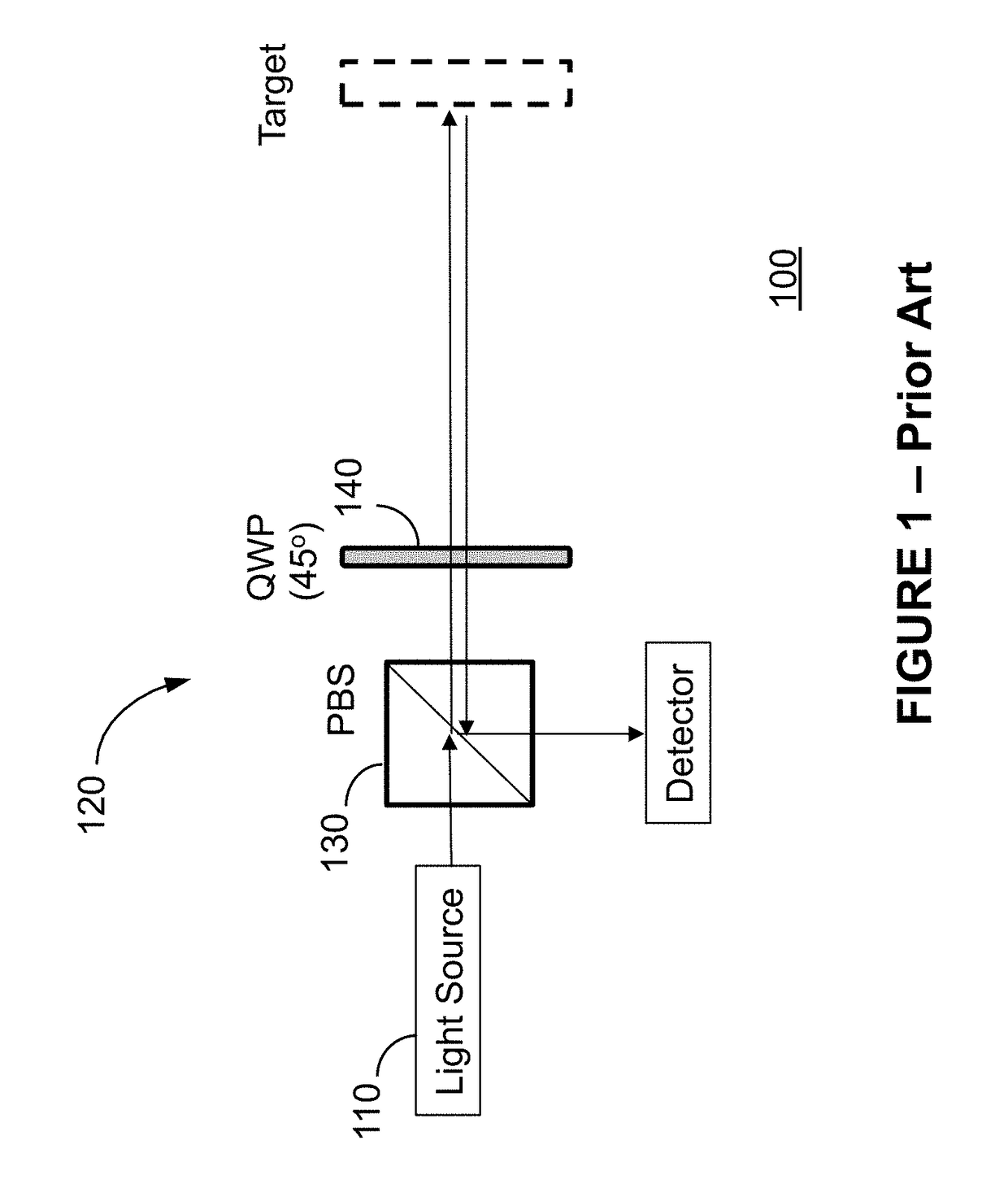
[0003] Various conventional transmitter / receiver systems, including, but not limited to laser radar systems, employ circular polarization to improve, optimize, and / or maximize an optical efficiency of such systems. FIG. 1 illustrates a conventional configuration of a transmitter / receiver system 100 incorporating a circular polarizer...

Examples

Embodiment Construction

[0016]Chirped lidar systems employ two or more laser sources to provide chirped lidar signals. These chirped lidar signals, when incident upon and reflected back from a point on a target, may be detected and used to determine a range and an instantaneous Doppler velocity of the point on the target. Such a lidar system is available from Digital Signal Corporation of Chantilly, Va., and is described in its U.S. Pat. No. 7,511,824, entitled “Chirped Coherent Laser Radar System and Method,” which issued on Mar. 31, 2009. The foregoing patent is incorporated herein by reference as if reproduced below in its entirety.

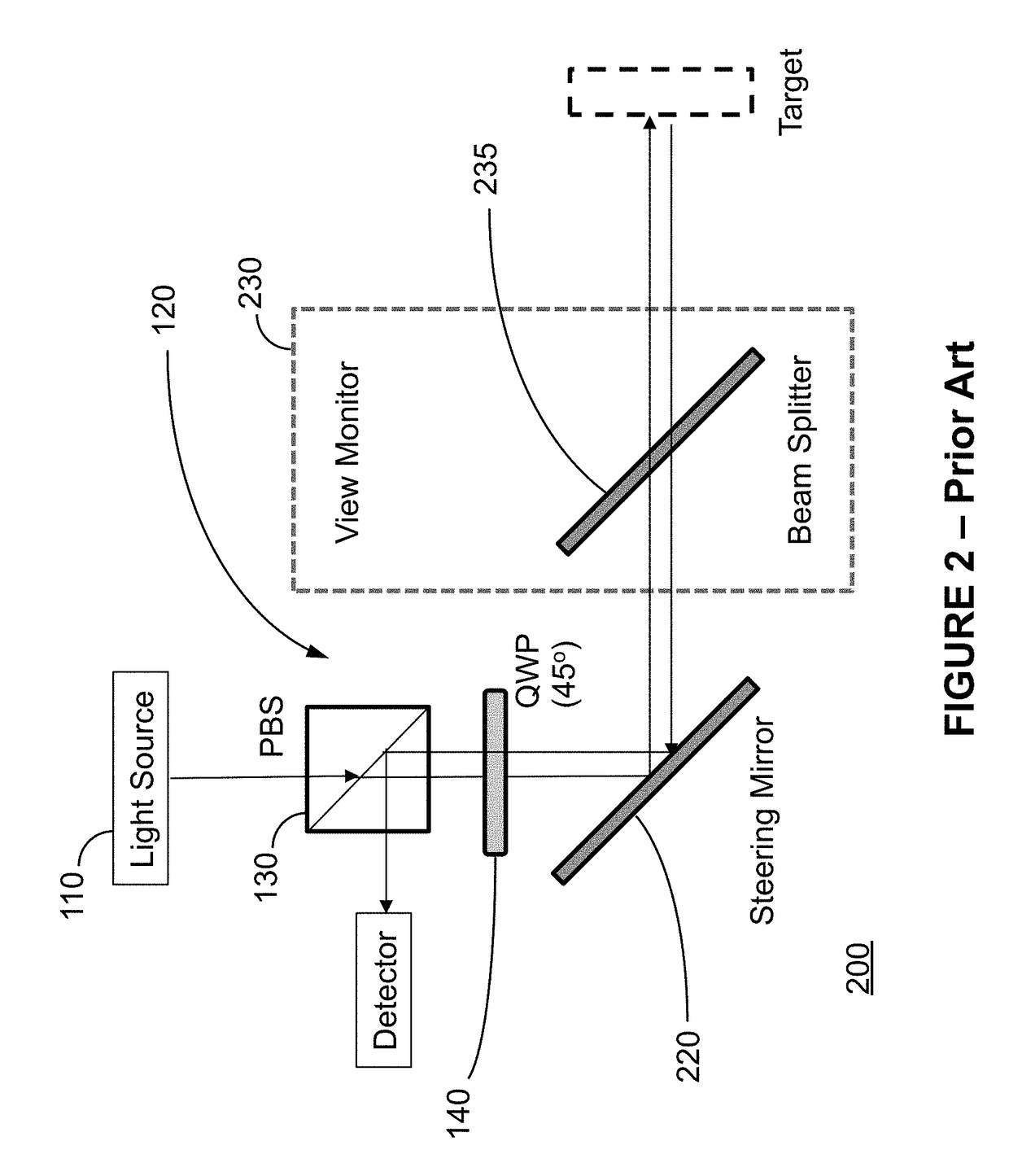
[0017]The lidar system referenced above (which may be considered a transmitter / receiver for purposes of this description) employs linear polarization for the optical path comprising a majority of the optical components and fibers (i.e., fiber optics) and circular polarization for the optical path of free space from the lidar system to a target and back (i.e. free-space path)....