Electronic baggage stowage system and methods

US20180086464A1Active Publication Date: 2018-03-29AIRBUS OPERATIONS GMBH
9 Cites 11 Cited by

Patent Information

Authority / Receiving Office
US · United States
Current Assignee / Owner
Publication Date
2018-03-29

Smart Images

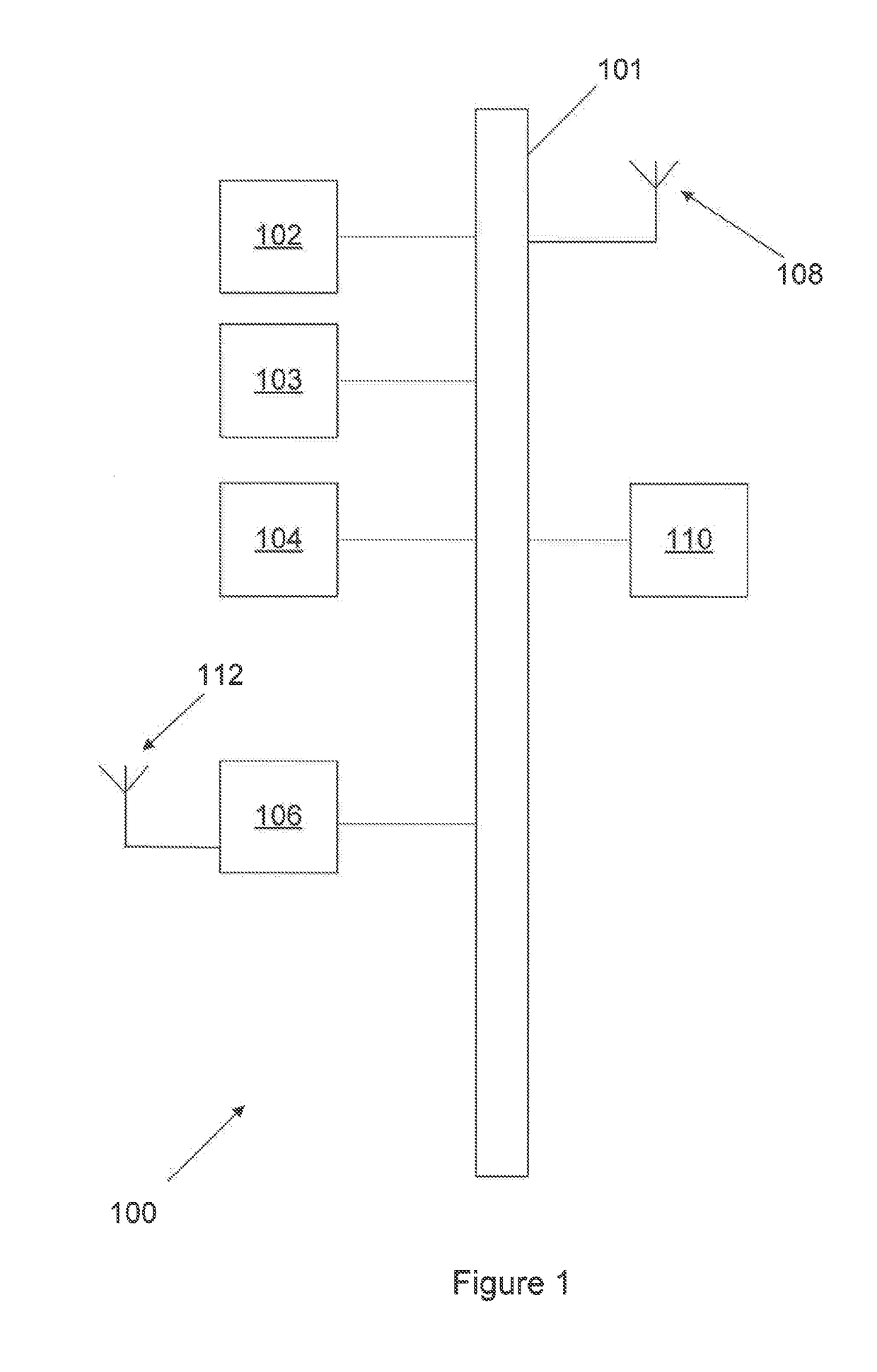
  • Figure 1
    Figure 1
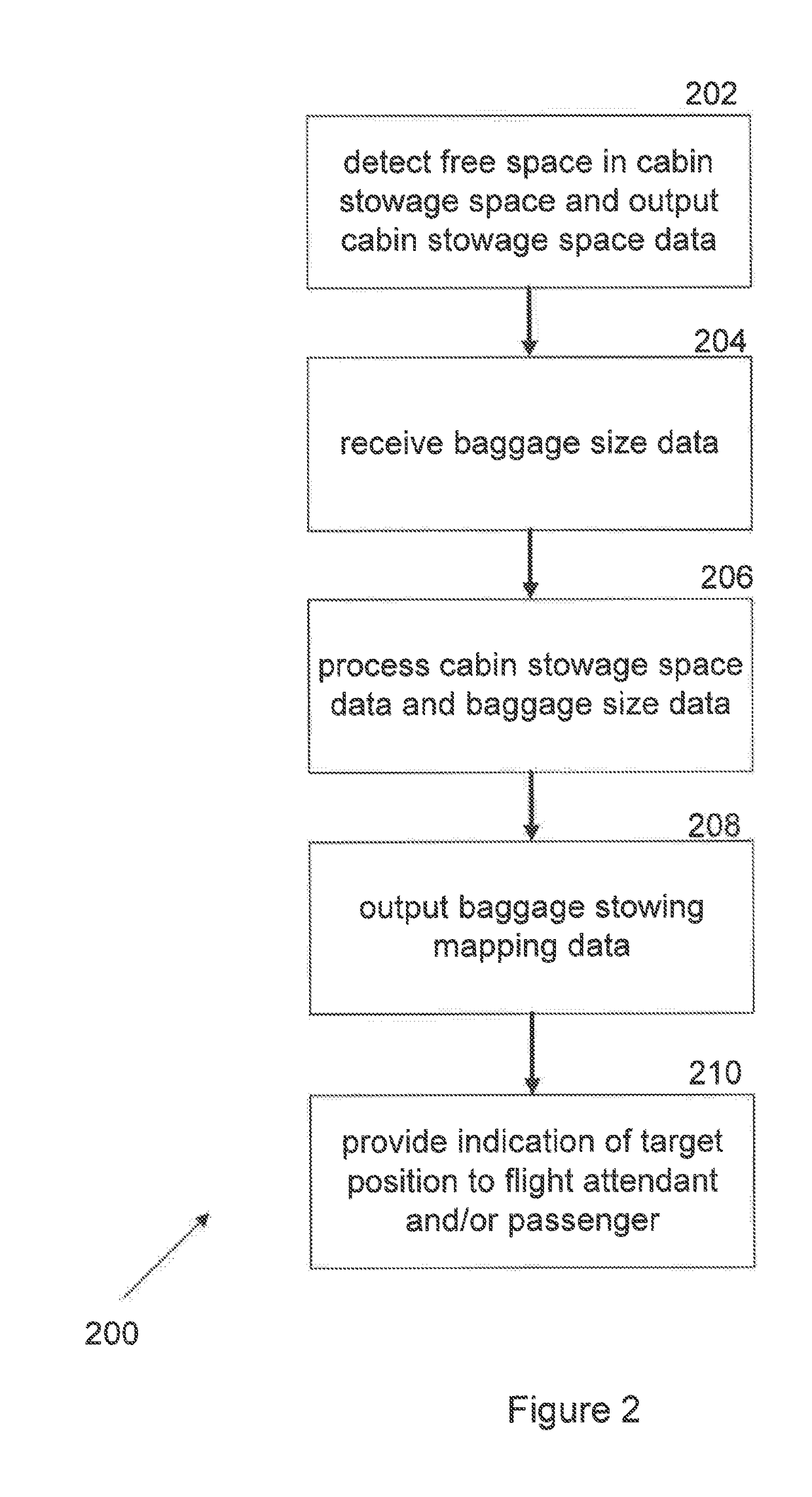
  • Figure 2
    Figure 2
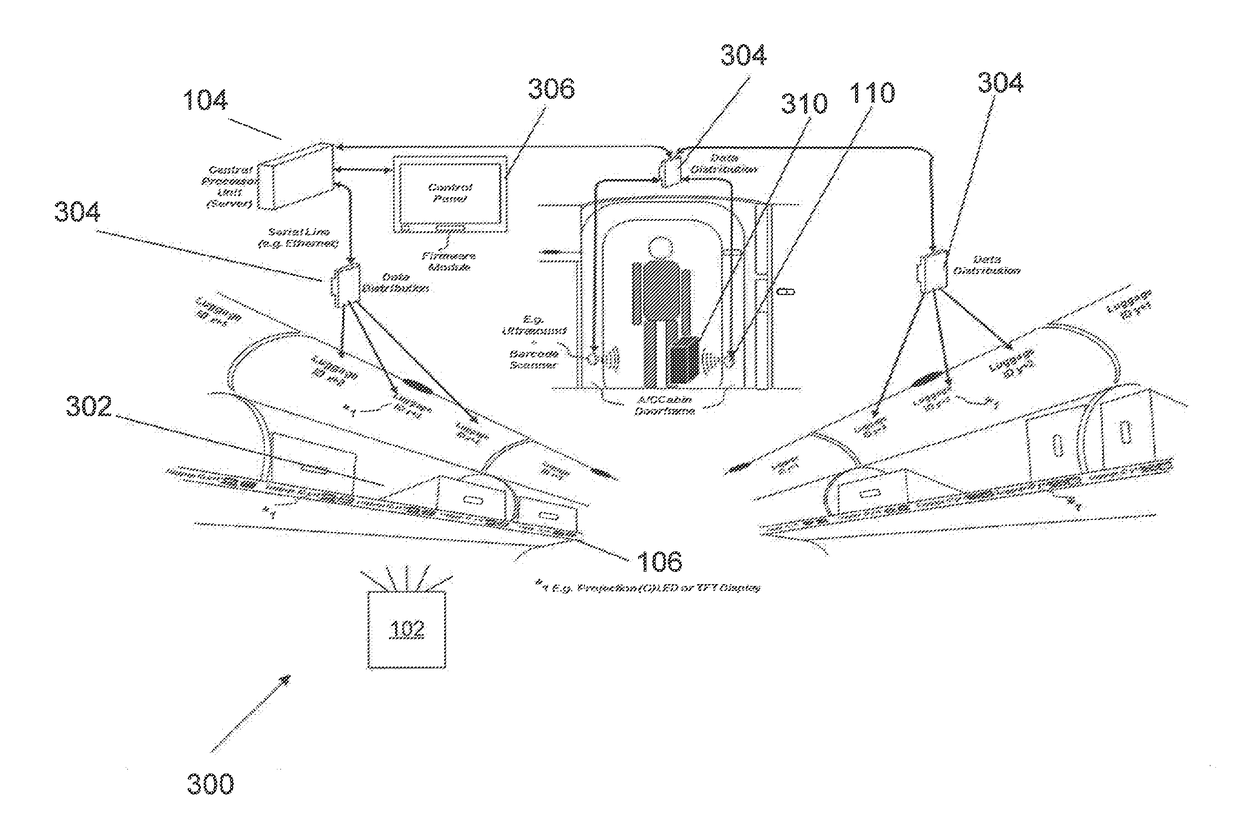
  • Figure 3
    Figure 3
Patent Text Reader

Abstract

An electronic baggage stowage system for an aircraft comprising a first detector to detect free space in a cabin stowage space, wherein the first detector is configured to output cabin stowage space data based on the detection, a processing unit communicating with the first detector, wherein the processing unit is configured to process the cabin stowage space data, receive and process baggage size data indicating the size of one or more baggage items, and output baggage stowage mapping data in response to the processing of the cabin stowage space data and the baggage size data. The baggage stowage mapping data indicates one or more target positions in the cabin stowage space at which the baggage items are to be placed. An indicator communicates with the processing unit to provide the indication of the one or more target positions to a flight attendant or passenger of the aircraft.
Need to check novelty before this filing date? Find Prior Art

Description

CROSS-REFERENCES TO RELATED APPLICATIONS

[0001] This application claims the benefit of the German patent application No. 10 10 2016 218 307.9 filed on Sep. 23, 2016, the entire disclosures of which are incorporated herein by way of reference.FIELD OF THE INVENTION

[0002] This invention generally relates to electronic baggage stowage systems and methods allowing, in particular, for an electronically supported optimization of the boarding process by passenger guidance in an aircraft.BACKGROUND OF THE INVENTION

[0003] Passengers, for example of aircraft, may generally have to search a stowage space for their baggage, such as cabin or hand baggage, during boarding of the aircraft cabin. Passengers who are seated in the last few rows may find all overhead bins or compartments occupied when arriving at their seat. In this scenario, the passenger may have to go back against the stream of passengers entering the aircraft to find a free stowage space. This may lead to a jamming of the aisle and sl...

Examples

Embodiment Construction

[0041]In this example, a surveillance mechanism for the cabin baggage stowage space in an aircraft is outlined.

[0042]FIG. 1 shows a schematic block diagram of an electronic baggage stowage system 100 according to embodiments as described herein.

[0043]In this example, the electronic baggage stowage system 100 comprises a detector 102. The surveillance mechanism is realized in here by a video camera, ultrasonic sensors or laser scanners. Free space is measured in this example by detector 102 and the available volume of the free space is determined. The detection of free space using detector 102 is performed continuously during the boarding process. The information is then available on-board the aircraft and can be provided to the processing unit 104 with which detector 102 is in communication via an electronic connection 101. As outlined above, the component of the electronic baggage stowage system may also communicate with each other wirelessly.

[0044]In this example, the electronic b...