

Simultaneous visible and fluorescence endoscopic imaging
a fluorescence and visible light technology, applied in fluorescence/phosphorescence, instruments, television systems, etc., can solve the problems of fibers being prone to breakage, physical limitations on image quality, and limited image resolution
- Summary
- Abstract
- Description
- Claims
- Application Information
AI Technical Summary
Benefits of technology
Problems solved by technology
Method used
Image

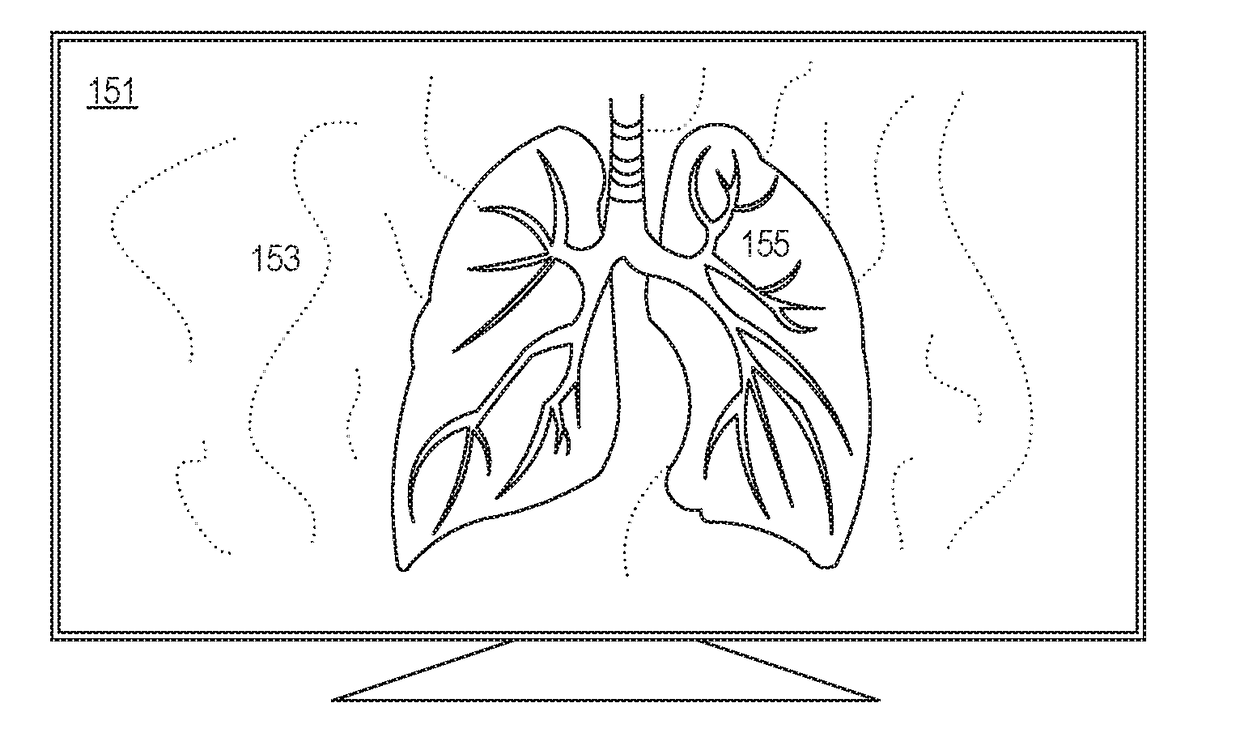
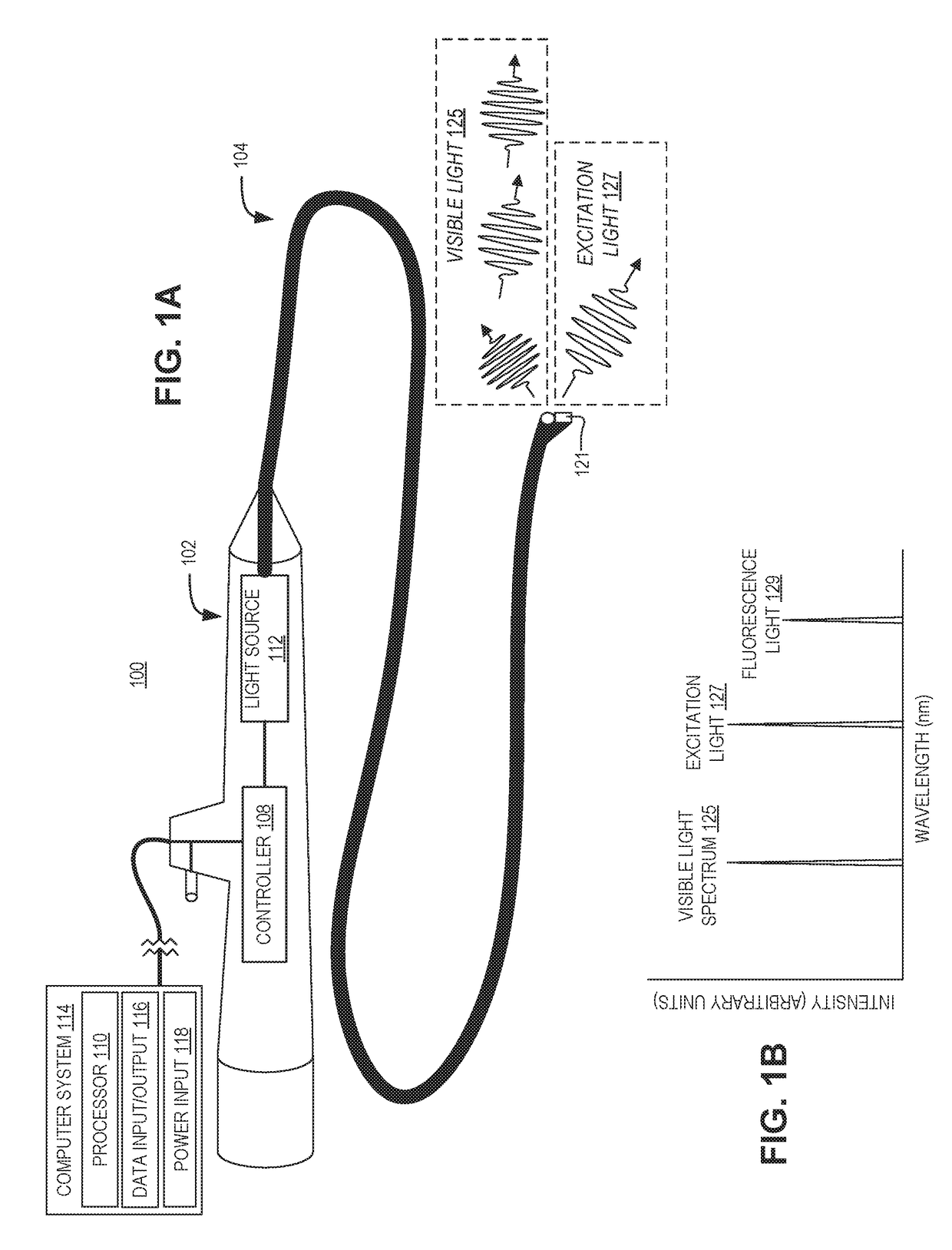
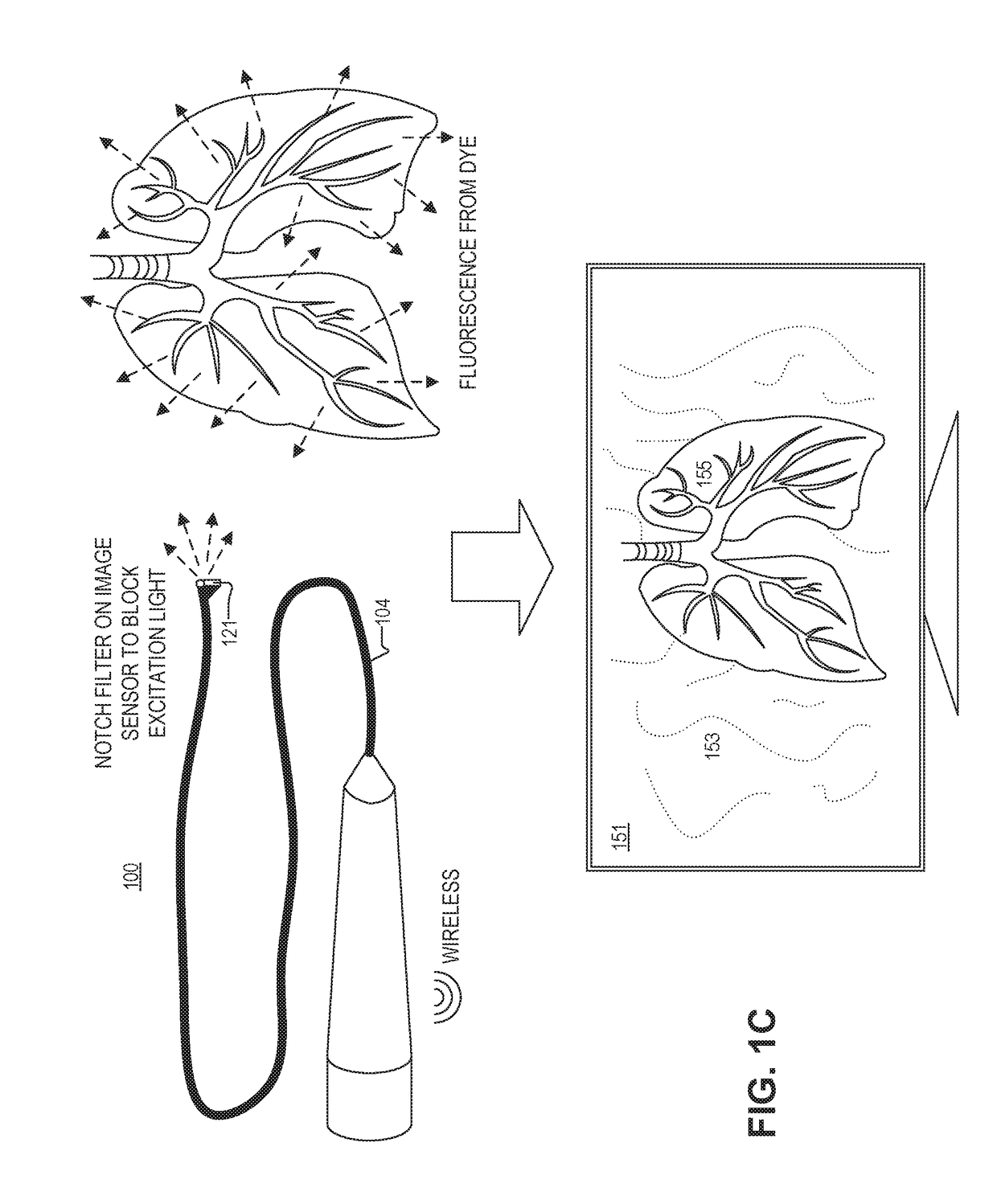
Examples
Embodiment Construction
[0012]Embodiments of a system and method for simultaneous visible and fluorescent endoscopic imaging are described herein. In the following description numerous specific details are set forth to provide a thorough understanding of the embodiments. One skilled in the relevant art will recognize, however, that the techniques described herein can be practiced without one or more of the specific details, or with other methods, components, materials, etc. In other instances, well-known structures, materials, or operations are not shown or described in detail to avoid obscuring certain aspects.
[0013]Reference throughout this specification to “one embodiment” or “an embodiment” means that a particular feature, structure, or characteristic described in connection with the embodiment is included in at least one embodiment of the present invention. Thus, the appearances of the phrases “in one embodiment” or “in an embodiment” in various places throughout this specification are not necessarily...
PUM
 Login to View More
 Abstract
Description
Claims
Application Information
 Login to View More