

Adaptive Topology Optimization For Additive Layer Manufacturing
a topology optimization and additive layer technology, applied in multi-objective optimization, design optimisation/simulation, instruments, etc., can solve the problems of increasing the computational resources necessary for implementing cae-fem design, increasing the computational time, and exceeding the computational capacity without usefulness, so as to reduce the computational cost
- Summary
- Abstract
- Description
- Claims
- Application Information
AI Technical Summary
Benefits of technology
Problems solved by technology
Method used
Image

Examples
Embodiment Construction
[0013]The present invention will now be described in detail with reference to the accompanying drawings to enable those skilled in the art to embody and use it. Various modifications to the described embodiments will be immediately appreciable to those skilled in the art, and the generic principles described herein can be applied to other embodiments and applications without departing from the scope of the present invention, as defined in the appended claims. Thus, the present invention is not intended to be limited to the disclosed embodiments, but is to be accorded the widest scope consistent with the principles and features described and claimed.
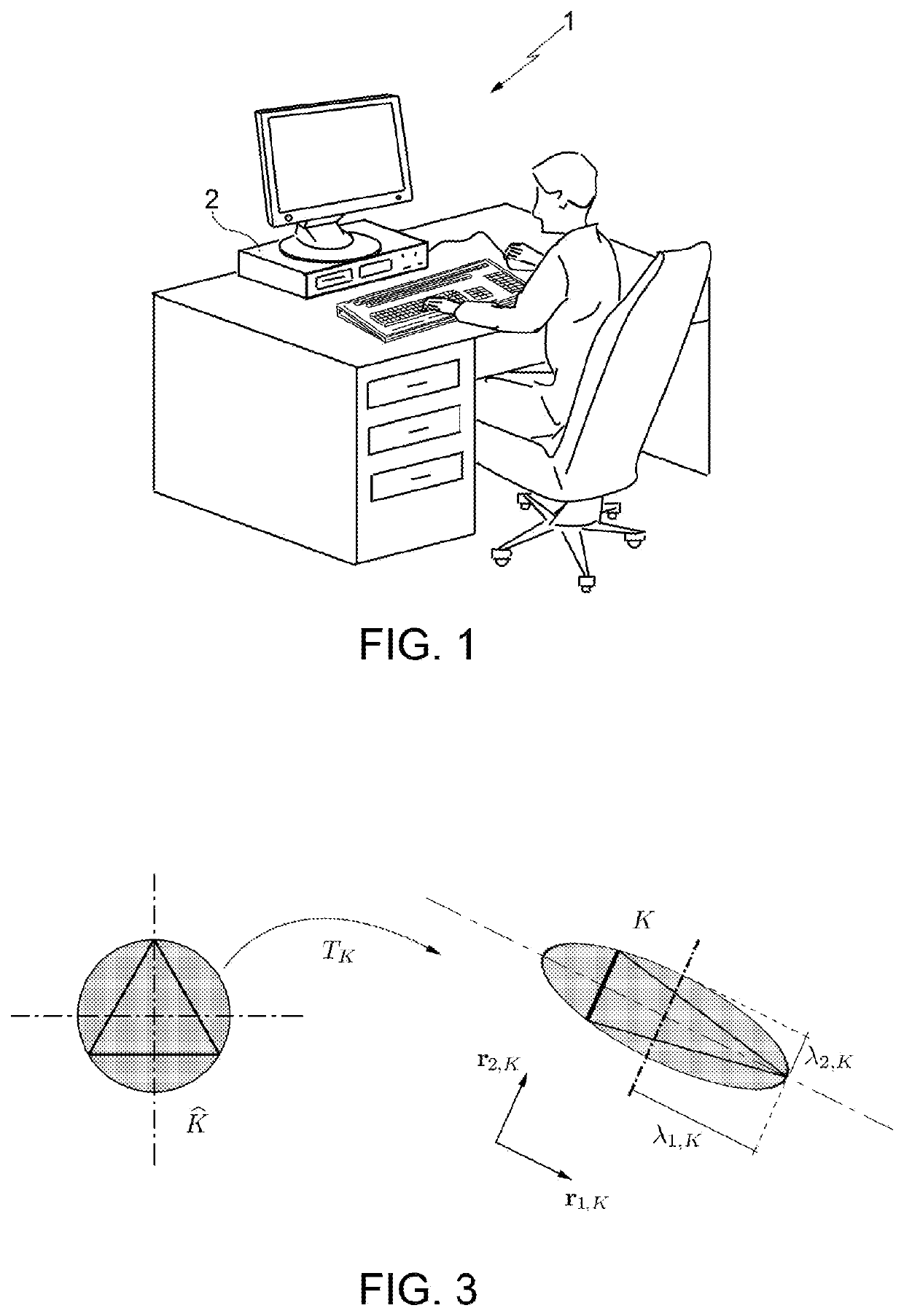
[0014]FIG. 1 schematically shows a computer-aided system, designated as a whole by reference number 1, for FEM-based structure design for subsequent additive layer manufacturing.
[0015]The computer-aided system 1 basically comprises a computer 2 with a user input device, in the example shown comprising a keyboard and a mouse, and a graphic...
PUM
 Login to View More
 Abstract
Description
Claims
Application Information
 Login to View More