
Lockable Spinal Implant
a spinal implant and locking technology, applied in the field of expandable spinal implants, can solve the problems of inability to expand and distract the end plates or fix the devices, inability to reliably improve the space for neural elements of existing static cages, and important and significant limitations of existing devices for interbody stabilization
- Summary
- Abstract
- Description
- Claims
- Application Information
AI Technical Summary
Benefits of technology
Problems solved by technology
Method used
Image

Examples
Embodiment Construction
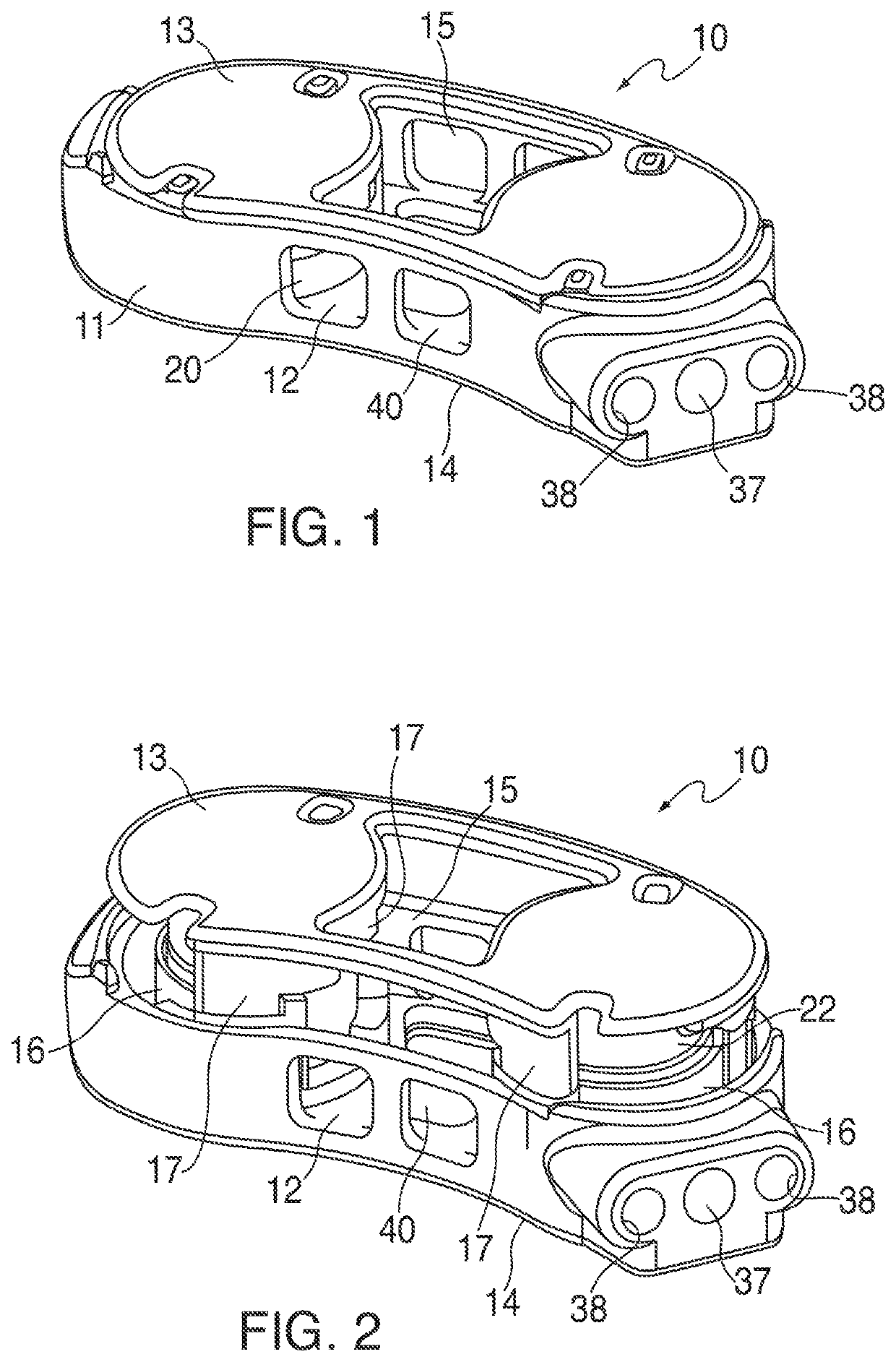
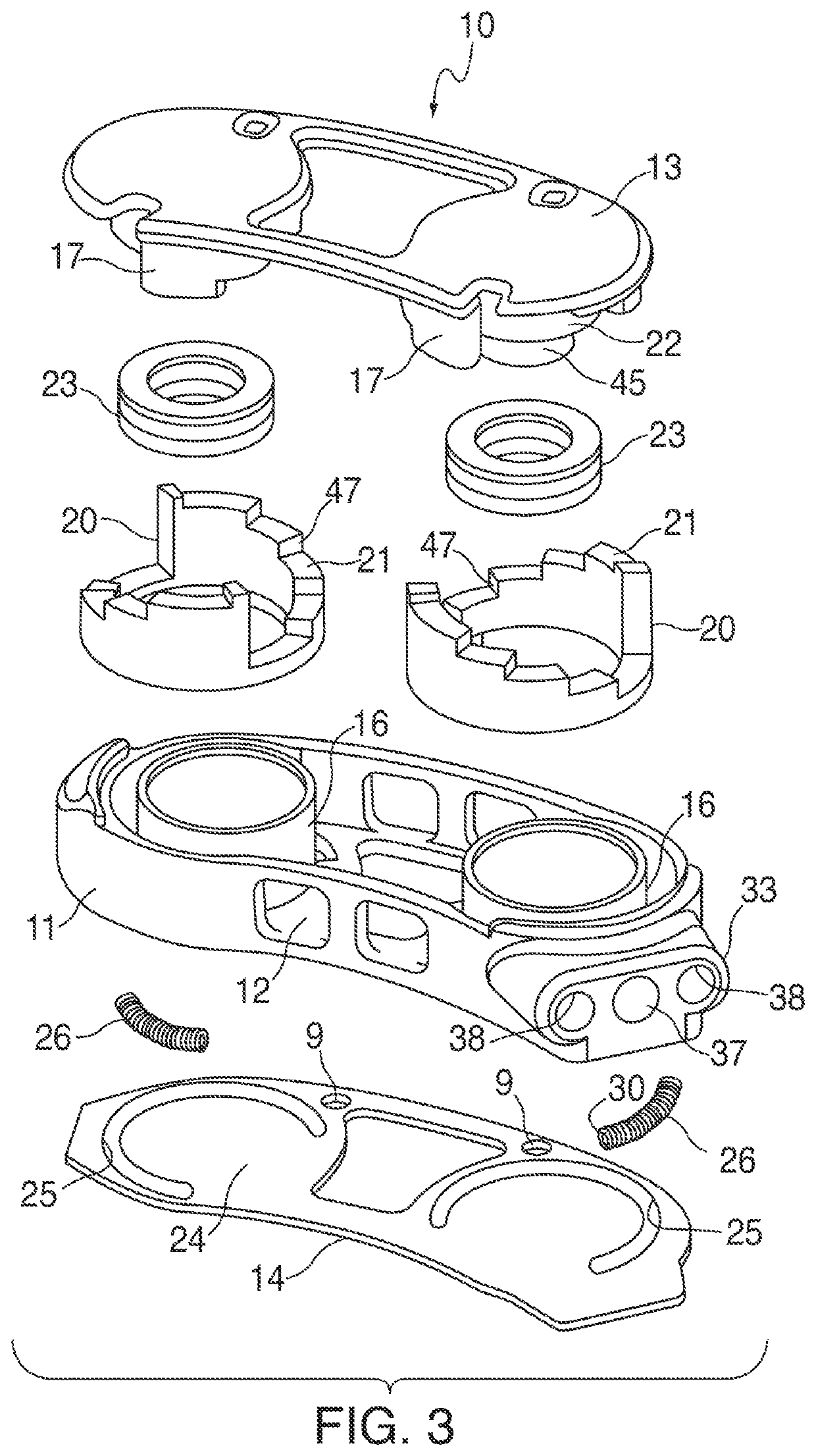
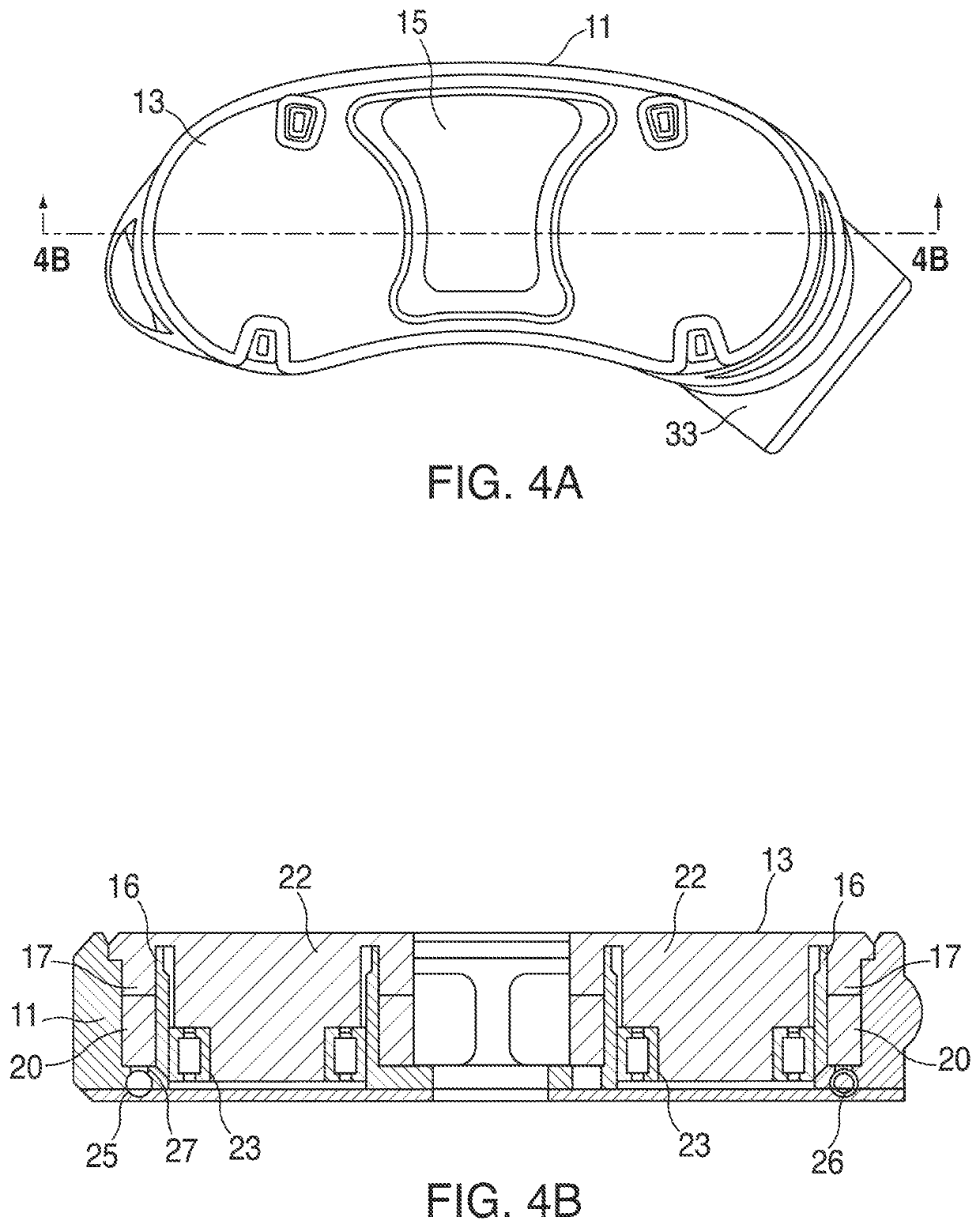
[0083]FIGS. 1-10B illustrate an example of an intervertebral implant 10, a Selectively Expandable Cage (SEC), having features of the invention. The implant 10 generally includes a housing 11, a housing base 12, an interlocking top end plate 13, a bottom end plate 14, an interior cavity 15 within the housing 11 and a pair of cylinders 16. The top and bottom end plates are the bone engaging members of the implant, providing surfaces for engaging vertebrae above and below the implant when placed in the patient. Upper lock supports 17 are attached to the underside of the top end plate 13 thus forming fixed lock members and have multi-stepped lower support surfaces 18 much like an inverted staircase. Lower lock supports 20, having multi-stepped upper support surfaces 21 surround cylinders 16 much like an upright staircase. The multi-stepped support surfaces form the locking surfaces of the lock supports. Pistons 22 are secured to the under surface of top end plate 13. Seal members 23 are...
PUM
| Property | Measurement | Unit |
|---|---|---|
| diameter | aaaaa | aaaaa |
| diameter | aaaaa | aaaaa |
| of rotation | aaaaa | aaaaa |
Abstract
Description
Claims
Application Information
 Login to View More