A color LCD device using this color filter suffers dark display due to the light absorbed by the color filter.
When a color filter is used in a reflection type LCD device which is not equipped with a back light, particularly, the light is absorbed twice, at the incident time and the outgoing time, so that the display becomes very dark.
It was therefore difficult to provide a reflection type color LCD device using a color filter.
1. The ECB type color LCD apparatus which uses conventional polarization plates suffers "white" becoming yellowish by the
birefringence effect of the liquid
crystal. To make this yellowish "white" to pure "white," a bluish polarization plate whose blue color is a complementary color to yellow may be used. Even with such a polarization plate, "white" still becomes yellowish. Moreover, the display of "black" becomes bluish, not dark.
2. Since the conventional ECB type color LCD apparatus cannot display pure and bright "white" and pure and dark "black," the
display contrast is low. Further, this conventional ECB type color LCD apparatus cannot clearly display white and black, which are the basic display colors, and three primary colors of red (R), green (G) and blue (B) with high purities.
3. When a
voltage is applied between the electrodes, the areas around the electrodes (non-display areas) show electro-optical responses different from those of the areas which display colors in accordance with the applied
voltage. The display colors of the non-display areas therefore differ from the display colors of the
electrode areas (display areas), thus lowing the purities of the display colors and the
display contrast. To overcome this problem, a black
mask is formed on the common electrodes (in the case of an
active matrix LCD device) to shield the display of the non-display areas. In this case, however, possible misalignment of the upper and lower substrates may cause the black
mask to cover the display areas to thereby reduce the effective area of the display areas, thus reducing the brightness of the displayed image.
4. As the display color and
gradation (brightness) simultaneously change with respect to the applied
voltage in the conventional ECB type color LCD apparatus, it is difficult to ensure
gradation display and multi-color display. As a solution, an ECB type color LCD device and a monochromatic LCD device may be placed one on the other so that the light whose
gradation is obtained by the monochromatic LCD device is
colored by the conventional ECB type color LCD device, thus presenting gradation display for each color. Such a double LCD-device structure is complex and requires approximately two times the cost of a single LCD-device structure.
When the conditions come off the ranges, the display quality becomes poorer in the order of the contrast and then the display color as the degree of the deviation increases.
When the conditions come off the ranges, the display quality becomes poorer in the order of the contrast and then the display color as the degree of the deviation increases.
When the conditions come off the ranges, the display quality becomes poorer in the order of the contrast and then the display color as the degree of the deviation increases.
When the conditions come off the ranges, the display quality becomes poorer in the order of the contrast and then the display color as the degree of the deviation increases.


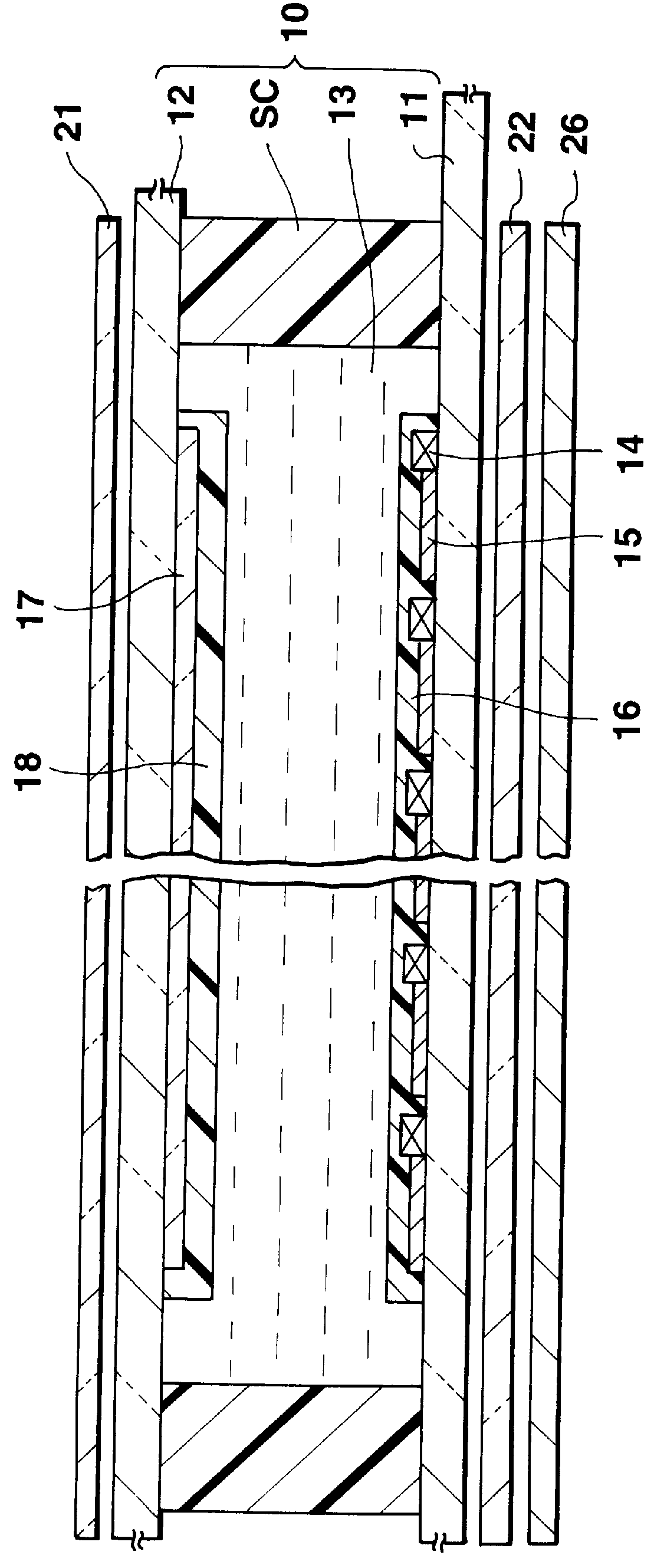
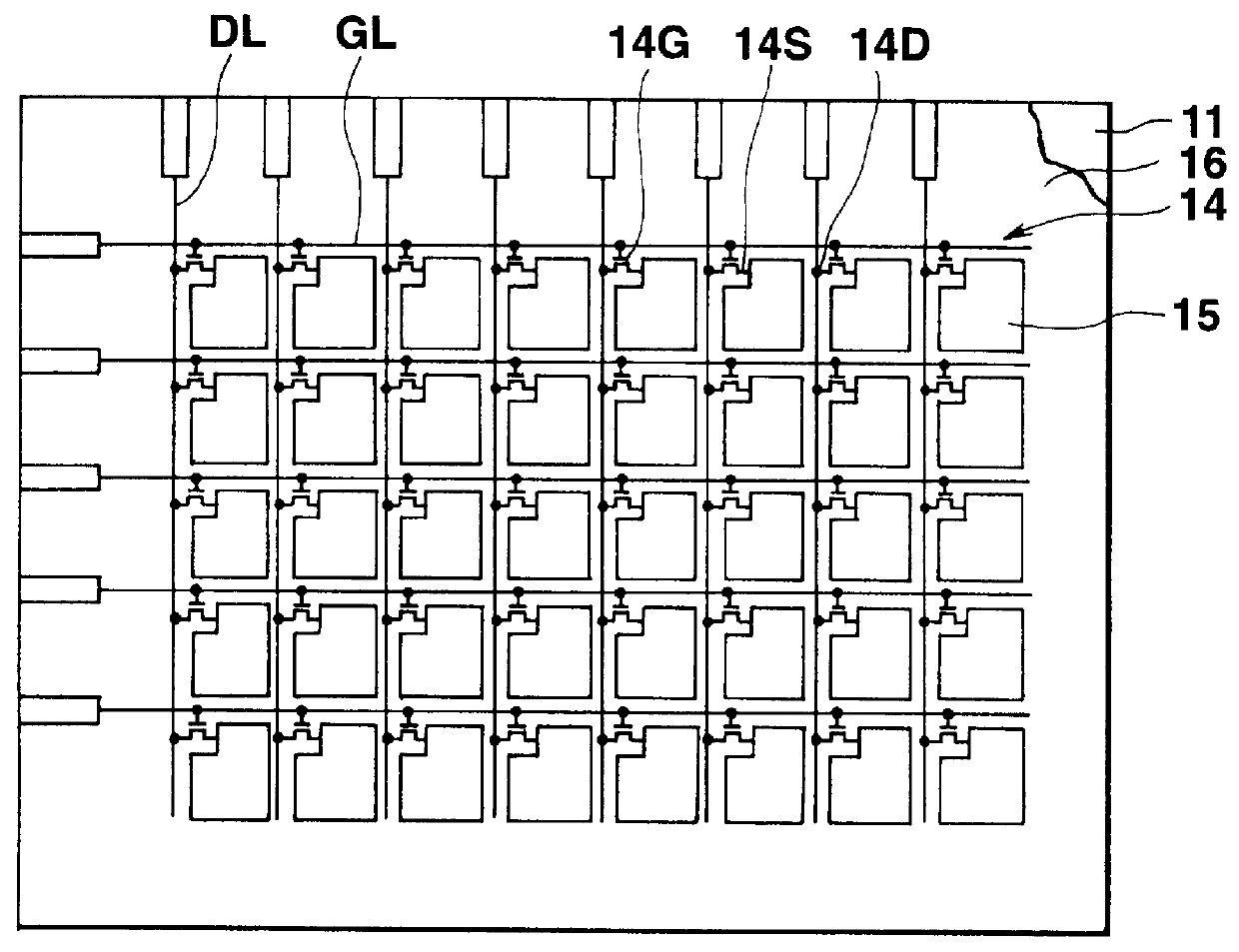
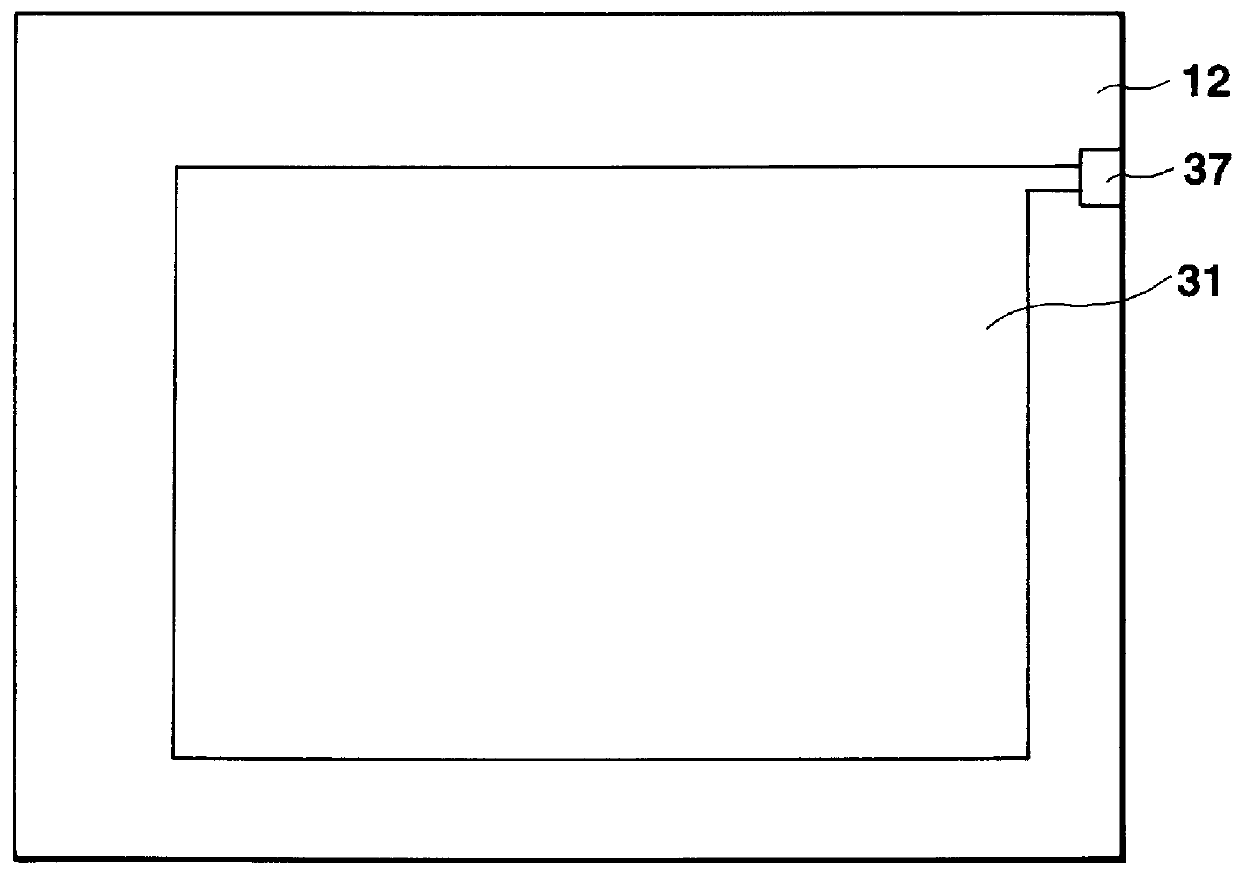
 Login to View More
  Login to View More