
Powered assisted liposuction and lipoinjection equipment
- Summary
- Abstract
- Description
- Claims
- Application Information
AI Technical Summary
Benefits of technology
Problems solved by technology
Method used
Image


Examples
Embodiment Construction
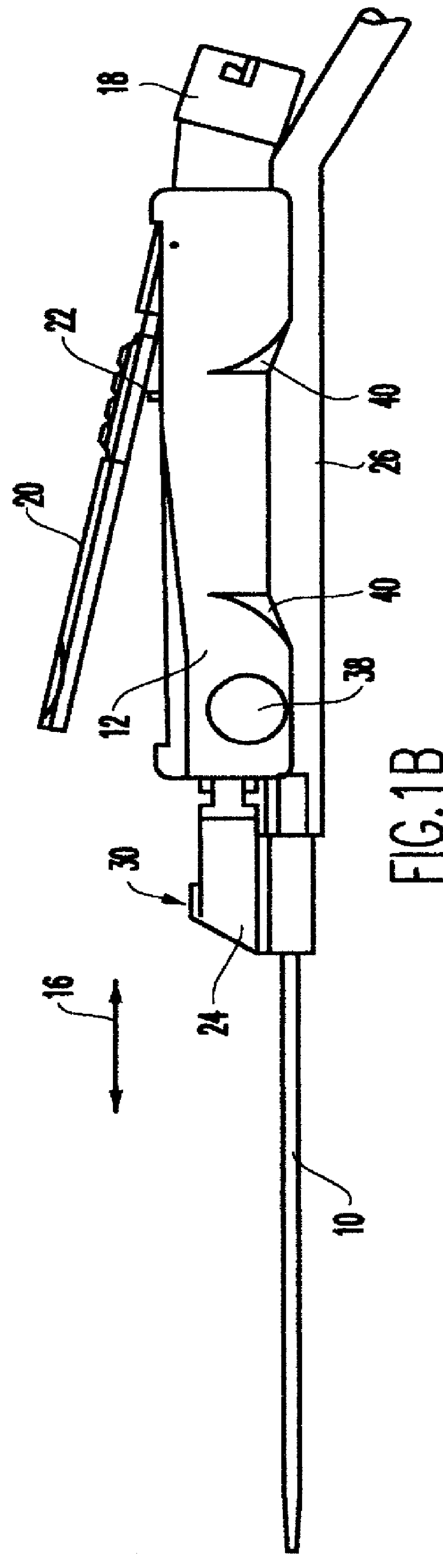
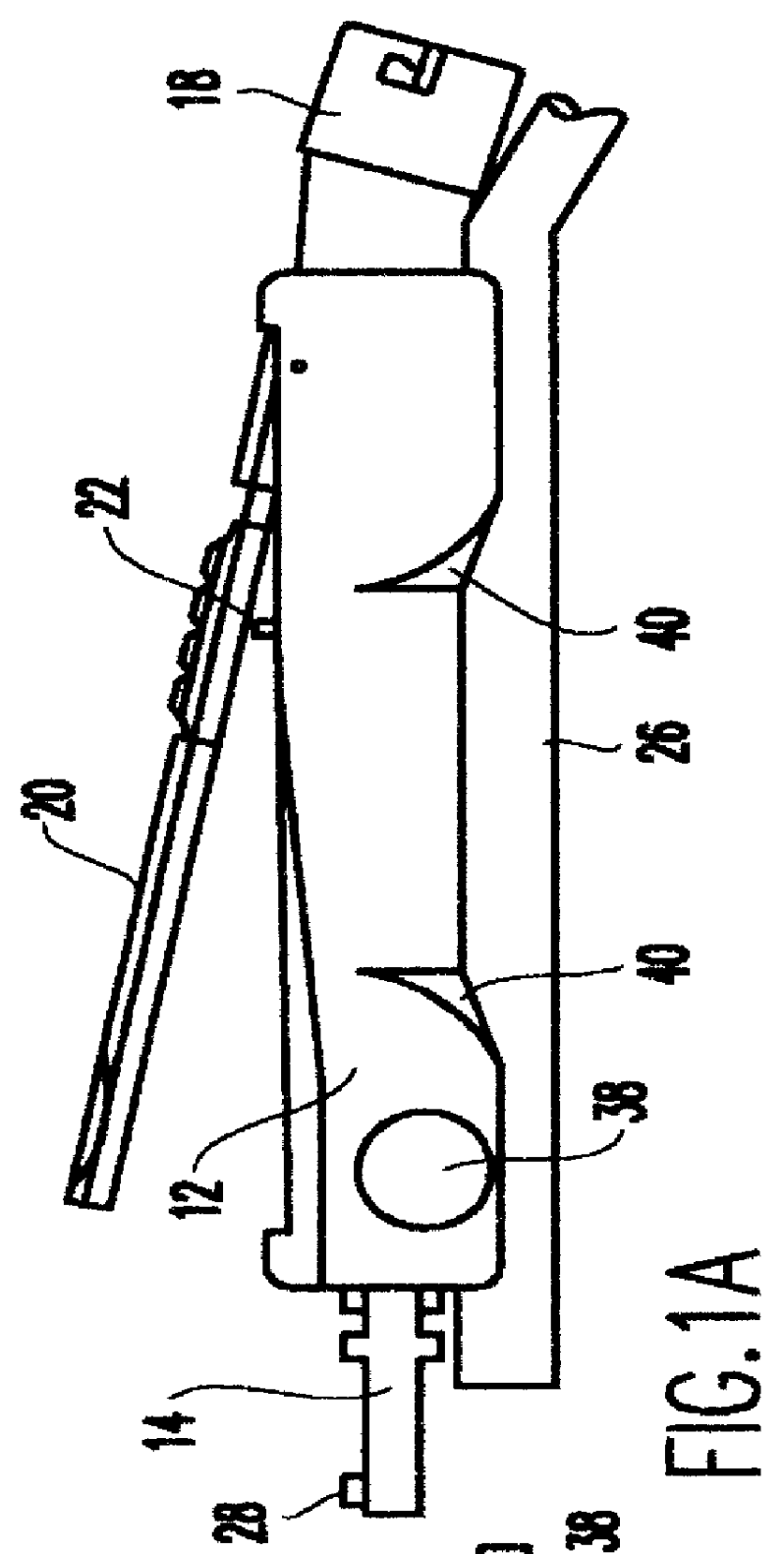
FIGS. 1a and 1b show the preferred embodiment of the power assisted liposuction / lipoinjection handpiece of the present invention. A cannula 10 is selectively connectable and disconnectable from a handle 12. The handle 12 includes a reciprocating member 14 which moves back and forth, as indicated by double headed arrow 16, in a reciprocating motion. In the preferred embodiment, the handle 12 includes a pneumatic drive assembly (not shown) and is connectable to a compressed air source by connector 18. An example of a suitable handle with internal pneumatic drive could be the MicroAire.RTM. 1400-100. However, it should be understood that any drive mechanism, including electrical, magnetic, etc., can be used to move the cannula 10 in a reciprocating motion 16.
The speed of reciprocation is preferably variable under the control of a lever 20 actuated button or switch 22, whereby complete depression of the lever 20 accelerates the reciprocation to its maximum speed, and partial depression ...
PUM
 Login to View More
 Abstract
Description
Claims
Application Information
 Login to View More