
Device and method for compensating non-uniformities in imaging systems
a technology of non-uniformity and imaging system, applied in the field of exposure and modulation, can solve the problems of non-uniformity in the light modulator, the inability of the human eye to detect the differences between adjacent pixels of photosensitive materials, and the inability to compensate, so as to achieve the effect of optimizing the quality of the exposur
- Summary
- Abstract
- Description
- Claims
- Application Information
AI Technical Summary
Benefits of technology
Problems solved by technology
Method used
Image

Examples
Embodiment Construction
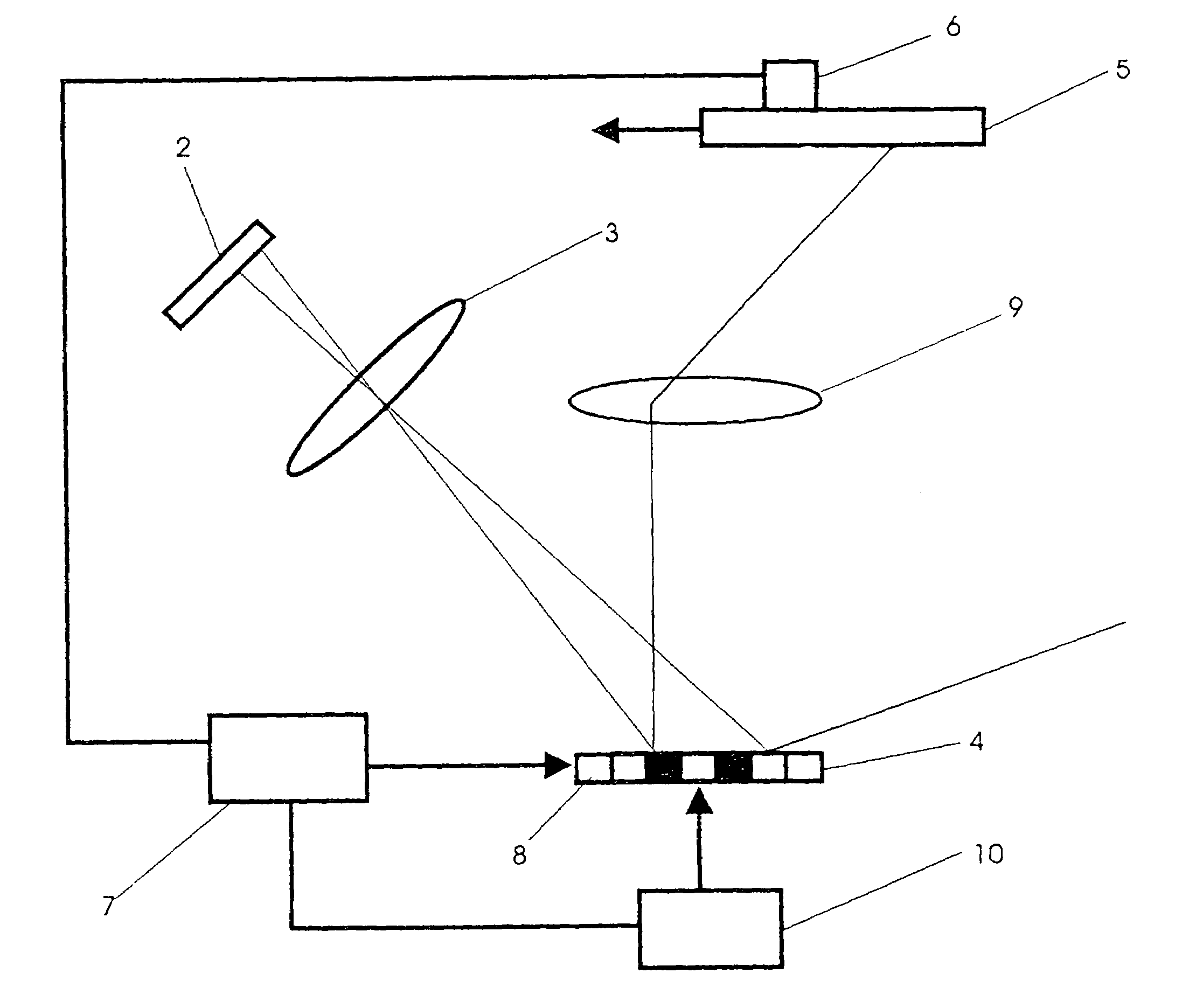
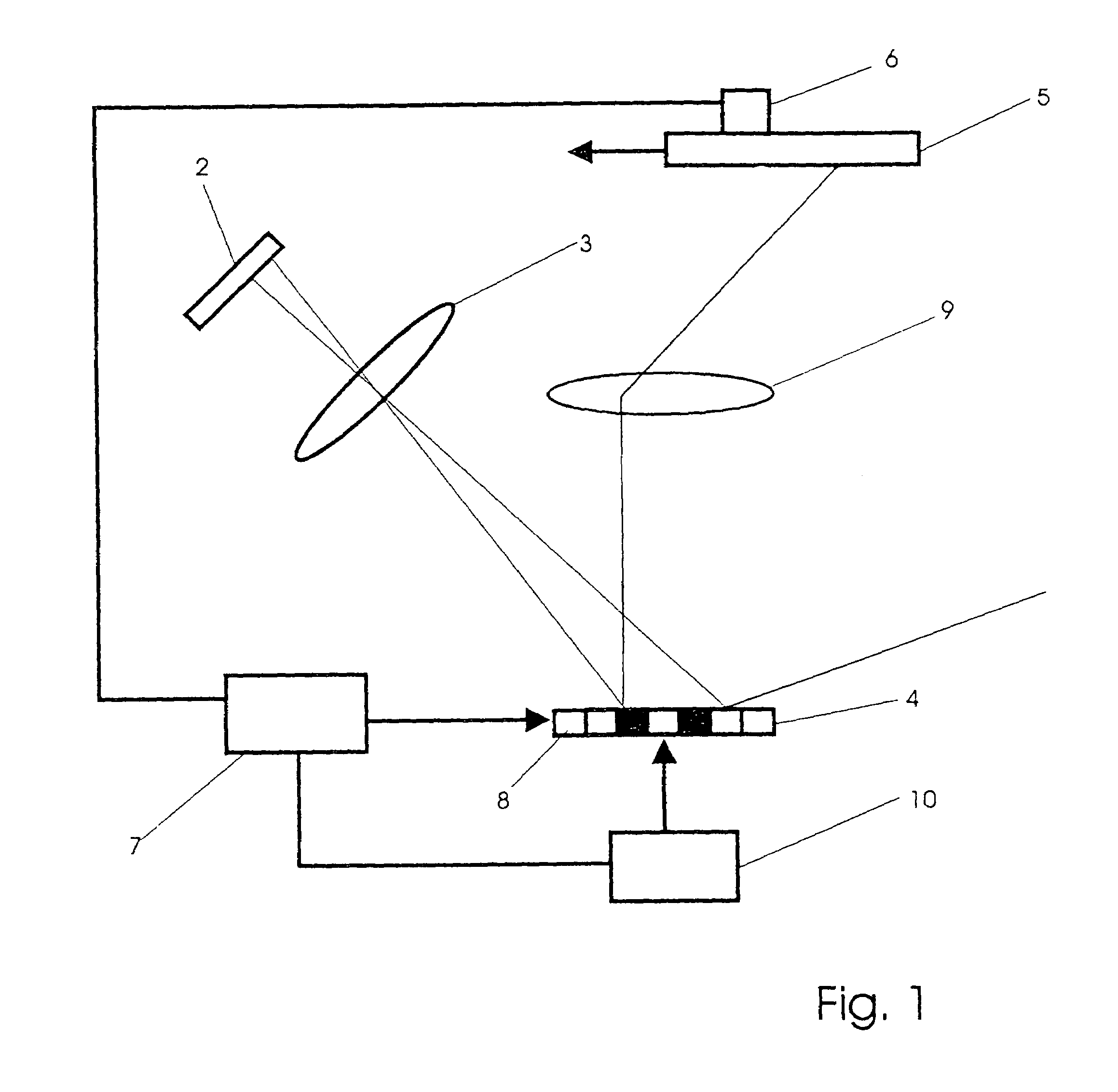
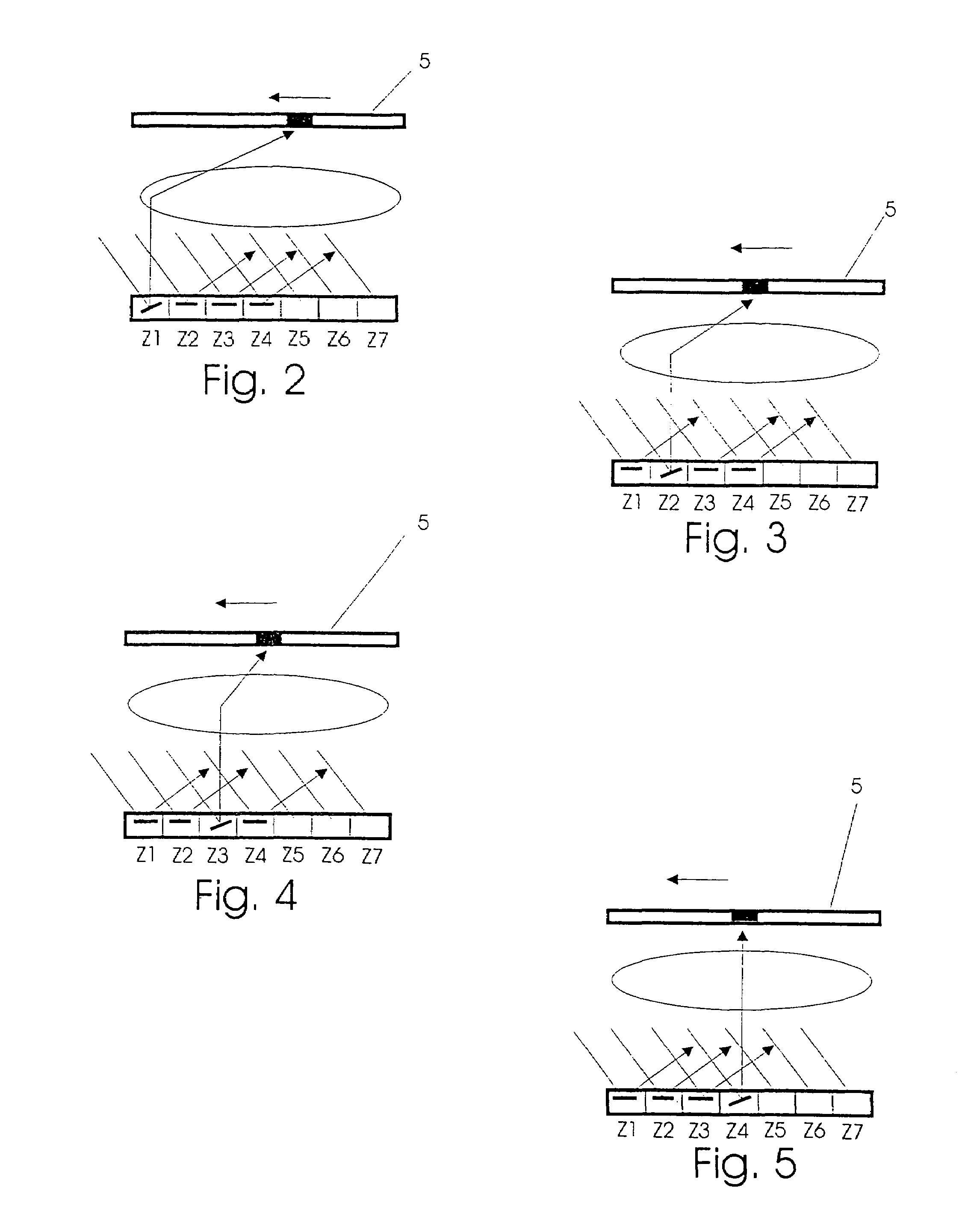
[0019]FIG. 1 is a schematic drawing of the exposure and modulation device 1: a light source 2 is imaged on a light modulator 4 using a first lens 3. The position of the photosensitive material 5 relative to the light modulator 4 is changed by a locator 6. The relative motion takes place in the direction of the cells of a row of the light modulator. Data patterns are transferred to the first column with cells 8 of the light modulator using a driver circuit 7. It is important that the transmission of the data pattern be synchronized with the motion of the photosensitive material 5. The data pattern transferred to the first column is moved to the next column in synchronization with the relative motion, so that the data pattern transferred to the photosensitive material 5 remains stationary on it. The light modulator 4 comprises a plurality of columns of cells 8. The data pattern transferred to the light modulator 4 comprises combinations of activated and non-activated cells 8. If the c...
PUM
| Property | Measurement | Unit |
|---|---|---|
| scrolling frequency | aaaaa | aaaaa |
| photosensitive | aaaaa | aaaaa |
| speed | aaaaa | aaaaa |
Abstract
Description
Claims
Application Information
 Login to View More