However, such applications suffer from slow transmission speeds and the need to build
wireless Internet infrastructure piece by piece with each new application.
While this kind of
software based implementation, crossing all general platforms such as NT and
Unix, is a straight forward and intuitive approach adapted to the infancy stage of an
industry standard such as WAP, it introduces many pitfalls and inefficiencies.
Alternatively, if such new functionalities are added to the
server, the
processing power and
server resources that they consume can cause the performance of the gateway to decrease.
Further, such standard or protocol-specific gateways are dedicated servers that are not fault-tolerant or load-balanced because it is generally not feasible or simple to provide multiple gateways and link them together with
fault tolerance or load balancing functionalities.
The above conventional gateway implementation is very rudimentary and represents the least
overall efficiency and the longest system latency, as will be explained in more detail below.
Such general purposed servers are loaded with heavy-weighted operating systems, which are not optimized for WAP related processes.
Further,
general purpose servers are bundled with other features such as supporting a keyboard,
CD ROM, video and audio cards and other non-network related peripherals, which burden the CPU with much system overhead.
Another drawback is that these servers are equipped with basic network adapters for implementing the network and
wireless data interfaces 402 and 404.
First, the adapter interrupts the host upon
receipt of
network data, and this interrupt causes two context switching operations on the host, a costly function in terms of CPU utilization.
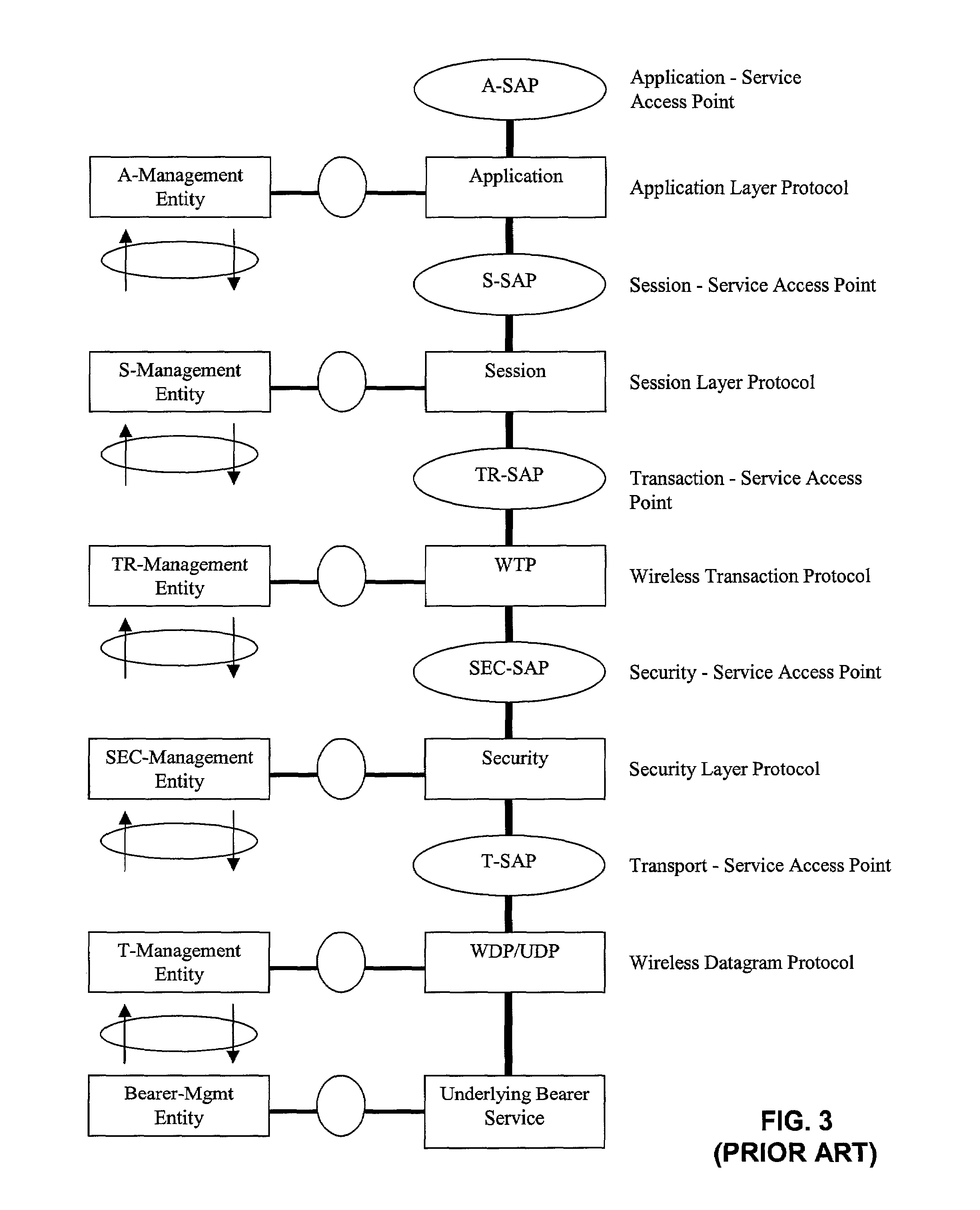
Depending on the implementation, this layering
processing may be very CPU intensive, and further, totally unnecessary given the purpose of WAP Gateway.
The problem with this approach is that every thread has a structure created by the OS and its
processing totally relies on the scheduling of the OS, i.e. the sequence of handling the requests.
A correspondingly large number of threads can be extremely resource hungry and can cause the host system to be unstable at best and to
crash at worst.
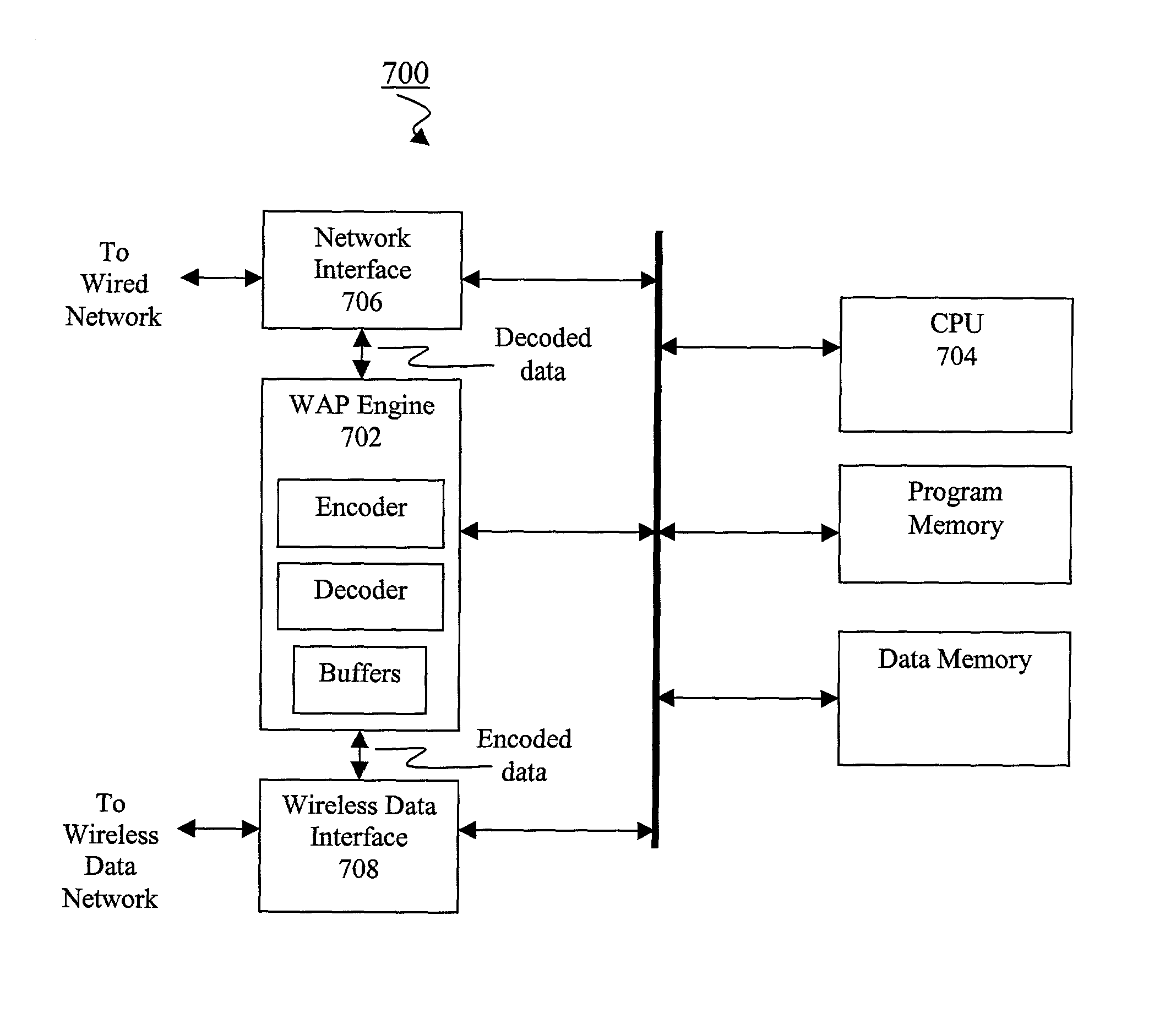
The conventional gateway illustrated in FIG. 4 suffers from even further drawbacks.
When a complete packet has been received, the
network interface interrupts the CPU, which causes the packet to be transferred to the
data memory via the
bus.
It should be apparent that the conventional gateway requires much CPU intervention and excessive transfer of data between elements and functions.
Moreover, the
scalability limitation of this design under
heavy traffic and processing loads render this architecture suitable for sites with only low traffic expectation and simple
traffic management requirements.
Not only is the design of FIG. 4 currently unsatisfactory for many purposes as illustrated above, it will grow more unsatisfactory in the future.
The current
wireless gateway architecture does not adequately address these requirements.



 Login to View More
  Login to View More