
Image processing
a technology of image processing and display, applied in the field of image processing, can solve the problem of not having a display such as it is presently availabl
- Summary
- Abstract
- Description
- Claims
- Application Information
AI Technical Summary
Benefits of technology
Problems solved by technology
Method used
Image

Examples
Embodiment Construction
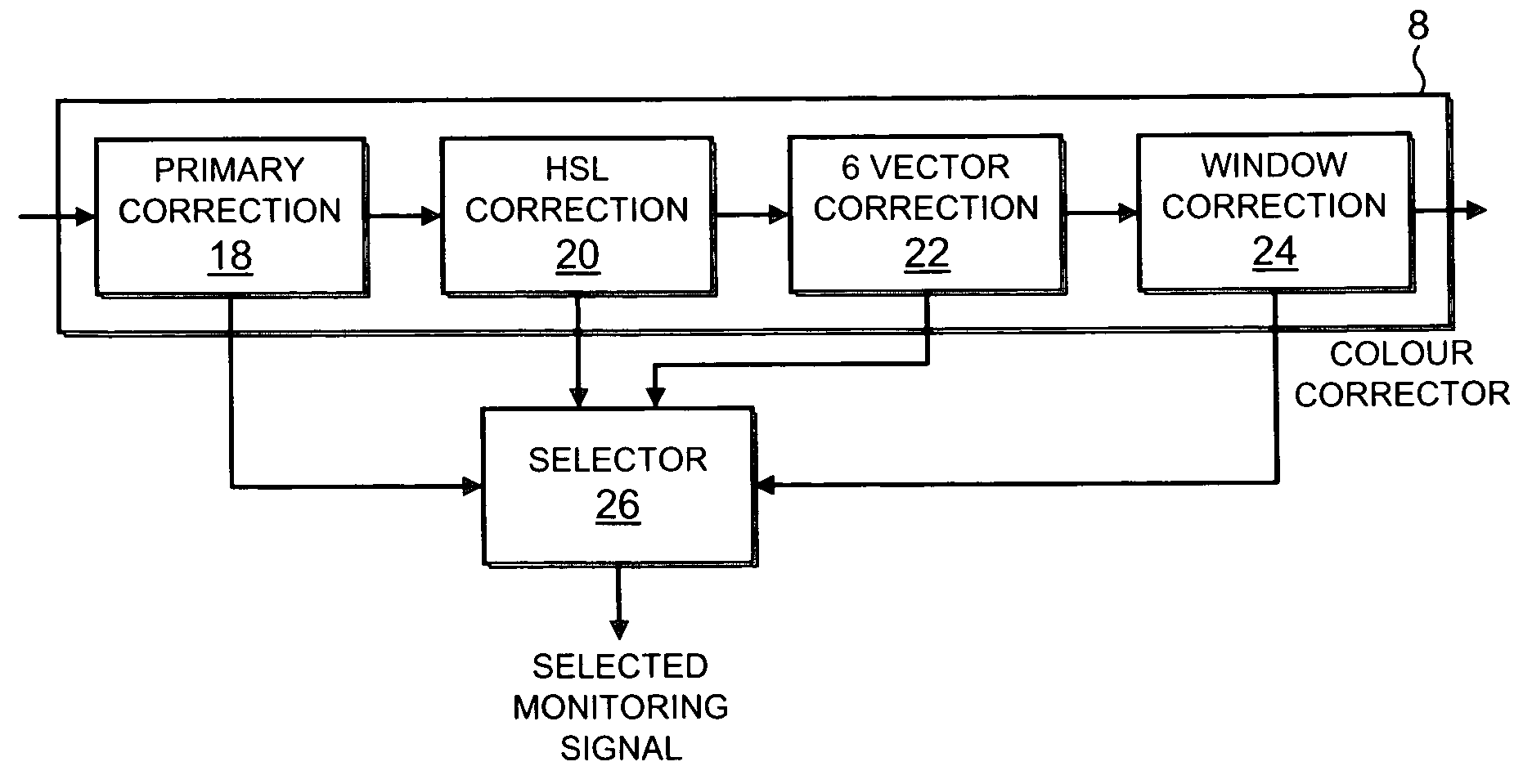
[0036]In one preferred embodiment, the system according to the invention might include a film scanning machine such as the ‘URSA’ produced by Rank Cintel Limited together with a ‘POGLE’ control unit and a ‘Megadef’ video processor provided downstream of the telecine to carry out additional appearance attribute corrections on the digital images obtained from the telecine machine.
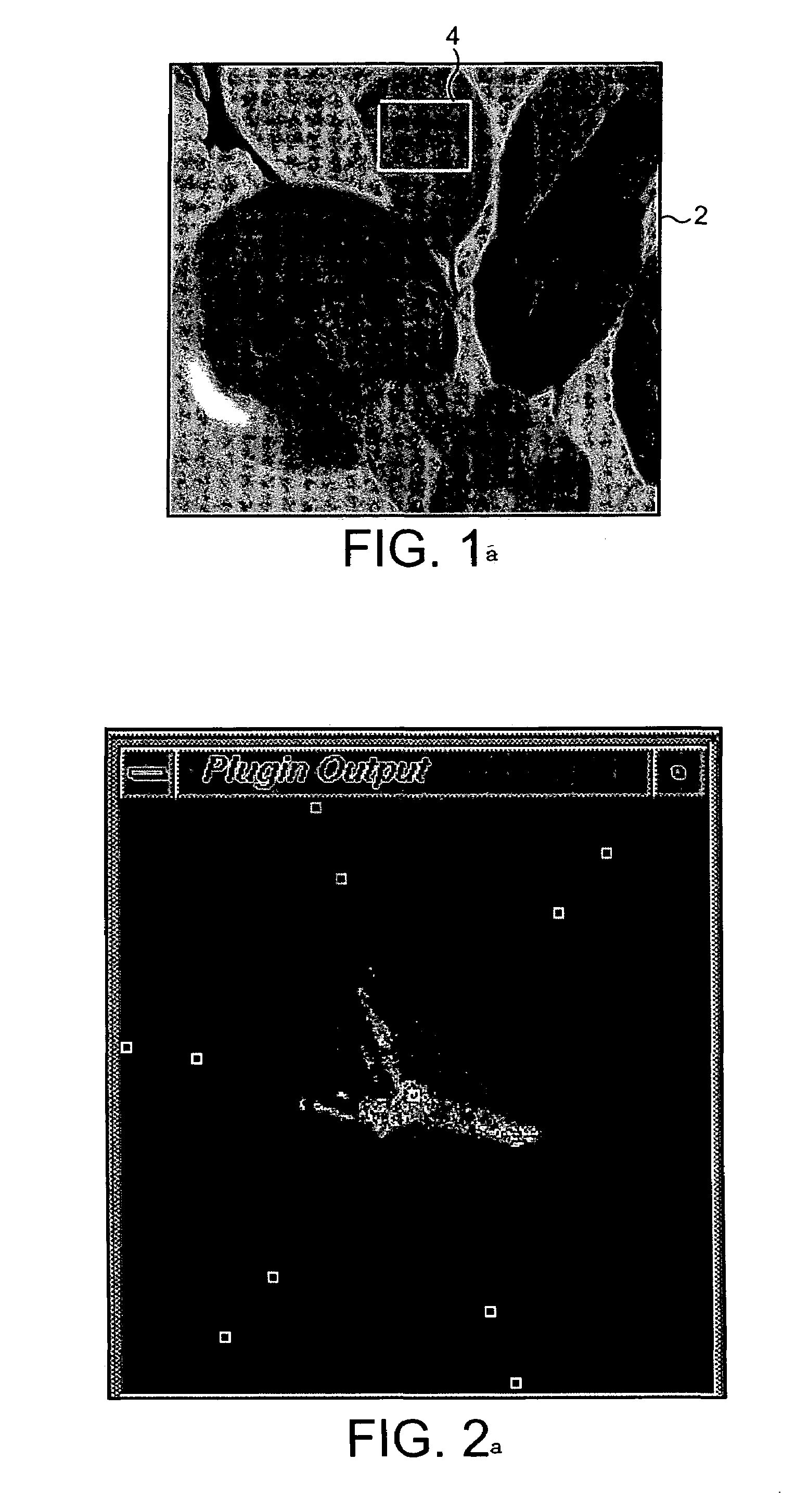
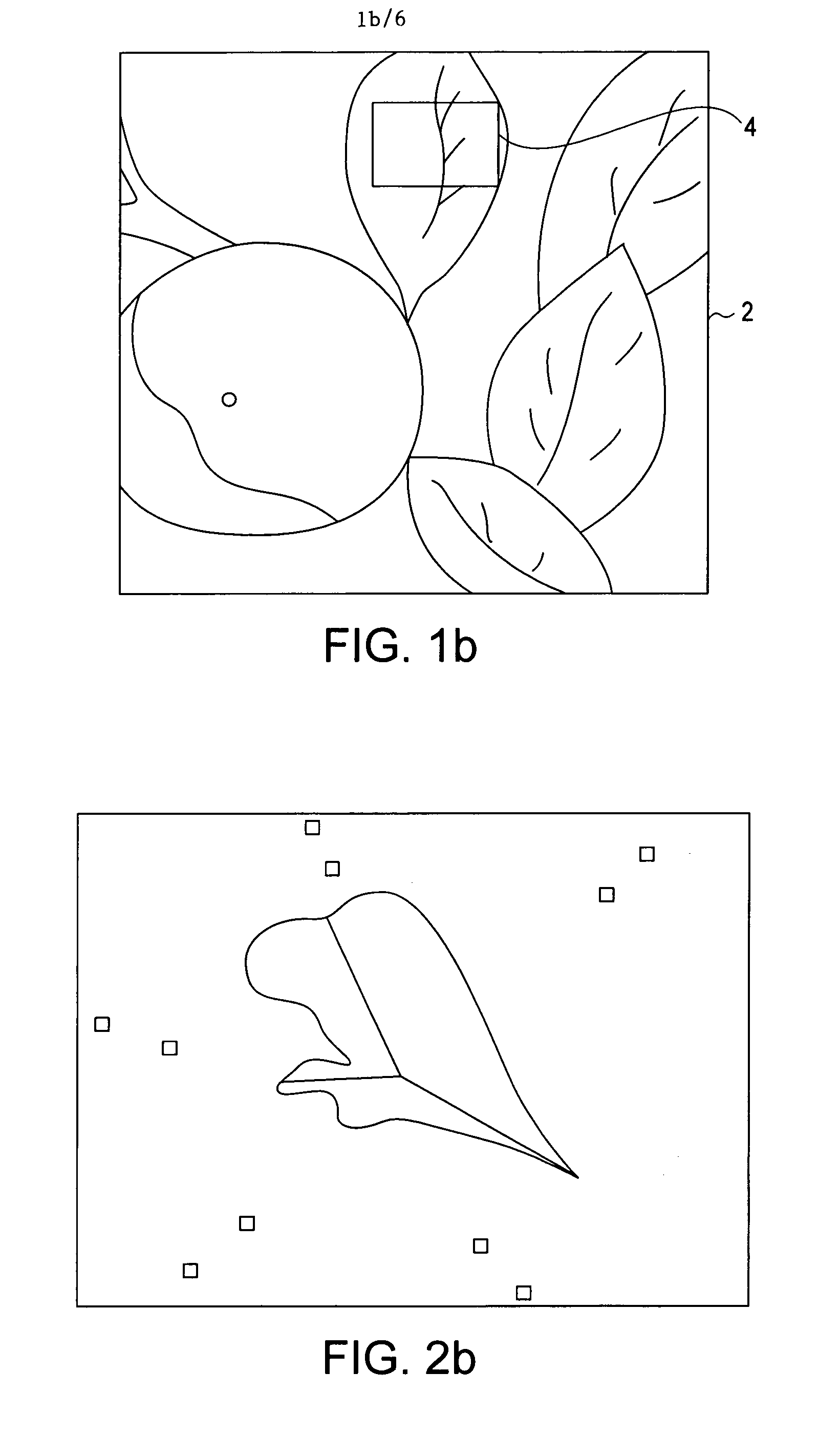
[0037]Software is built into the ‘POGLE’ control unit by means of which both waveform monitor and vectorscope type representations of the digital images obtained from the telecine machine are displayed on monitor screens. FIG. 1 shows an example of a digital image 2 obtained by scanning cinematographic film when displayed on a monitor screen. The vectorscope type representation of this image obtained by the ‘POGLE’ software is shown in FIG. 2. This image provides useful information to the operator when deciding how he wishes to alter the look of the image.
[0038]In order to select a region of the image which h...
PUM
 Login to View More
 Abstract
Description
Claims
Application Information
 Login to View More