

Process for purifying antibody
a technology of purification process and antibody composition, which is applied in the direction of antibody medical ingredients, instruments, peptides, etc., can solve the problem of complex methods and achieve the effect of high adcc activity
- Summary
- Abstract
- Description
- Claims
- Application Information
AI Technical Summary
Benefits of technology
Problems solved by technology
Method used
Image

Examples
example 1
Fractionation of an antibody composition comprising a large amount of a fucose-bound carbohydrate:
(1) Fractionation of an Antibody Composition by Lectin Chromatography
[0139]An anti-hIL-5Rα CDR-grafted antibody composition was purified using a lectin binding to a carbohydrate having fucose.
[0140]First, an expression vector for anti-hIL-5Rα CDR-grafted antibody which is produced according to the method described in WO97 / 10354 was introduced into a rat myeloma YB2 / 0 cell to obtain a cell which produces the anti-hIL-5Rα CDR-grafted antibody composition. The cell was cultured in a culture medium and then the anti-hIL-5Rα CDR-grafted antibody composition was purified from the medium according to the method described in WO97 / 10354.
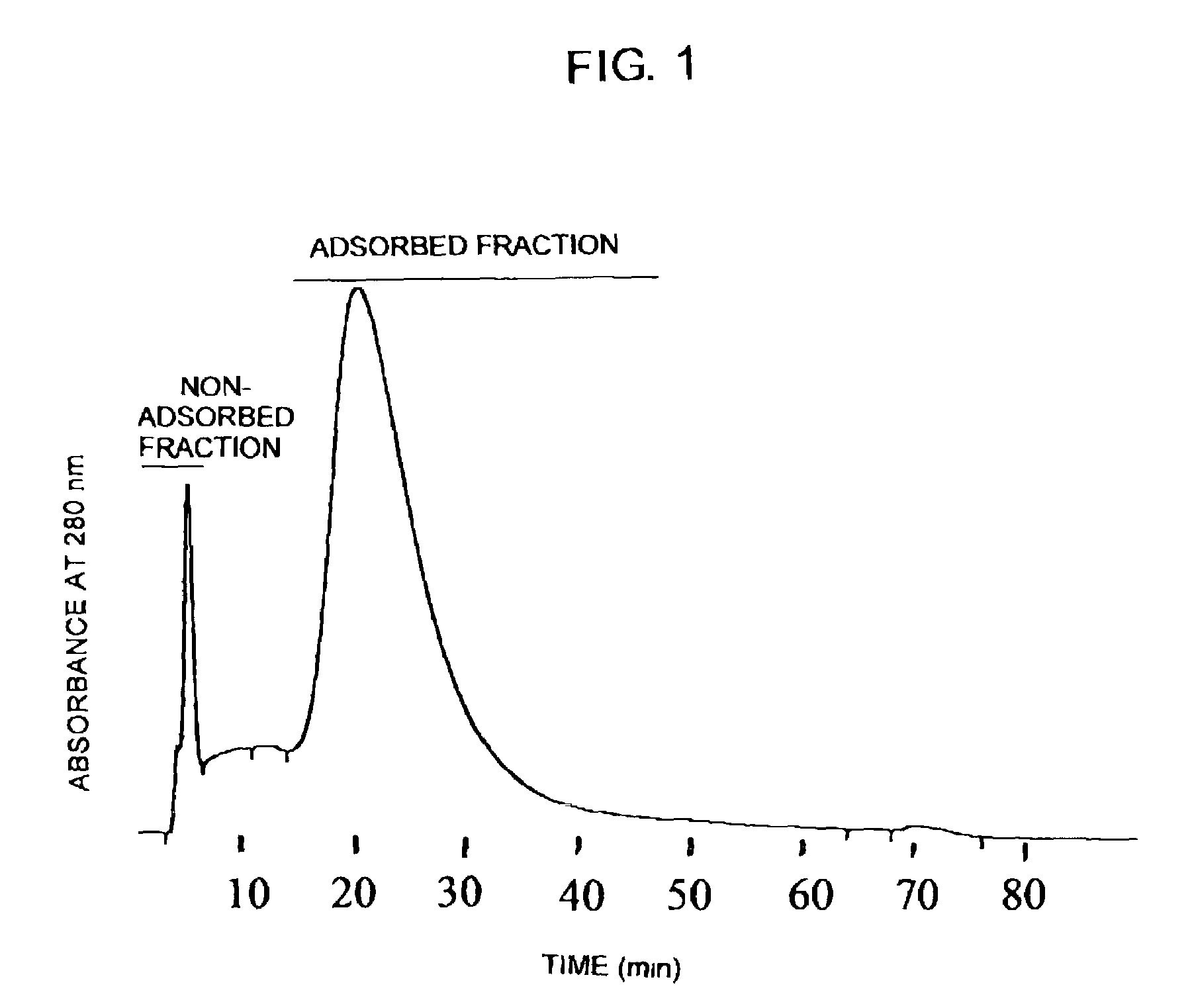
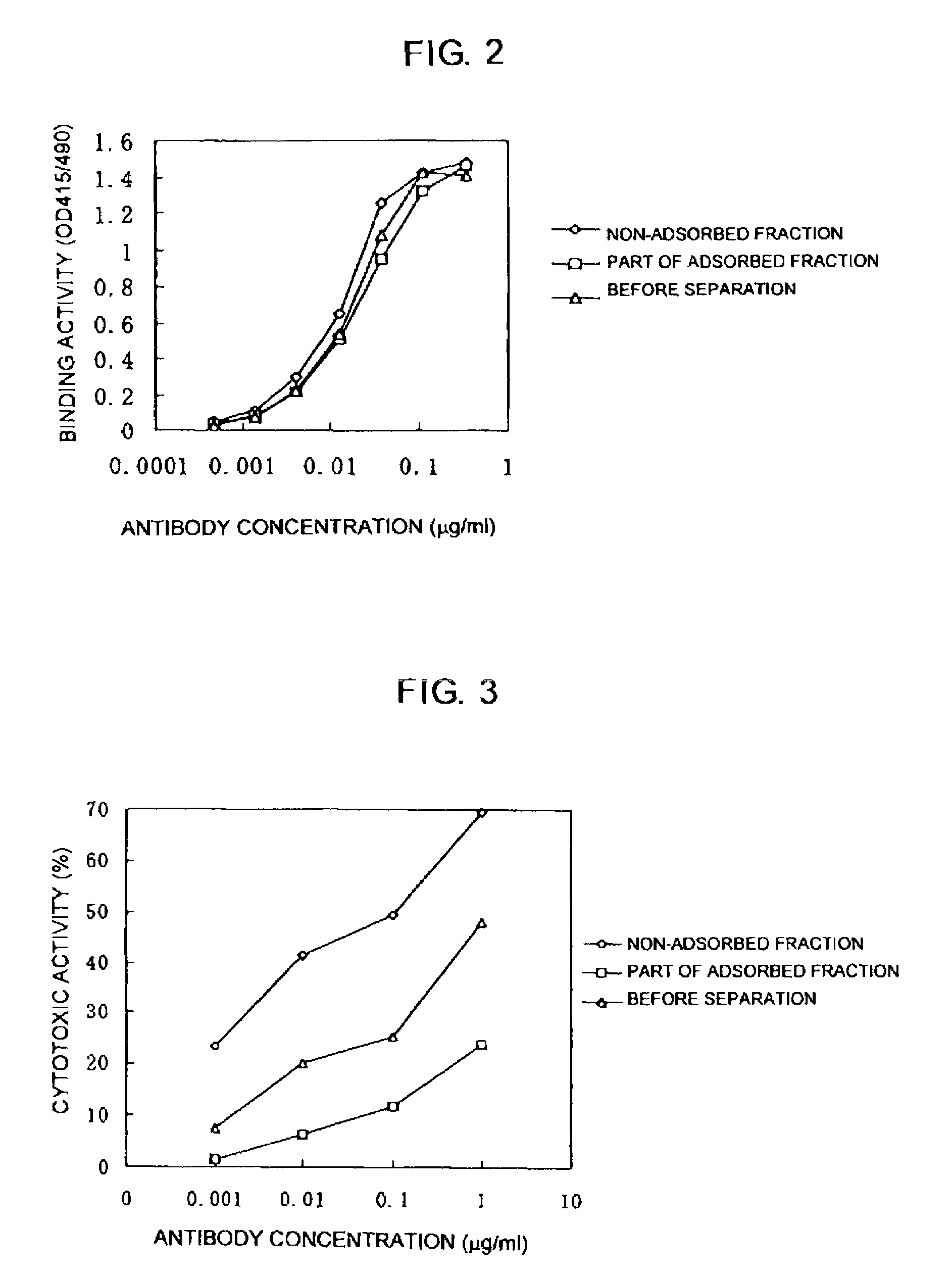
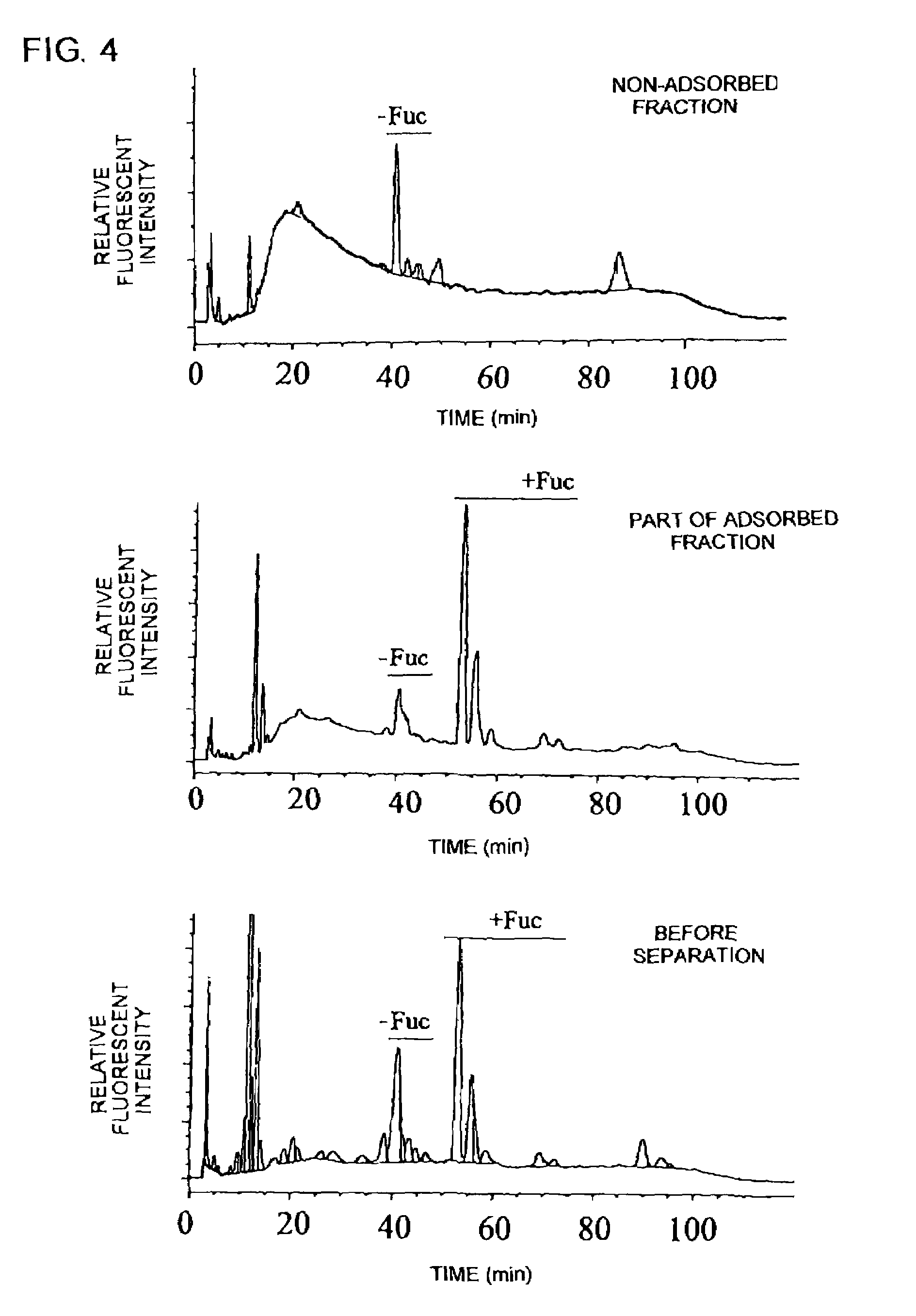
[0141]Next, a solution comprising the anti-hIL-5Rα CDR-grafted antibody composition obtained in the above was passed through a lectin column (LA-LCA, 4.6×150 mm, manufactured by Honen Corporation). Using LC-6A manufactured by Shimadzu Corporation as an HPLC syste...
example 2
Fractionation of an antibody composition comprising a large amount of a bisecting GlcNAc-bound carbohydrate:
(1) Fractionation of an Antibody Composition by Lectin Chromatography
[0150]An anti-hIL-5Rα CDR-grafted antibody composition was purified using a lectin binding to a carbohydrate having bisecting GlcNAc.
[0151]First, an expression vector for anti-hIL-5Rα CDR-grafted antibody produced according to the method described in WO97 / 10354 was introduced into a rat myeloma YB2 / 0 cell to obtain a cell which produces the anti-hIL-5Rα CDR-grafted antibody composition. The cell was cultured in a culture medium and then the anti-hIL-5Rα CDR-grafted antibody composition was purified from the medium according to the method described in WO97 / 10354.
[0152]Next, a solution containing the anti-hIL-5Rα CDR-grafted antibody composition purified in the above was passed through a lectin column (LA-WGA, 4.6×150 mm, manufactured by Honen Corporation). Using LC-6A manufactured by Shimadzu Corporation as an...
example 3
Fractionation of an antibody composition comprising a small amount of a carbohydrate having fucose and a large amount of a bisecting GlcNAc-bound carbohydrate:
(1) Fractionation of an Antibody Composition by Lectin Chromatography
[0154]The antibody composition containing a large amount of a bisecting GlcNAc-bound carbohydrate obtained in Example 2 was separated into a non-adsorbed fraction and an adsorbed fraction in a similar manner to the method described in Example 1(1).
(2) Carbohydrate Analysis
[0155]Carbohydrates in the non-adsorbed fraction and the part of the adsorbed fraction were analyzed by the method described in Example 1(4). The PA-labeled carbohydrates were eluted in the range of 18 minutes to 45 minutes. As a result, the part of the adsorbed fraction had a content of a carbohydrate having no fucose, decreased from 29% to 15%, and a content of a bisecting GlcNAc-bound carbohydrate, increased from 5% to 18%, as compared with the anti-hIL-5Rα CDR-grafted antibody compositio...
PUM
| Property | Measurement | Unit |
|---|---|---|
| Cytotoxicity | aaaaa | aaaaa |
Abstract
Description
Claims
Application Information
 Login to View More