A well-known problem with most home and
industrial water distribution systems is that hot water is not always readily available at the hot water side of the fixture when it is desired.
This problem is particularly acute in
water use fixtures that are located a distance from the hot
water heater or in systems with poorly insulated pipes.
As a result, the temperature of the water between the hot
water heater and the fixture lowers until it becomes cold or at least tepid.
For certain fixtures, such as virtually all dishwashers and washing machines, there typically is no easy method of “draining” away the cold or tepid water in the hot water pipes prior to utilizing the water in the fixture.
The inability to have hot water at the hot water side of the fixture when it is desired creates a number of problems.
One problem, as described above, is having to utilize cold or tepid water when hot water is desired.
Even in those fixtures where the person can allow the cold or tepid water to flow out of the fixture until the water reaches the desired warm or
hot temperature, such as a bath or
shower, there are certain problems associated with such a solution.
One such problem is the waste of water that flows out of the fixture through the drain and, typically, to the
sewage system.
This waste of water is compounded when the person is inattentive and hot water begins flowing down the drain and to the
sewage system.
Yet another problem associated with the inability to have hot water at the hot water valve when needed is the waste of time for the person who must wait for the water to reach the desired temperature before he or she-can take a bath or
shower at the desired temperature.
Despite the devices and systems set forth above, many people still have problems with obtaining hot water at the hot water side of fixtures, particularly bath and / or
shower fixtures, located away from the hot water heater or other source of hot water.
While this meets the primary function of keeping the water at a remote fixture hot, leaving the valve in a slightly open condition does present two problems.
First, the lack of toggle action can result in scale being more likely to build up on the
actuator because it is constantly extended.
Second, the open valve constantly bleeds a small amount of hot or almost hot water into the cold water
piping, thereby keeping the faucet end of the cold
water pipe substantially warm.
If the bypass valve is equipped with a spring-loaded
check valve to prevent siphoning of cold water into the hot water side when only the hot water faucet is open, then the very small flow allowed through the throttled-down valve may cause chattering of the spring loaded
check valve.
It is also detrimental to have any noticeable
crossover flow (siphoning) from hot to cold or cold to hot with any combination of faucet positions, water temperatures, or pump operation.
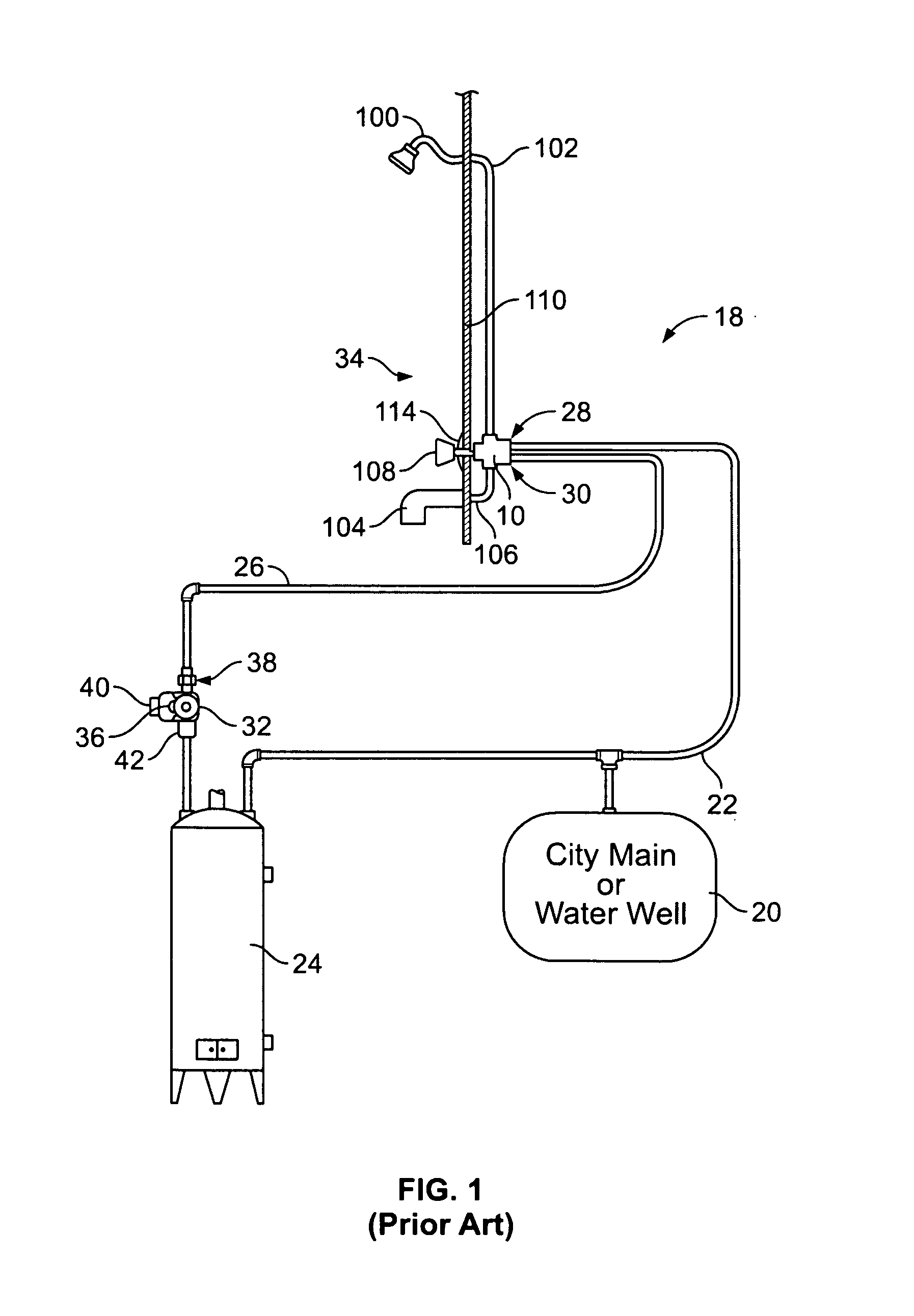
Due to the nature of their use, shower / tub fixtures are the most common problem areas with regard to the availability of hot water and, as such, can benefit greatly from the use of a bypass valve, such as a thermostatically controlled bypass valve, Unfortunately,
retrofitting an attached or adjacent bypass valve to an existing shower control valve (i.e., one that is mounted into the water
distribution system) has not been very practical.
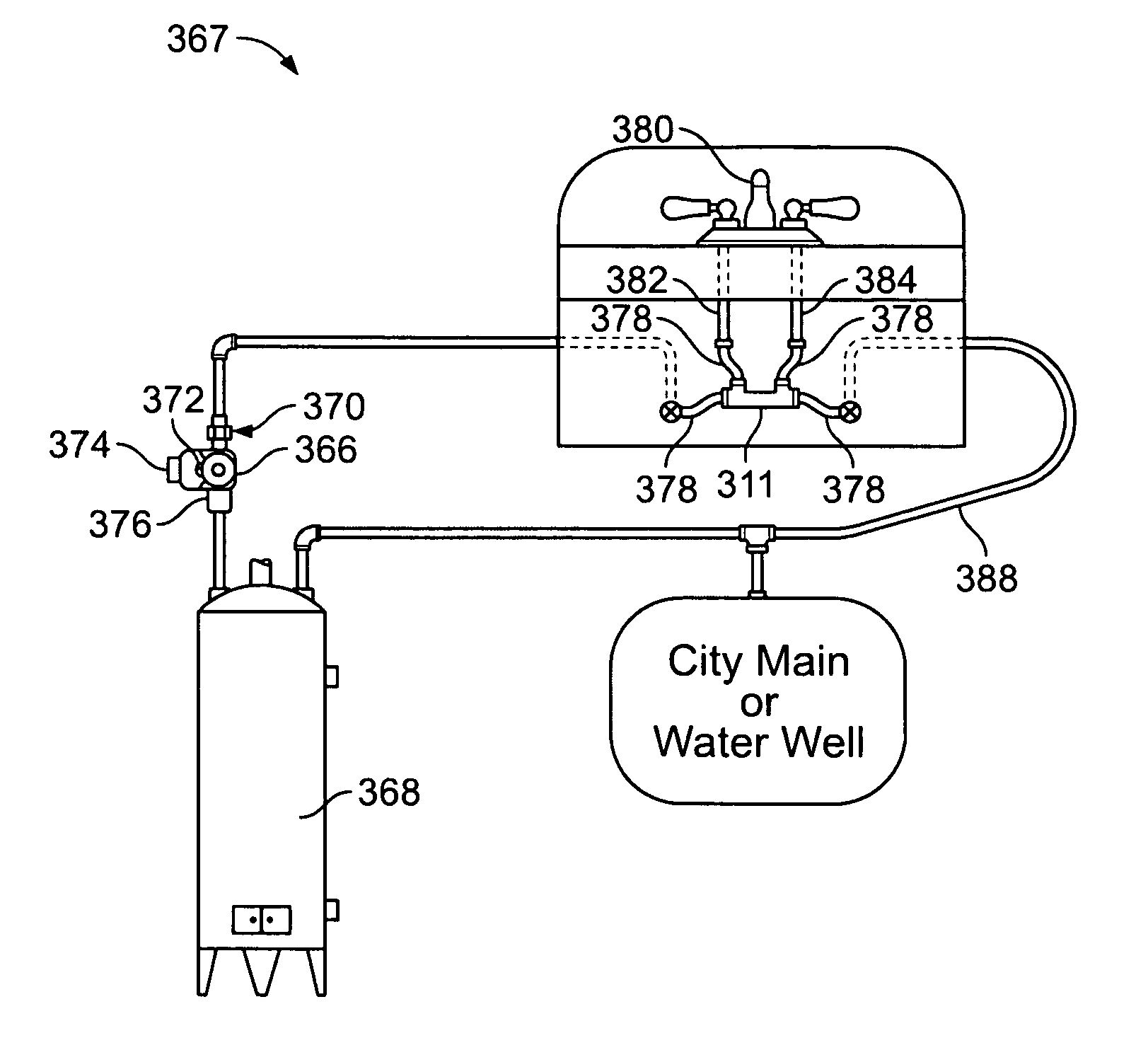
Generally, existing shower control valve designs do not lend themselves to hydraulic connections through which cooled-off water may be bypassed, as is relatively easily accomplished with angle stop hose connections under a sink.
Although
saddle valves could conceivably be utilized, the installation of these valves would require the gross enlargement of the opening in the shower wall.
As a result, the retrofitting of an existing tub / shower installation to incorporate a bypass valve or other beneficial hydraulic improvements, such as pressure balanced valve spools and the like, has generally been impractical with existing valves and valve systems.
Besides the currently available tub / shower water
control valves, there are also a multitude of other such valves that are no longer commercially available (i.e., those replaced or upgraded with a different model).
The existence of these many different designs complicates the ability to provide an apparatus and / or system for retrofitting the tub / shower water control valve to incorporate a bypass valve or other operating improvements, such as pressure balancing.
None of the known prior art devices provide an apparatus or system that is adaptable for retrofitting the multitude of different tub / shower water-control valve designs to incorporate a bypass valve.


 Login to View More
  Login to View More