Method and apparatus for automatic generation of information system user interfaces

a technology of information system and user interface, applied in the field of user interface and software engineering, can solve the problems of long delay, insufficient domain model consideration of ui specification methods, and bugs in business logic code itsel

US7334216B2Inactive Publication Date: 2008-02-19SOSY
44 Cites 137 Cited by

Patent Information

Authority / Receiving Office
US · United States
Current Assignee / Owner
Publication Date
2008-02-19
Estimated Expiration
Not applicable · inactive patent

Smart Images

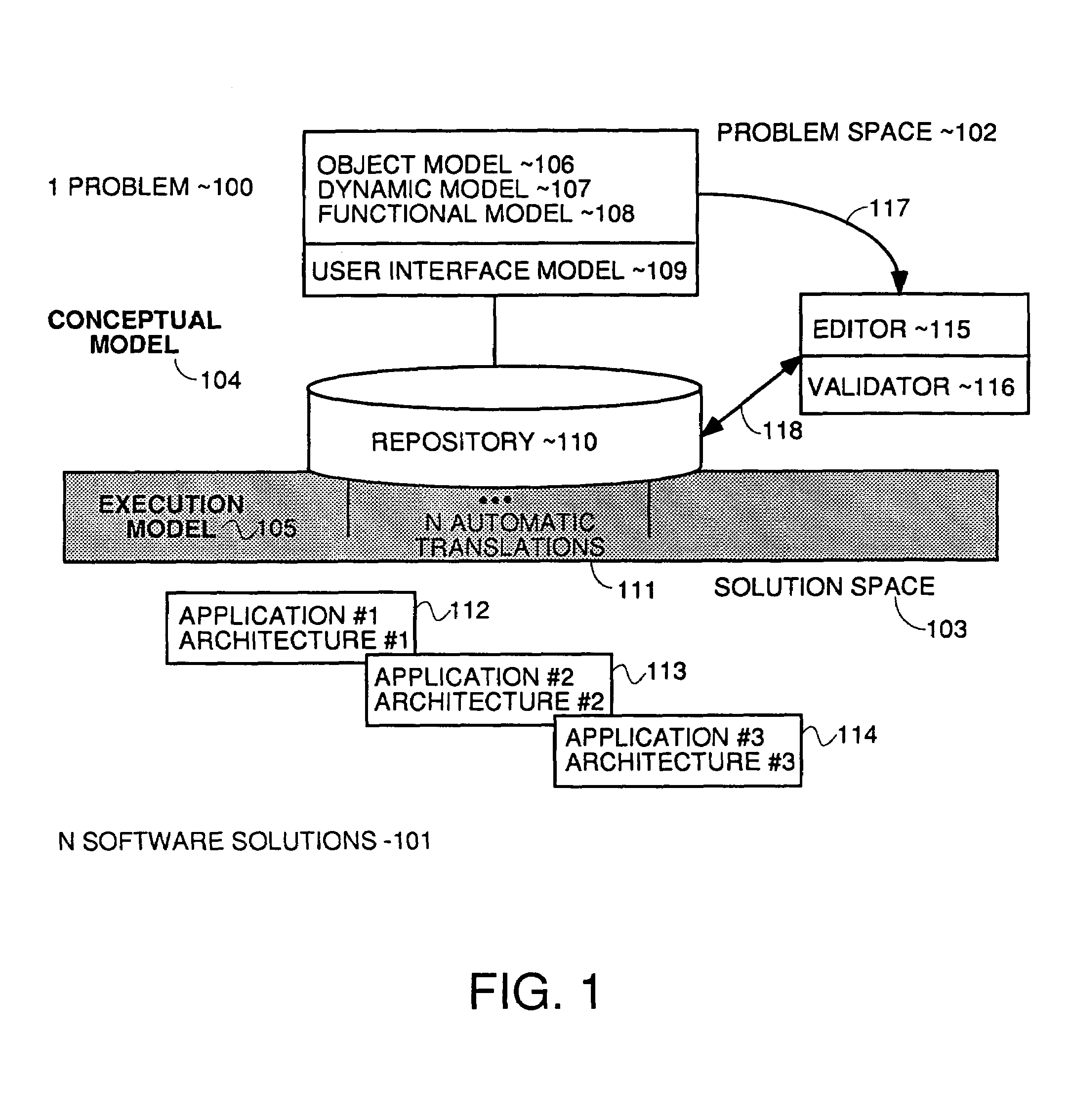
  • Figure 1
    Figure 1
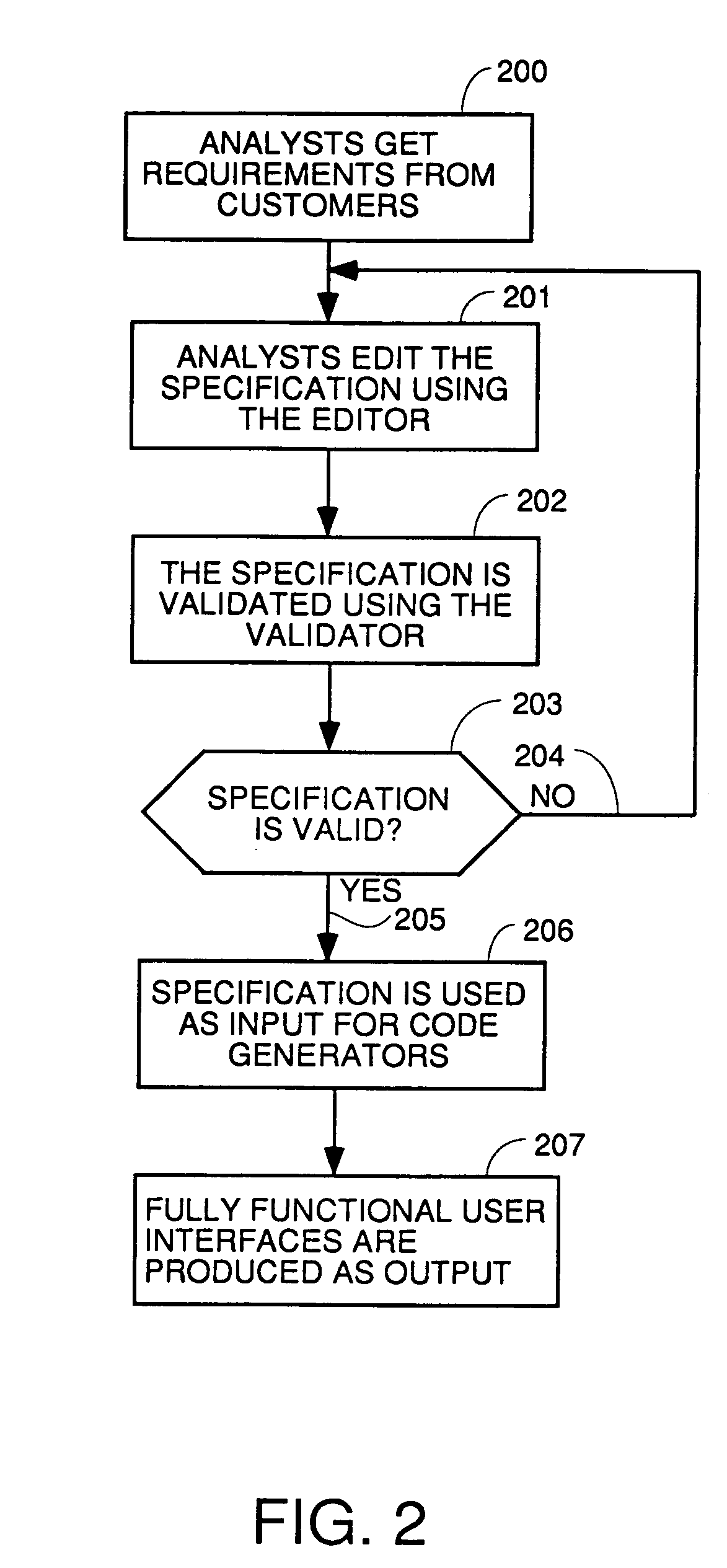
  • Figure 2
    Figure 2
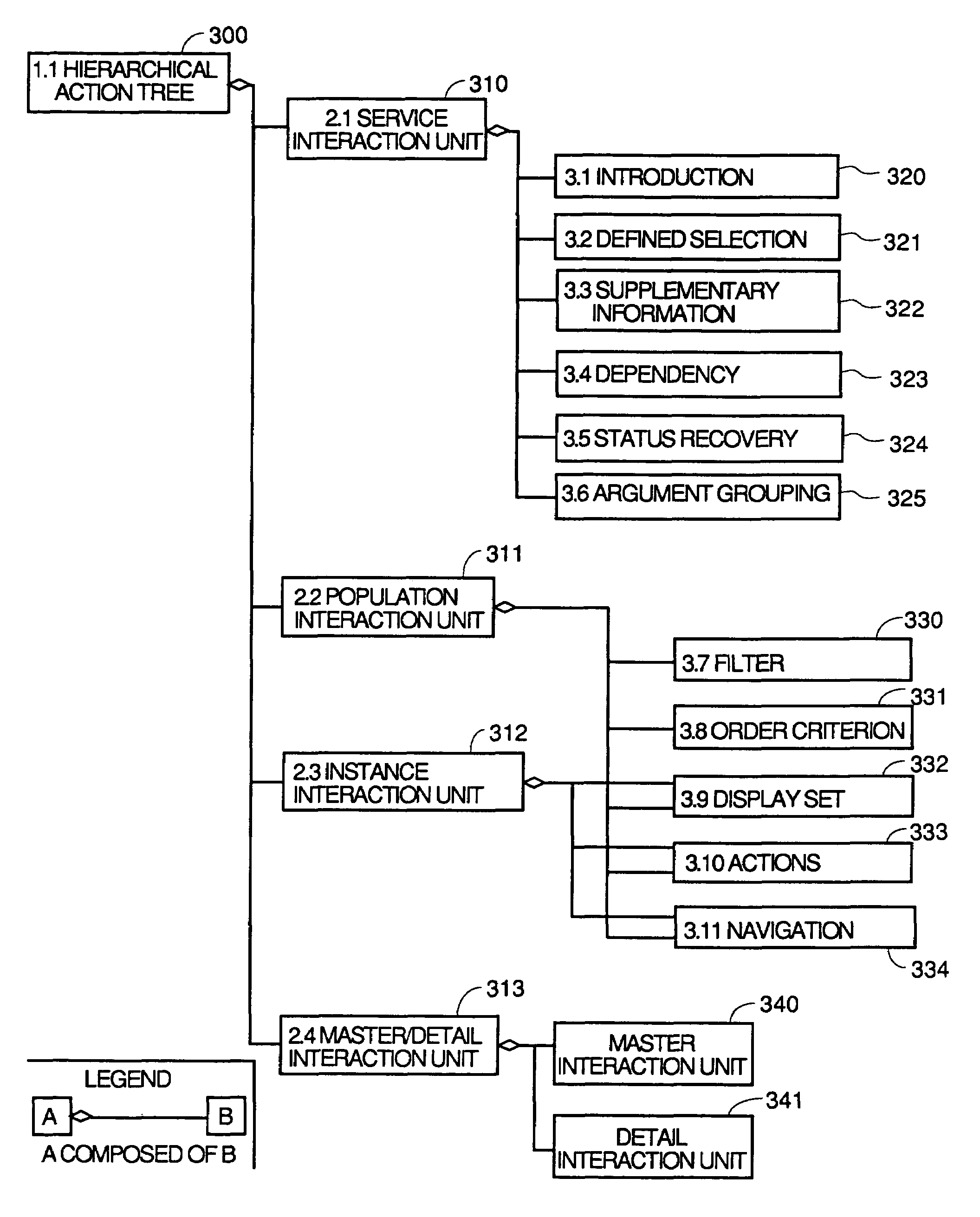
  • Figure 3
    Figure 3
Patent Text Reader

Abstract

A method and apparatus for the specification and automatic generation of user interfaces of information system (computer programs) is provided. The method is based in pattern language to specify requirements in an un-ambiguous mode and with precise semantics. The pattern language allows a user interface model to be composed using elements of the pattern language (computer objects in the object oriented programming style) which fully specify the desired user interface. The semantics of the objects in the user interface model have one and only one definition such that user interface model can be validated in a validation process. The validation process eliminates bugs in the final computer program code which is automatically produced from the user interface model. A model (metamodel), an editor tool (computer program) implementing the model for creating specifications of the user interface model, DTD specification, code generators, and other artifacts are depicted and described here for obtaining such user interfaces for different platforms (computers and operating systems) and different programming languages without manual coding of the computer code to implement the user interface. The software obtained is ready to run and it is able to communicate with a business server component using a standardized Application Programmatic Interface (API).
Need to check novelty before this filing date? Find Prior Art

Description

CROSS REFERENCE TO RELATED APPLICATIONS

[0001] This is a continuation-in-part of a prior U.S. patent application entitled Automatic Software Production System, Ser. No. 09 / 872,413, filed Jun. 1, 2001, now U.S. Pat. No. 7,278,130 which was a continuation-in-part of prior U.S. patent application of the same title, Ser. No. 09 / 543,085, filed Apr. 4, 2000 (now U.S. Pat. No. 6,681,383, issued Jan 1, 2004) which are hereby incorporated by reference. Two other CIPS of 09 / 543,085, filed Apr. 4, 2000 exist having Ser. Nos. 09 / 872,087 (filed Jun. 1, 2001, now abandoned in favor of a divisional application Ser. No. 10 / 877,492, which is currently pending and published as US-2004-0233232-A1 on Nov. 25, 2004) and 09 / 872,333, filed Jun. 1, 2001 issued as U.S. Pat. No. 7,137,100 on Nov. 14, 2006.REFERENCES

[0002] Pedro J. Molina, Oscar Pastor, Sofia Marti, Juan J. Fons and, Emilio Insfrán. “Specifying Conceptual Interface Patterns in an Object-Oriented Method with Code Generation” In Proceedings of 2nd...

Examples

Embodiment Construction

[0069]The invention improves an automatic software production system as described in a United States patent application entitled Automatic Software Production System, filed Apr. 4, 2000, Ser. No. 09 / 543,085, (now U.S. Pat. No. 6,681,383, issued Jan. 20, 2004) and three continuation-in-part of the same title all filed on June 1, 2001, and having Ser. No. 09 / 872,413, (currently allowed but not yet issued), 09 / 872,087, (filed Jun. 1, 2001, now abandoned in favor of a divisional application Ser. No. 10 / 877,492, which is currently pending and published as US-2004-0233232-A1 on Nov. 25, 2004) and 09 / 872,333, issued as U.S. Pat. No. 7,137,100 on Nov. 14, 2006, respectively, all of which describe systems to automatically produce robust and fully functional business applications from specifications and all of which are hereby incorporated by reference.

[0070]Referring to FIG. 1 there is shown a block diagram describing an overview of the software development process. A given problem 100 can b...