
Method for operating a wind turbine during a disturbance in the grid
a technology of wind power installations and disturbances, applied in the direction of electric generator control, machines/engines, mechanical equipment, etc., to achieve the effect of improving the network-supporting method of operating wind power installations
- Summary
- Abstract
- Description
- Claims
- Application Information
AI Technical Summary
Benefits of technology
Problems solved by technology
Method used
Image

Examples
Embodiment Construction
[0023]The term “integration of embedded generation” refers hereinafter to the capacitance of energy units which are integrated in a part of an energy system, which exceeds the energy supplied by another part of the system.
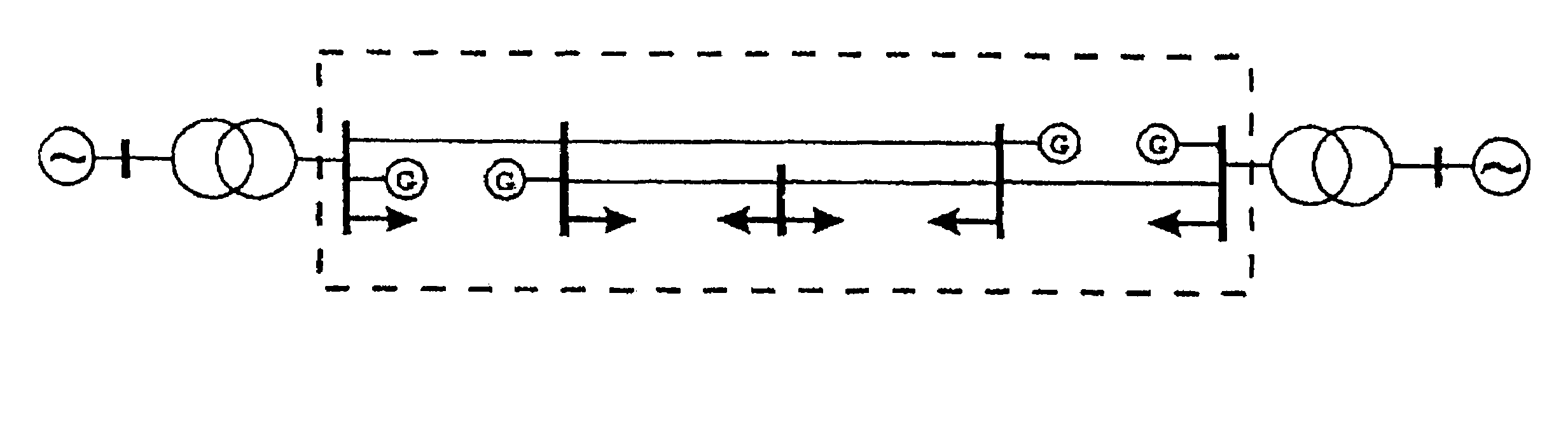
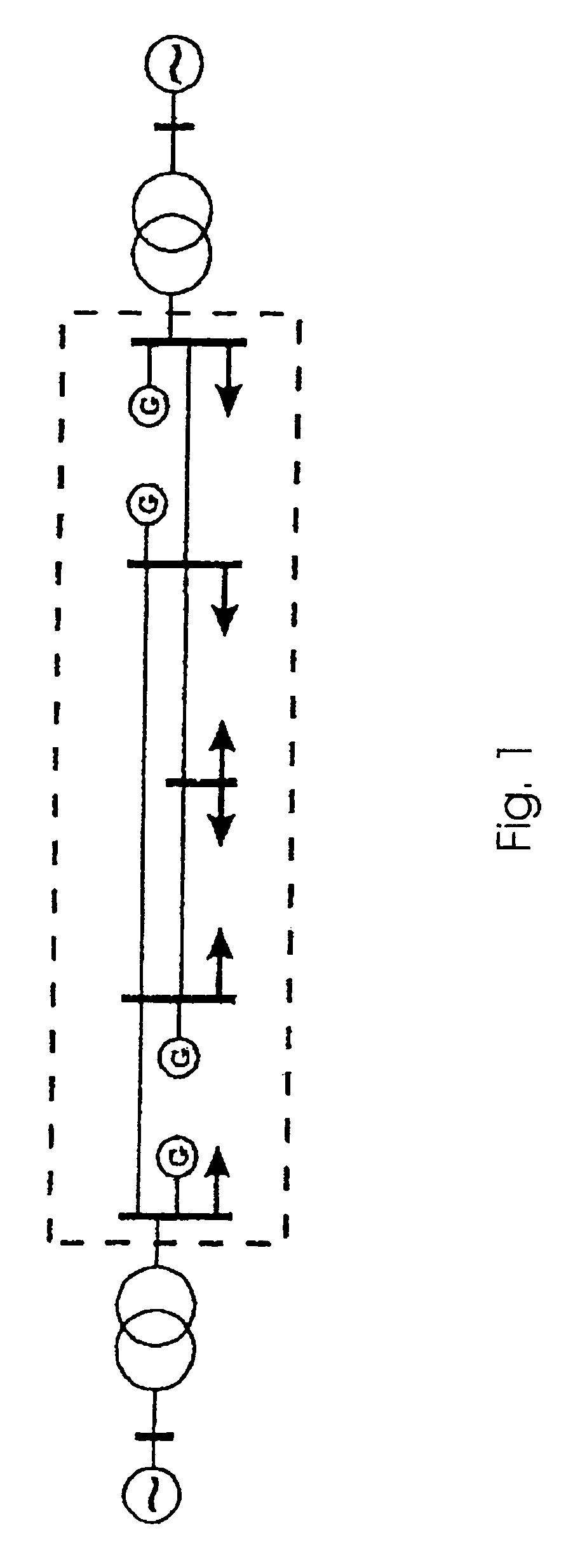
[0024]FIG. 1 shows the structure in principle of an energy generation network with some generators G.
[0025]A “ride-through” of embedded generation units means in this context that the generation units remain on the network and feed a short-circuit power to the network during the occurrence of a fault in the network. Active and reactive power are also fed to the network immediately after the elimination of a fault.
[0026]The reasons for the “ride-through” demands in respect of the transmission access codes which are increasingly established by the network operators represent the following:
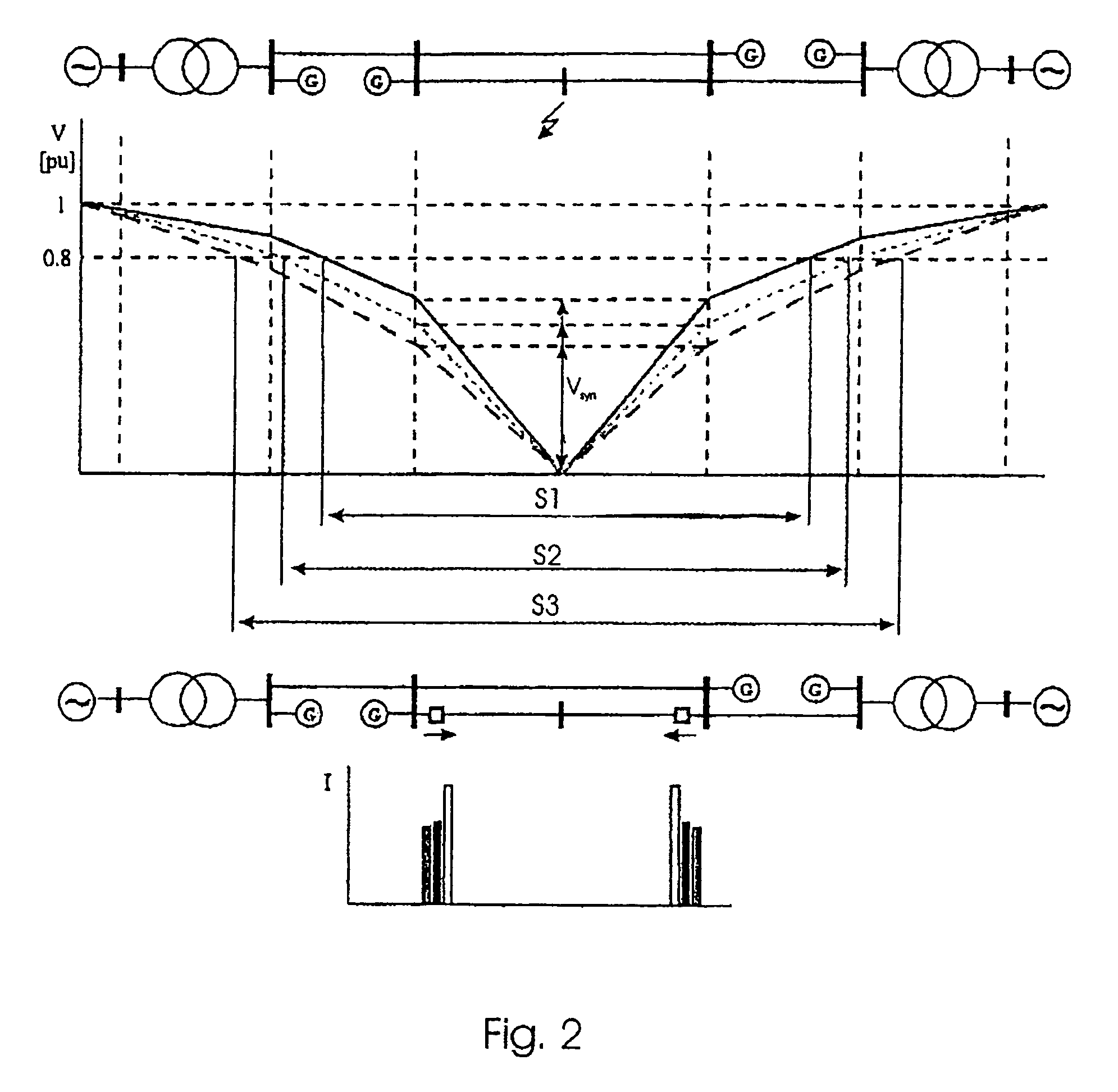
[0027]FIG. 2 shows a diagrammatic structure of an energy generation network, a diagram for illustrating a voltage collapse because of a fault in the network.
[0028]FIG. 3 shows a dia...
PUM
 Login to View More
 Abstract
Description
Claims
Application Information
 Login to View More