
Method and system for regulation of the rotational speed of a rotor on a wind turbine
a technology of rotating speed and wind turbine, which is applied in the direction of electric generator control, machines/engines, mechanical equipment, etc., can solve the problems of reducing the degree of aerodynamic efficiency of blades, and reducing the efficiency of wind turbines, so as to achieve the effect of increasing energy outpu
- Summary
- Abstract
- Description
- Claims
- Application Information
AI Technical Summary
Benefits of technology
Problems solved by technology
Method used
Image

Examples
Embodiment Construction
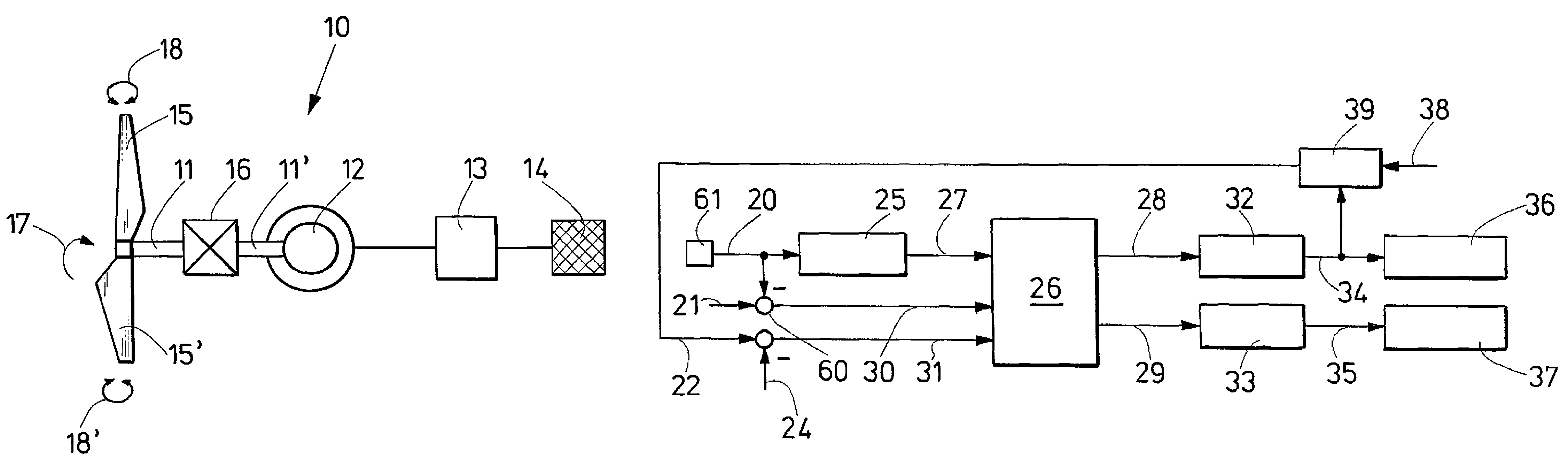
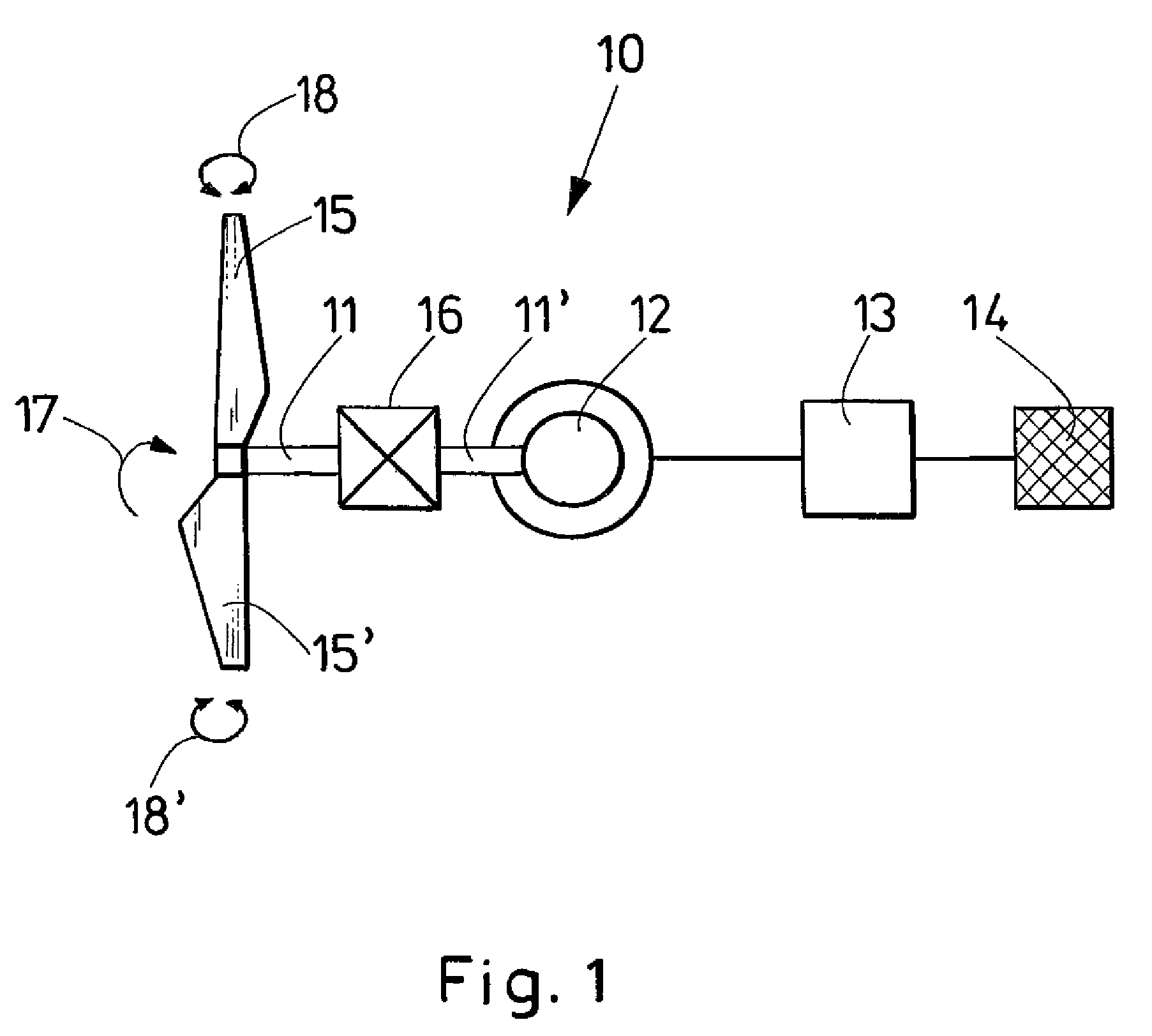
[0037]FIG. 1 shows in a very schematic manner a wind turbine 10, comprising a rotor 11, on which rotor blades 15 and 15′ are arranged. The rotor 11 is connected with a drive 16. The drive 16 is connected with a generator 12 via a shaft 11′. The rotor 11 is rotatable, namely according to an indicated rotational direction 17. Through corresponding rotation of the rotor 11 and via the drive 16 also of the shaft 11′, a conventional generator 12, for example, an asynchronous generator, can create electrical power, which can be made available to a network or grid 14, to which the consumers are for example connected, via a converter 13. Accordingly, convention regulations of rotational speed-variably operated systems are described for example in the book by Siegfried Heier, “Windkraftanlagen, Systemauslegung, Netzintegration und Regelung,” (Wind Turbines, System Design, Network Integration and Regulation) Verlag Teubner, 2005, pages 320 through 328. FIG. 1 also indicates the change in the ...
PUM
 Login to View More
 Abstract
Description
Claims
Application Information
 Login to View More