Unlock instant, AI-driven research and patent intelligence for your innovation.

Method and apparatus for dynamically controlling power management in a distributed system

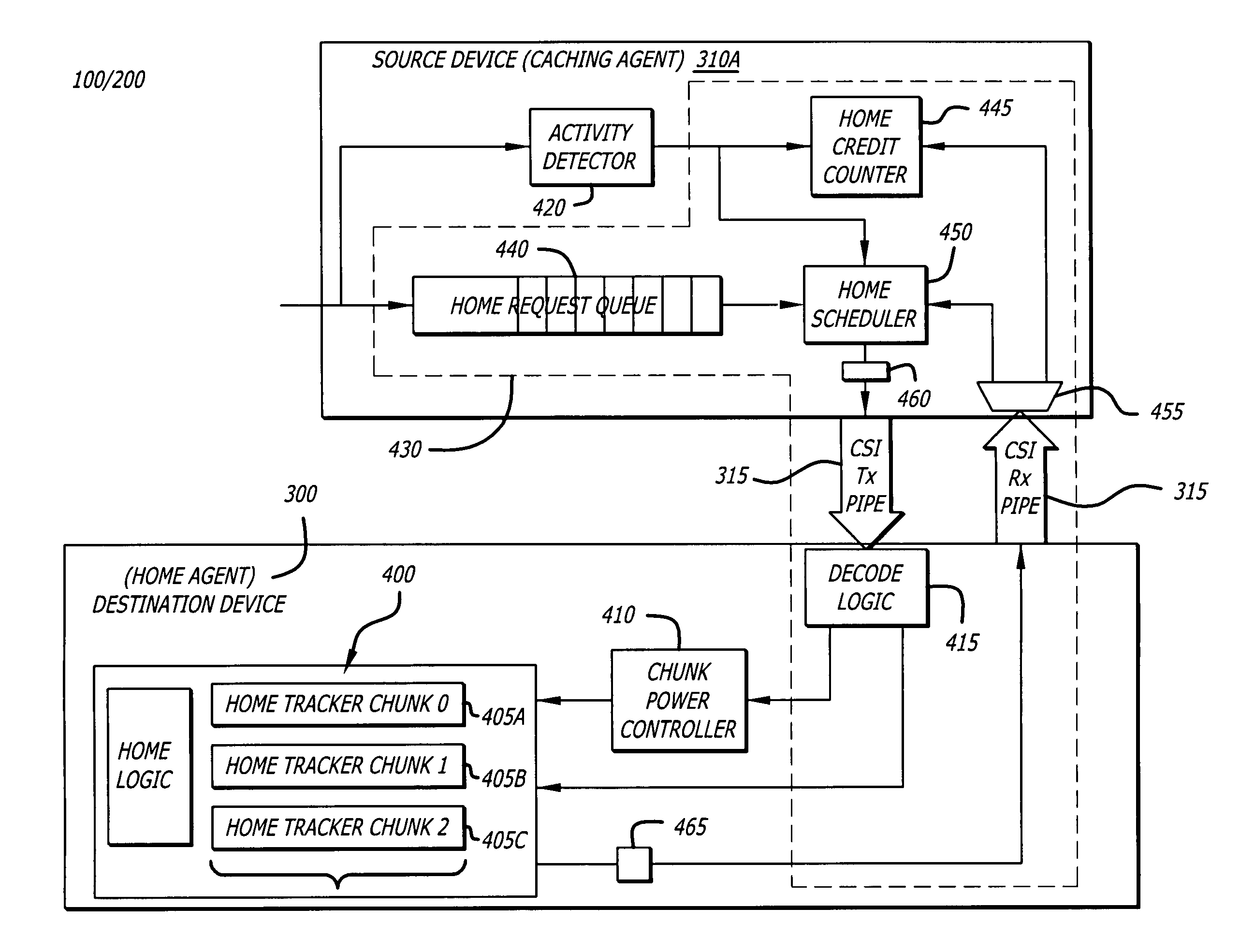
a distributed system and power management technology, applied in multi-programming arrangements, liquid/fluent solid measurement, instruments, etc., can solve the problems that conventional activity detection circuitry cannot effectively hide the latency of turning on/off the units, and the architecture will likely experience power management difficulties

Inactive Publication Date: 2010-01-05
INTEL CORP
View PDF15 Cites 36 Cited by
  • Summary
  • Abstract
  • Description
  • Claims
  • Application Information

AI Technical Summary

Benefits of technology

SCDPM effectively mitigates power waste by dynamically adjusting resources, optimizing power usage in CSI-based systems, especially for I / O devices with high buffering needs, thereby improving system performance and reducing power consumption.

Problems solved by technology

This architecture will likely experience difficulties in power management.
As a result, conventional activity detection circuitry cannot effectively hide the latency to turn on / off the units from the performance aspects of the system since it cannot provide adequate lead time to circuitry of these units to turn power on or off.

Method used

the structure of the environmentally friendly knitted fabric provided by the present invention; figure 2 Flow chart of the yarn wrapping machine for environmentally friendly knitted fabrics and storage devices; image 3 Is the parameter map of the yarn covering machine
View more

Image

Smart Image Click on the blue labels to locate them in the text.
Viewing Examples
Smart Image
  • Method and apparatus for dynamically controlling power management in a distributed system
  • Method and apparatus for dynamically controlling power management in a distributed system
  • Method and apparatus for dynamically controlling power management in a distributed system

Examples

Experimental program
Comparison scheme
Effect test

first embodiment

[0071]Referring now to FIG. 8, activity detector 420 of FIG. 4 is shown. Herein, activity detector 420, referred to as a “core driven activity detector,” is logic residing in the source (e.g., caching agent 310A) and is coupled to one or more cores 500 (e.g., cores 500A-500D) and a shared cache 510. Core driven activity detector 420 can screen through traffic generated from the core(s) 500 and generate a message to its destination for proper power tuning.

[0072]Detecting and predicting core behaviors in the subsequent period of time is challenging because core behaviors are application specific, and thus, are difficult to cover all cases of operation. Core driven activity detector 420 may be adapted to look at various inputs to determine appropriate actions. Some of these inputs are set for below, albeit other inputs may be used.

[0073]Architecture Event counts 800 can sometimes be very useful of predicting burstiness behavior. For example, a core experiencing a large number of branch...

second embodiment

[0079]Referring now to FIG. 9, activity detector 420 of FIG. 4 is shown. Herein, activity detector 420, referred to as an “IOH activity detector,” is responsible for determining the power management commands it needs to send to its connected clients (destinations). To make this determination, IOH activity detector 420 uses resources within the IOH architecture. These resources include, but are not limited or restricted to those resources set forth below.

[0080]PCI Requests / Events: IOH activity detector 420 can screen the request / event commands that come from PCI ports 900. Based on these commands, IOH activity detector 420 can scan for power-usage hints by noting the request / event type and the destination ID.

[0081]DMA / DMI / Interrupt Requests / Events: Similar to the PCI, the DMA and DMI (for legacy-bridge) and Interrupts 910 can also yield hints for client power management.

[0082]CSI Requests / Events and Power States: As the IOH receive requests and events 920 from the CSI busses, IOH act...

the structure of the environmentally friendly knitted fabric provided by the present invention; figure 2 Flow chart of the yarn wrapping machine for environmentally friendly knitted fabrics and storage devices; image 3 Is the parameter map of the yarn covering machine
Login to View More

PUM

No PUM Login to View More

Abstract

According to one embodiment of the invention, an activity detector comprises a resource partitioned into a plurality of chunks, a power controller and an activity detection unit. In communication with the activity detector and the resource, the power controller, based on measured activity by the activity detector, activates an additional chunk of the plurality of chunks and assigned the additional chunk to a specified agent or deactivates at least one chunk of the plurality of chunks.

Description

FIELD[0001]Embodiments of the invention relate to the field of power management, and according to one embodiment, a method and apparatus for dynamically managing power for a Common System Interconnect (CSI) style distributed system.GENERAL BACKGROUND[0002]Microprocessors commonly use dynamic power management techniques to manage power usage. Normally, dynamic power management for microprocessors is accomplished through activity detection circuitry that is located in the microprocessor and coupled to a centralized, front side bus (FSB). The activity detection circuitry is adapted to detect conditions under which certain units should be turned on or off and to adjust the power levels of these units appropriately.[0003]Traditionally, the activity detection circuitry has provided acceptable performance because such circuitry was physically separated from the power-controlled units by only a short distance. However, bus architectures are moving away from FSB architectures and are beginni...

Claims

the structure of the environmentally friendly knitted fabric provided by the present invention; figure 2 Flow chart of the yarn wrapping machine for environmentally friendly knitted fabrics and storage devices; image 3 Is the parameter map of the yarn covering machine
Login to View More

Application Information

Patent Timeline
no application Login to View More
Patent Type & Authority Patents(United States)
IPC IPC(8): G06F1/32
CPCG06F1/3209G06F1/3275Y02B60/1228Y02B60/1225Y02D10/00
Inventor SISTLA, KRISHNAKANTHHUTSELL, STEVEN R.LIU, YEN-CHENG
Owner INTEL CORP