
Biocompatible wound dressing
a wound dressing and biocompatible technology, applied in the field of wound dressings, can solve the problems of reducing oxygen and nutrients, affecting the healing process, and less able to fight successfully, so as to enhance cell growth, prevent vacuum leakage, and enhance cell growth
Patent Information
- Authority / Receiving Office
- US · United States
- Patent Type
- Patents(United States)
- Current Assignee / Owner
- Publication Date
- 2010-07-27
- Estimated Expiration
- Not applicable · inactive patent
Smart Images
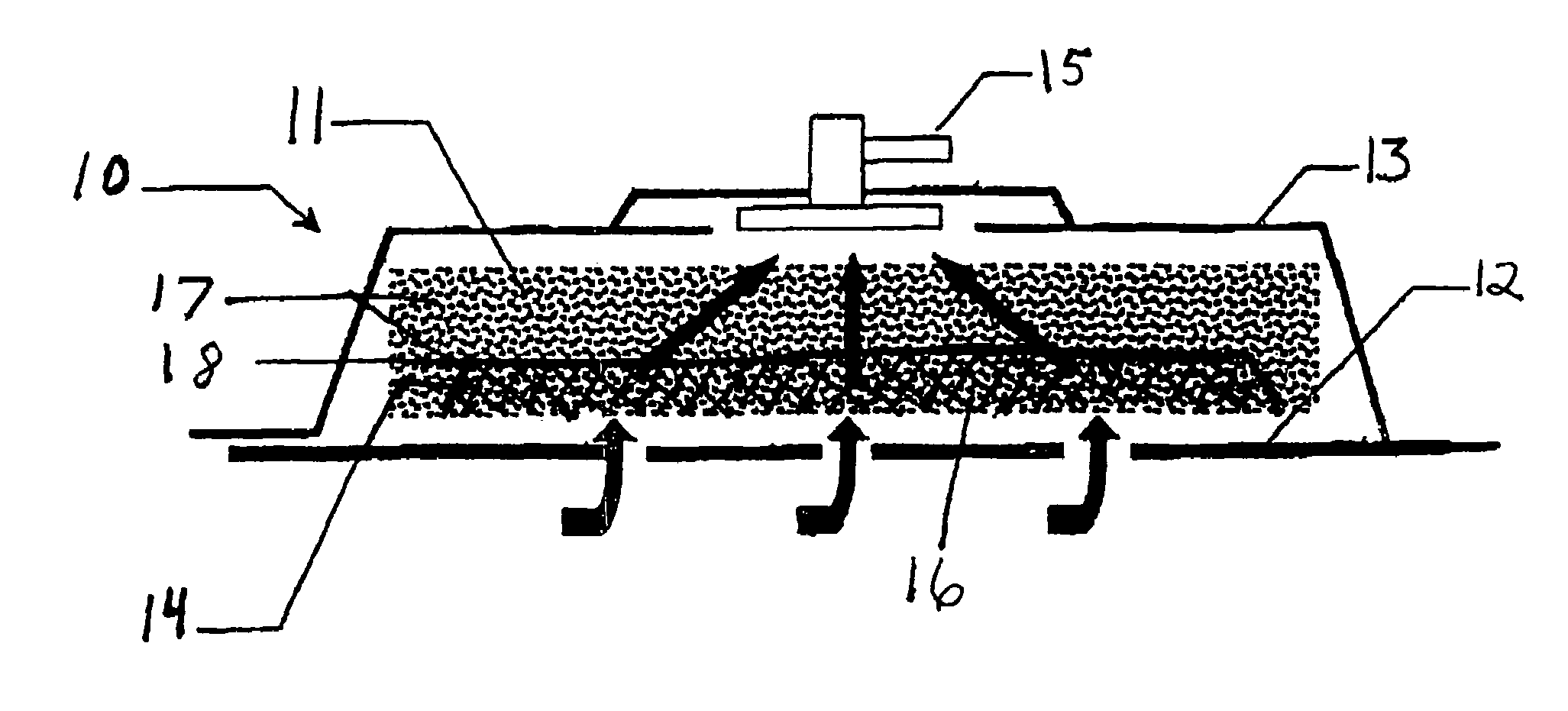
Figure 1 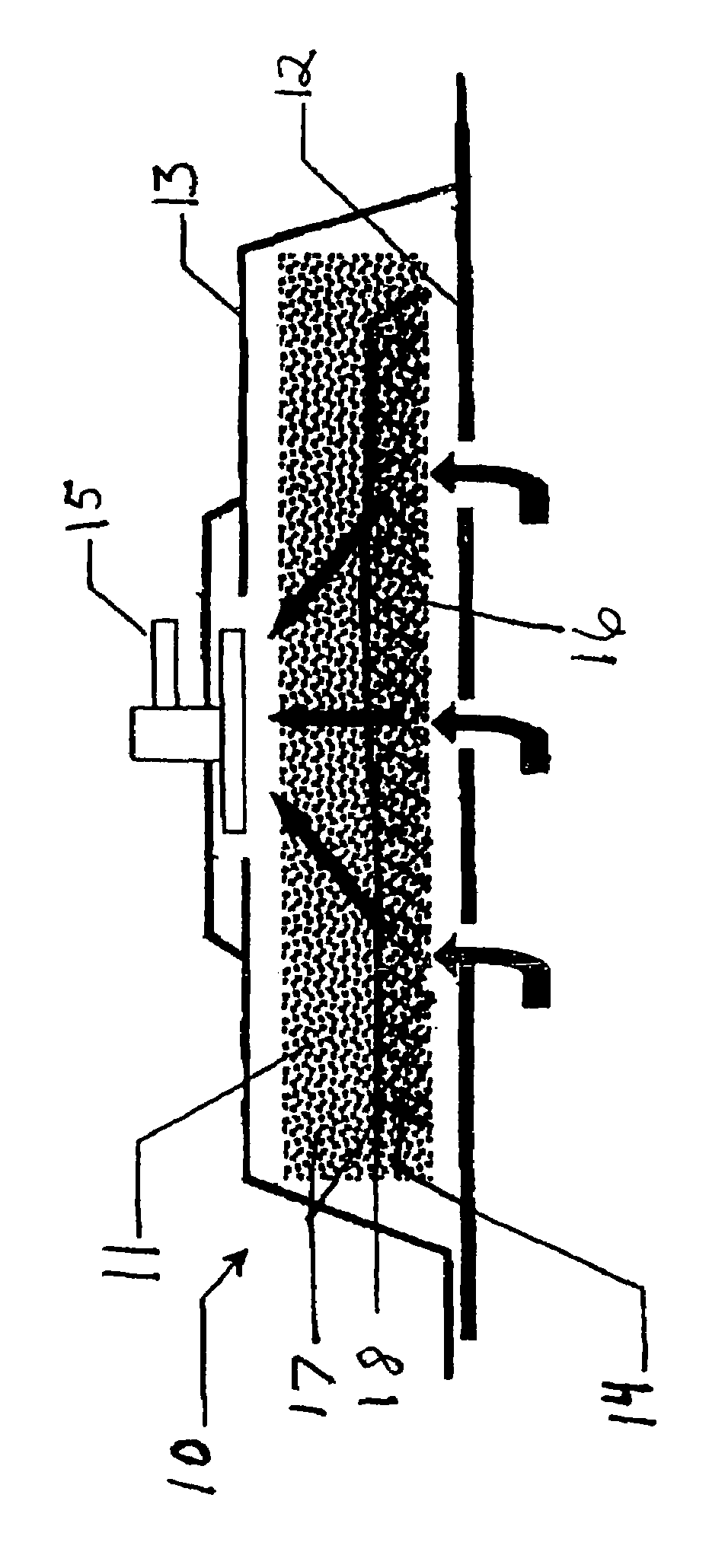
Figure 2
Abstract
Description
CROSS-REFERENCE TO RELATED APPLICATION
[0001] This is a continuing application of U.S. patent application Ser. No. 10 / 075,743 filed Feb. 14, 2002, now U.S. Pat. No. 7,070,584, which claims the benefit under 35 U.S.C. §119(e), of U.S. provisional patent application No. 60 / 269,657 filed Feb. 16, 2001.FIELD OF THE INVENTION
[0002] This invention relates generally to wound dressings commonly associated with the vacuum induced healing of open wounds. More particularly, the present invention relates to a wound dressing, having a cell growth enhancing porous lattice, matrix, or scaffold, or a bioabsorbable layer as part of the dressing to enhance the wound healing.BACKGROUND OF THE INVENTION
[0003] Vacuum induced healing of open wounds has recently been popularized by Kinetic Concepts, Inc. of San Antonio, Tex., by its commercially available V.A.C.® product line. The vacuum induced healing process has been described in commonly assigned U.S. Pat. No. 4,969,880 issued on Nov. 13, 1990 to Zamierow...
Examples
example i
[0033]The above described open celled foam is formed into a pad. The general principles set forth in U.S. Pat. No. 5,795,584 issued to Totakura et al on Aug. 18, 1998 at Col. 5 lines 5-42, are followed to create a structure superimposed on the bottom of the pad. Holes are placed in those portions of the non-bioabsorbable substrate relatively remote from the bioabsorbable cell growth enhancing matrix substrate. The matrix covers a portion of the pad located within the boundaries of the wound being treated. The pad is then completely covered by an airtight drape, and subjected to sub atmospheric pressure, as is the standard practice for utilizing V.A.C.® therapy. The matrix is absorbed within the expected useful life of the pad, so, that when the pad is removed, the matrix had been absorbed, and the growing cells are not disturbed. The pad is replaced, if necessary, either by a conventional pad or by a matrix containing pad, as deemed therapeutically necessary.
example ii
[0034]A conventional pad is selected. A collagen cell growth matrix is applied to a portion of the bottom thereof. The general principles of V.A.C.® therapy are followed, with the matrix containing pad substituted for a conventional pad. During the expected duty cycle of the pad, the collagen matrix is absorbed by the growing cells, so that when the pad is removed, the matrix had been absorbed, and the growing cells are not disturbed. The pad is replaced, if necessary, either by a conventional pad or by a matrix containing pad, as deemed therapeutically necessary.
example iii
[0035]The procedure set forth in EXAMPLE II is followed. However an ultra-low density fused-fibrous ceramic, sometimes referred to under the trademark P.R.I.M.M., is substituted for the collagen matrix thereof. The general principles of V.A.C.® therapy are followed. During the expected duty cycle of the pad, the ultra-low density fused-fibrous ceramic is absorbed by the growing cells, so, that when the pad is removed, the ultra-low density fused-fibrous ceramic had been absorbed, and the growing cells were not disturbed. The pad is replaced, if necessary, either by a conventional pad or by a matrix containing pad, as deemed therapeutically necessary.