
Piezoelectric actuator
a technology of actuators and actuators, applied in piezoelectric/electrostrictive/magnetostrictive devices, piezoelectric/electrostriction/magnetostriction machines, device material selection, etc., can solve the problem of electrical shorting between the side edges of internal electrodes of opposite polarities, and achieve the effect of improving the reliability of the actuator, protecting the environment and from contamination, and increasing the robustness against fuel
- Summary
- Abstract
- Description
- Claims
- Application Information
AI Technical Summary
Benefits of technology
Problems solved by technology
Method used
Image

Examples
Embodiment Construction
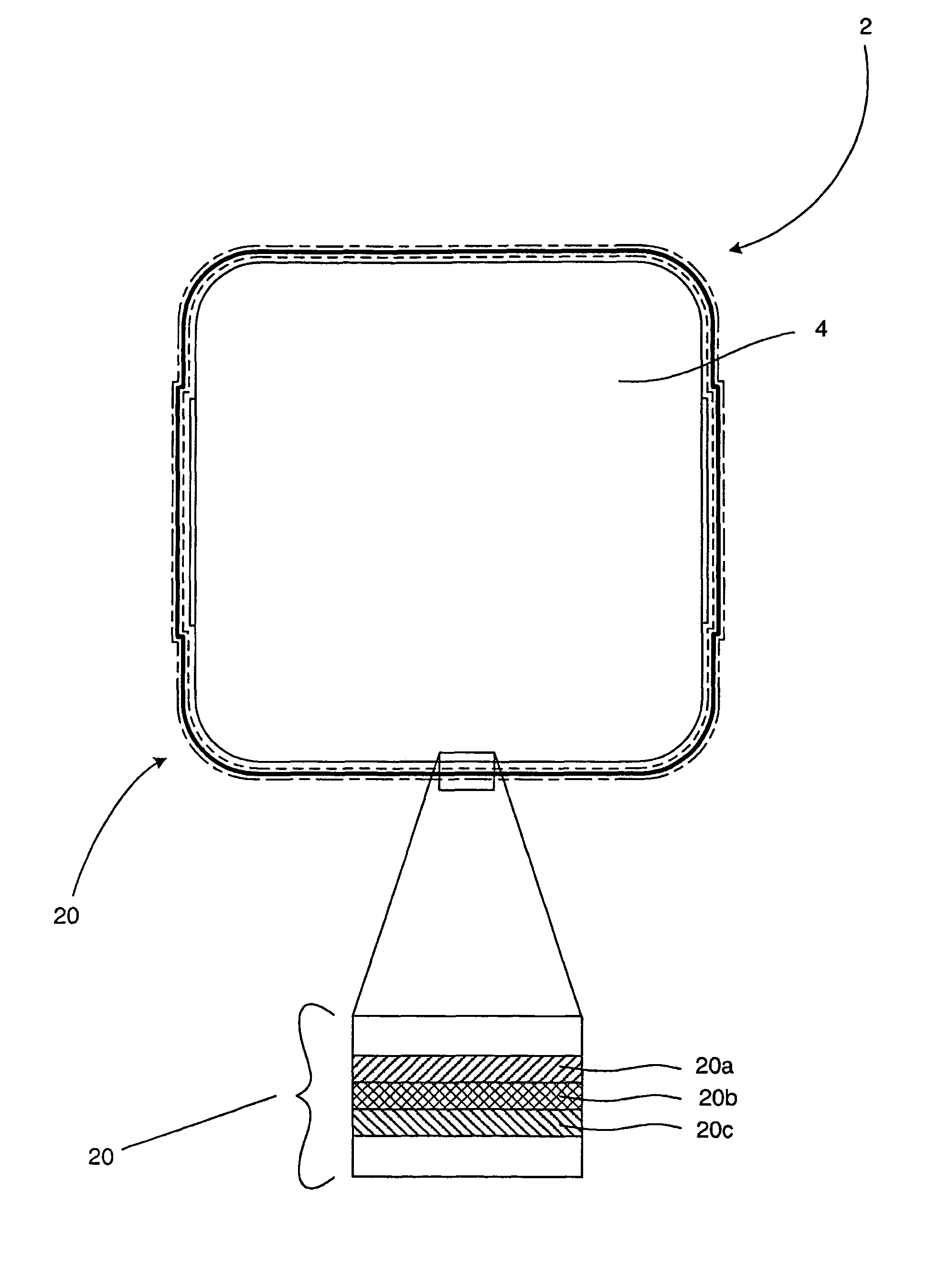
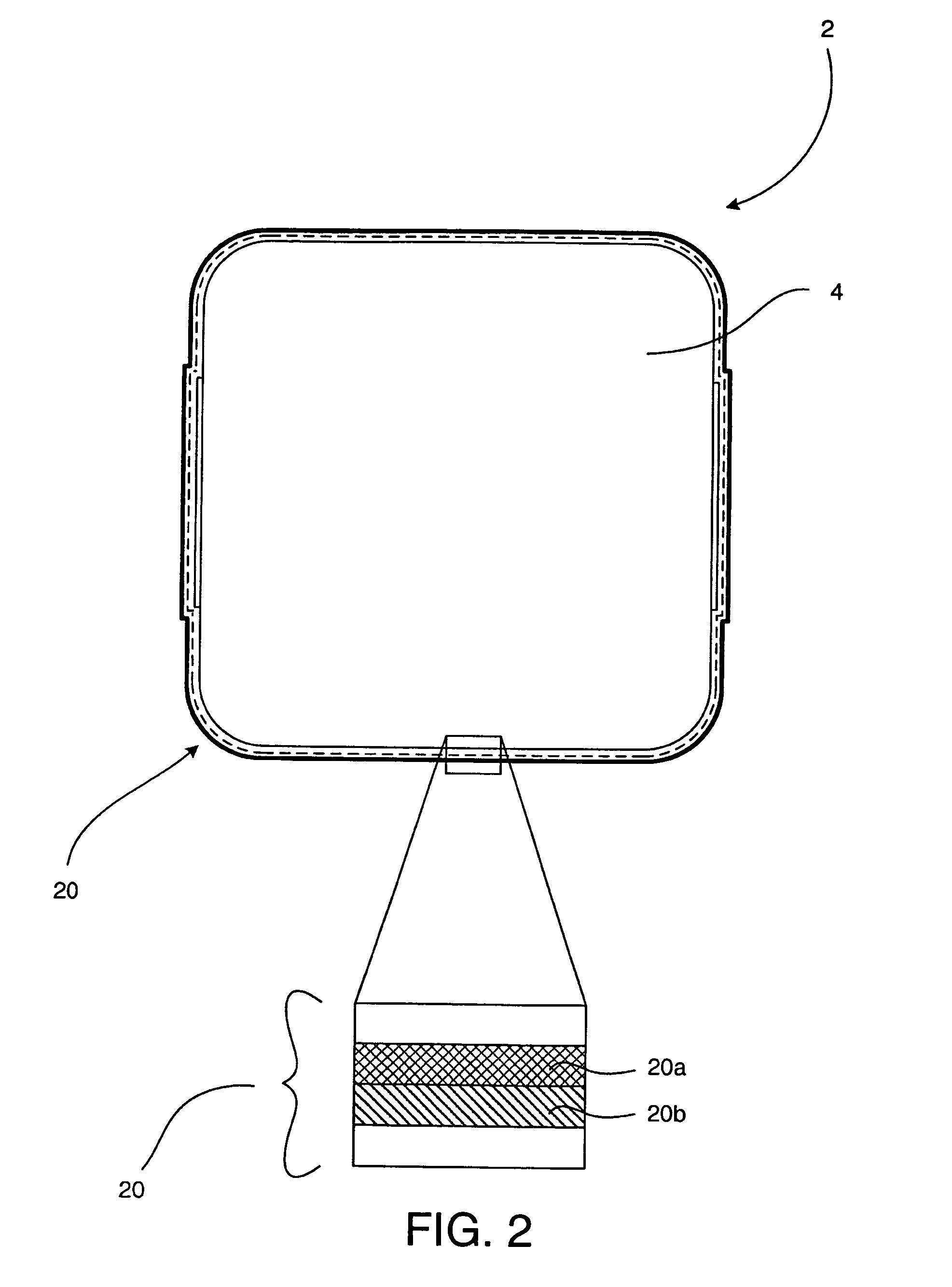
[0020]In FIG. 2, in order to protect the actuator 2 from the aggressive chemical environment in which it is to be used, the actuator 2 is provided with a passivation means 20 that is arranged to cover substantially the entire surface of the actuator 2.
[0021]The passivation means 20 comprises two layers: an adhesive layer 20a and a protective barrier or ‘passivation’ layer 20b. The adhesive layer 20a is provided immediately adjacent the surface of the actuator 2, and intermediate the barrier layer 20b. The bonding layer 20a provides a means to fix the barrier layer 20b to the actuator 2 and is preferably in the form of an epoxy glue having a high temperature stability and low ionic content so as to be electrically resistive. For example, the adhesive layer 20a may be composed of a silicone, fluorosilicone, acrylic or epoxy based adhesive. The adhesive layer thickness should be less than about 100 μm.
[0022]During construction of the actuator 2, the adhesive layer 20a may be applied ei...
PUM
 Login to View More
 Abstract
Description
Claims
Application Information
 Login to View More