

Polymer-based bracket system for exterior cladding
a technology of polymer-based brackets and exterior cladding, which is applied in the direction of parkings, walls, ceilings, etc., can solve the problem of low thermal conductivity of polymer brackets, and achieve the effect of low thermal conductivity
- Summary
- Abstract
- Description
- Claims
- Application Information
AI Technical Summary
Benefits of technology
Problems solved by technology
Method used
Image

Examples
Embodiment Construction
[0044]For the purposes of description herein, the terms “upper,”“lower,”“right,”“left,”“rear,”“front,”“vertical,”“horizontal,” and derivatives thereof shall relate to the invention as oriented in FIG. 1. However, it is to be understood that the invention may assume various alternative orientations, except where expressly specified to the contrary. It is also to be understood that the specific devices and processes illustrated in the attached drawings, and described in following specification, are simply exemplary embodiments. Hence, specific dimensions and other physical characteristics relating to the embodiments disclosed herein are not to be construed as limiting, unless expressly stated otherwise.
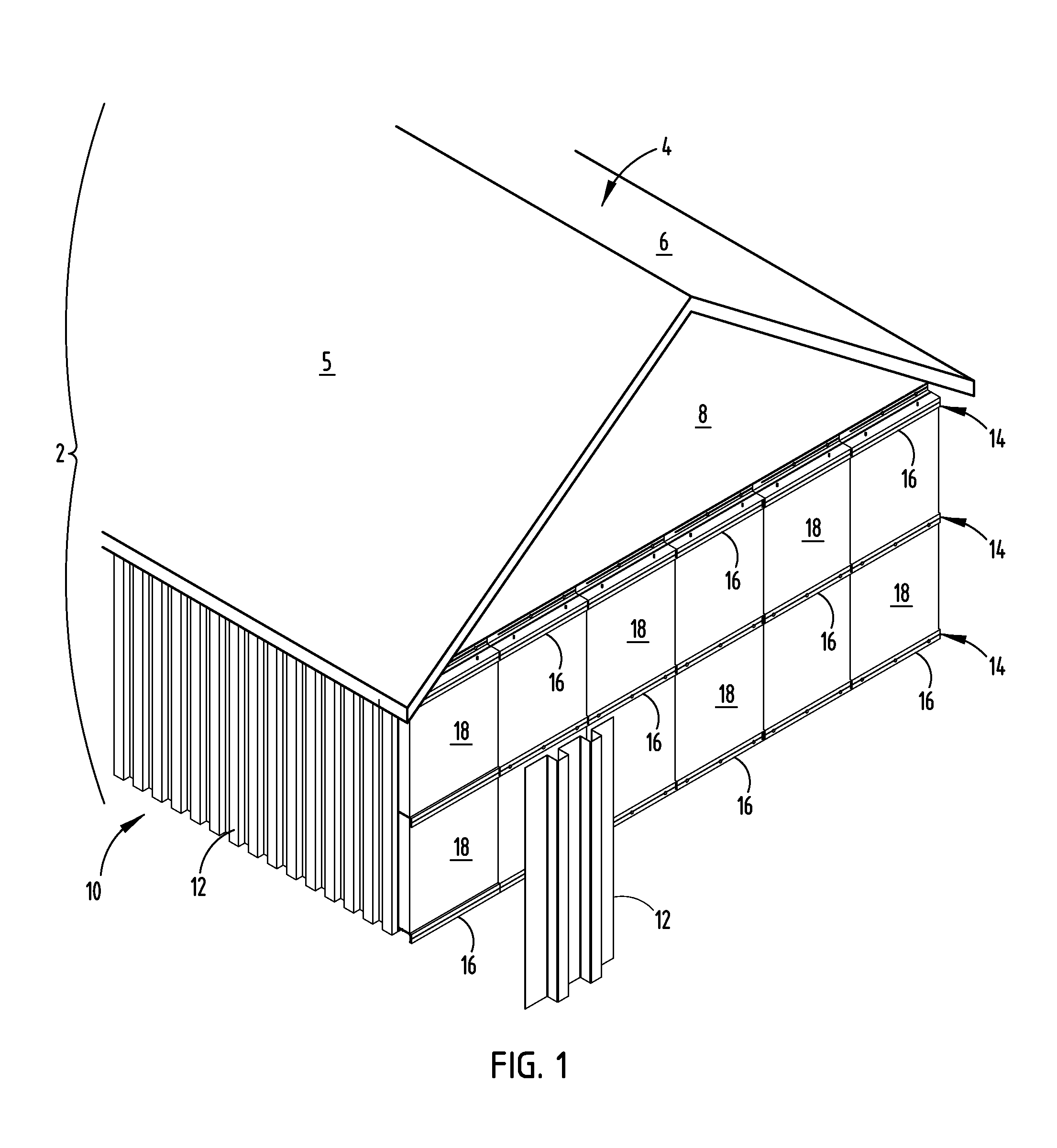
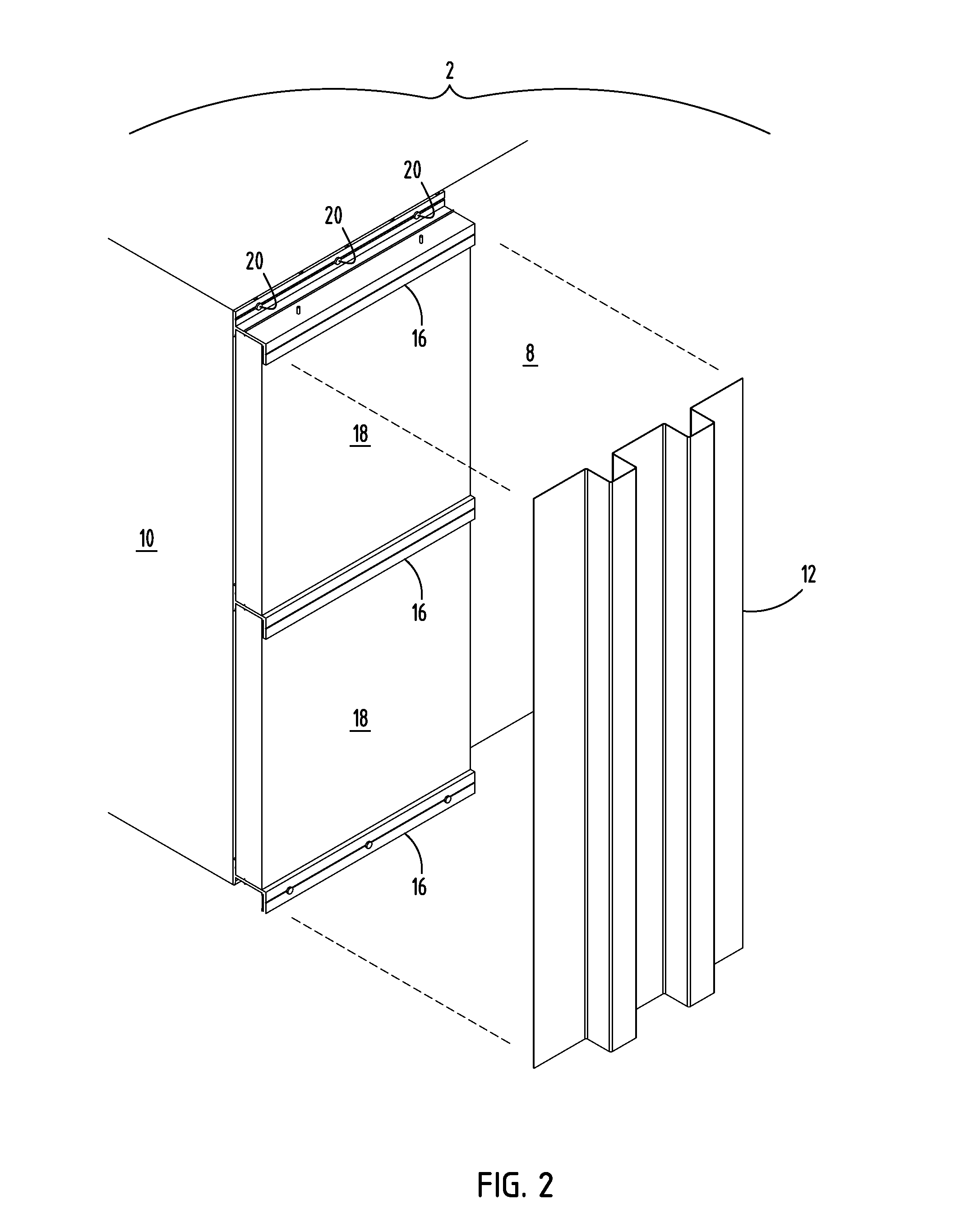
[0045]The reference numeral 2 (FIG. 1) generally designates one embodiment of the present invention wherein a building structure includes a roof 4 with sides 5, 6, a front wall 8, and a side wall 10. The side wall or building substrate 10 is covered by exterior cladding units 12 which, ...
PUM
| Property | Measurement | Unit |
|---|---|---|
| length | aaaaa | aaaaa |
| thermal conductivity | aaaaa | aaaaa |
| resistance | aaaaa | aaaaa |
Abstract
Description
Claims
Application Information
 Login to View More