
EGFR aptamer inhibitor for use in therapy and diagnosis
- Summary
- Abstract
- Description
- Claims
- Application Information
AI Technical Summary
Benefits of technology
Problems solved by technology
Method used
Image

Examples
Embodiment Construction
Materials and Methods
CL4 42-81 Aptamer
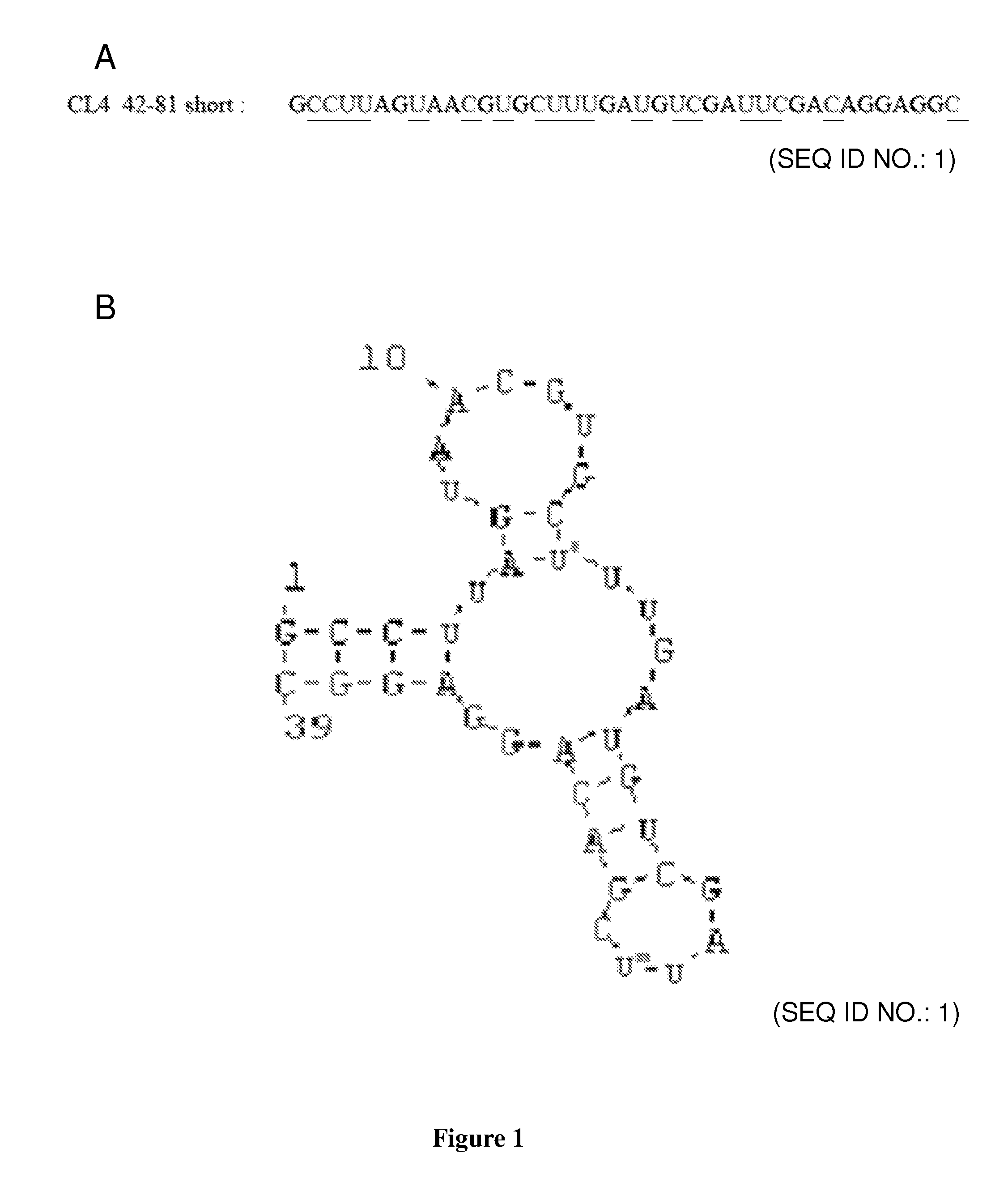
[0034]CL4 42-81 aptamer is a 2′-fluoropyrimidine (2′F-Py), nuclease-resistant RNA aptamer consisting of 39 nt:
[0035]
(SEQ ID No. 1)5′ GCCUUAGUAACGUGCUUUGAUGUCGAUUCGACAGGAGGC 3′.
[0036]2′-fluoro (amino) pyrimidine modifications, 2′-O-alkyl nucleotides, 3′ end cap and locked nucleic acids, LNA modifications, are the modification that significantly enhance RNA stability and may be used in the present invention.
[0037]CL4 42-81 aptamer and a scrambled sequence used as a negative control were purchased from Sigma (Sigma, St. Louis, Mo.).
Cells and shRNA Transfection
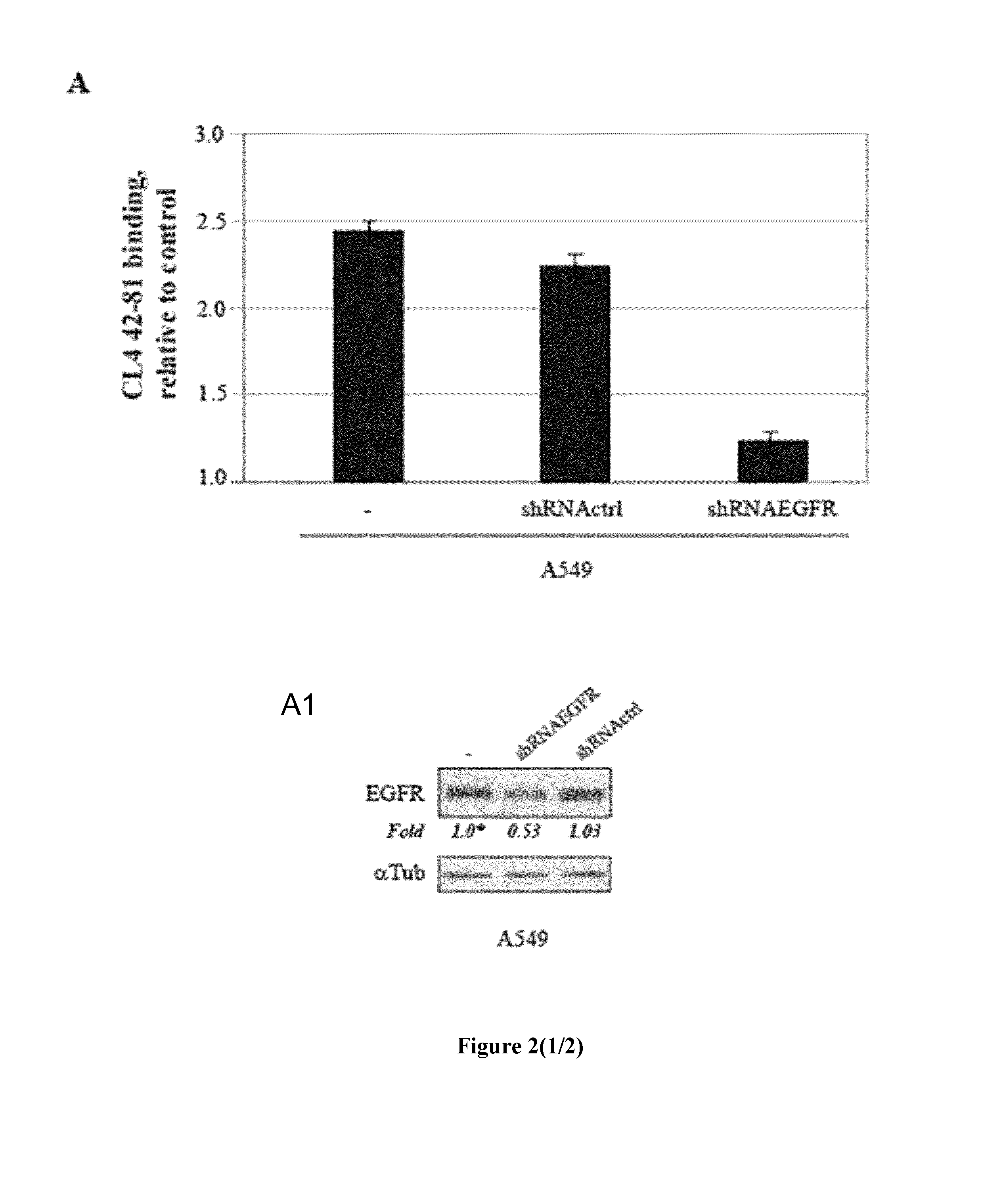
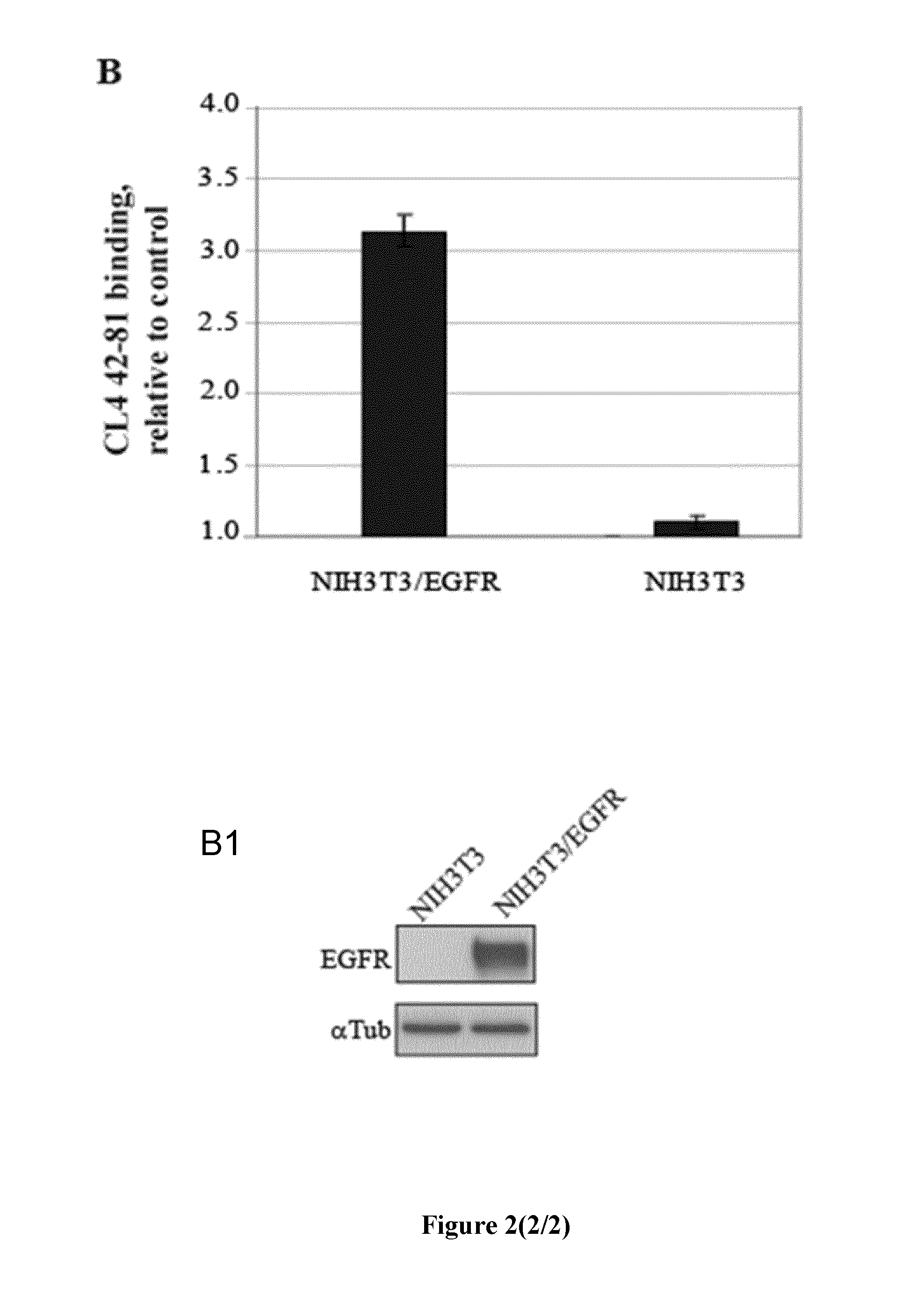
[0038]Human NSCLC A549, epidermoid carcinoma A431, glioma U87MG and T98G, breast SKBr3, MCF7 and T47D and mouse fibroblast NIH3T3 (all from American Type Culture Collection, Manassas, Va.) cells were grown in Dulbecco's modified Eagle medium (DMEM) supplemented with 10% fetal bovine serum (FBS) and 2 mM L-glutamine (Invitrogen, Carlsbad, Calif.). NIH3T3 cells stably transfected with human EGFR...
PUM
| Property | Measurement | Unit |
|---|---|---|
| concentration | aaaaa | aaaaa |
| pH | aaaaa | aaaaa |
| wavelengths | aaaaa | aaaaa |
Abstract
Description
Claims
Application Information
 Login to View More