Determination of a measure of a glycation end-product or disease state using tissue fluorescence

A tissue and state technology, applied in the field of using tissue fluorescence to determine a certain glycation end product or disease state, can solve problems such as technologies or methods that do not mention variable characteristics

A tissue and state technology, applied in the field of using tissue fluorescence to determine a certain glycation end product or disease state, can solve problems such as technologies or methods that do not mention variable characteristics

CN100998499AInactive Publication Date: 2007-07-18VERALIGHT INC

Image

Smart Image Click on the blue labels to locate them in the text.
Viewing Examples
Smart Image
  • Determination of a measure of a glycation end-product or disease state using tissue fluorescence
  • Determination of a measure of a glycation end-product or disease state using tissue fluorescence
  • Determination of a measure of a glycation end-product or disease state using tissue fluorescence

Examples

Experimental program
Comparison scheme
Effect test

Embodiment Construction

[0043] Exposure of proteins to glucose generally results in non-enzymatic glycation and sugar oxidation, a process known as the Maillard reaction. The stable end products of the Maillard reaction are collectively referred to as advanced glycation end products (AGEs). In the absence of significant clearance, the AGEs accumulate at a rate proportional to mean blood glucose levels. The Maillard reaction can be thought of as an aging process that occurs regularly in the healthy state and is accelerated in diabetic patients by the presence of chronic hyperglycemia. In the skin, collagen is the most abundant protein and is susceptible to glycation. Skin collagen AGEs are usually in the form of fluorescent cross-links and adducts; pentosidine (cross-link) and carboxymethyllysine (CML, adduct) are two well-studied skin- Collagen AGE example. Other AGE examples include fluorolink, pyrraline, crossline, N'..-(2-carboxyethyl)lysine (CEL), glyoxal-lysine dimer (GOLD), methylethyl Dial...

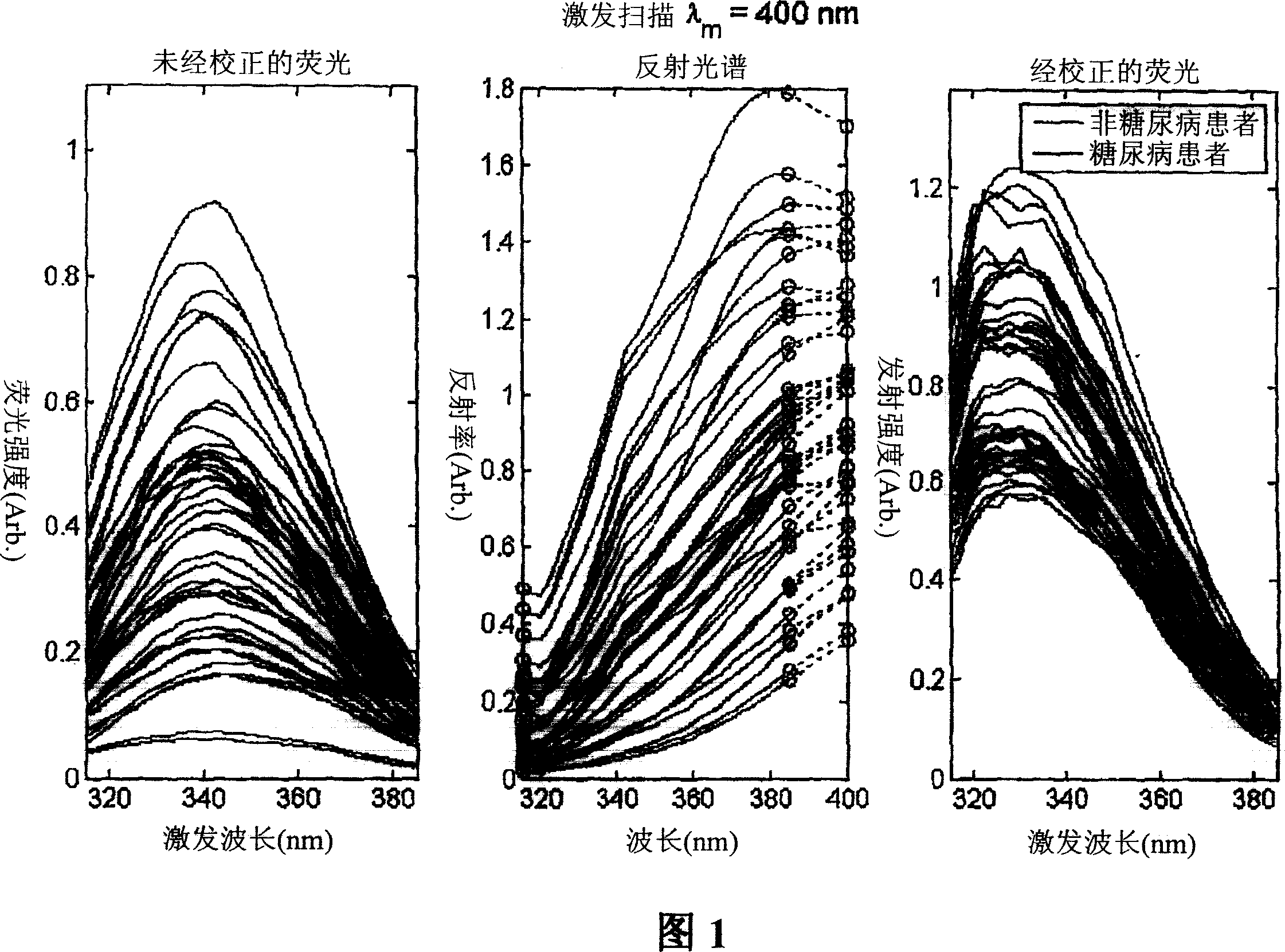
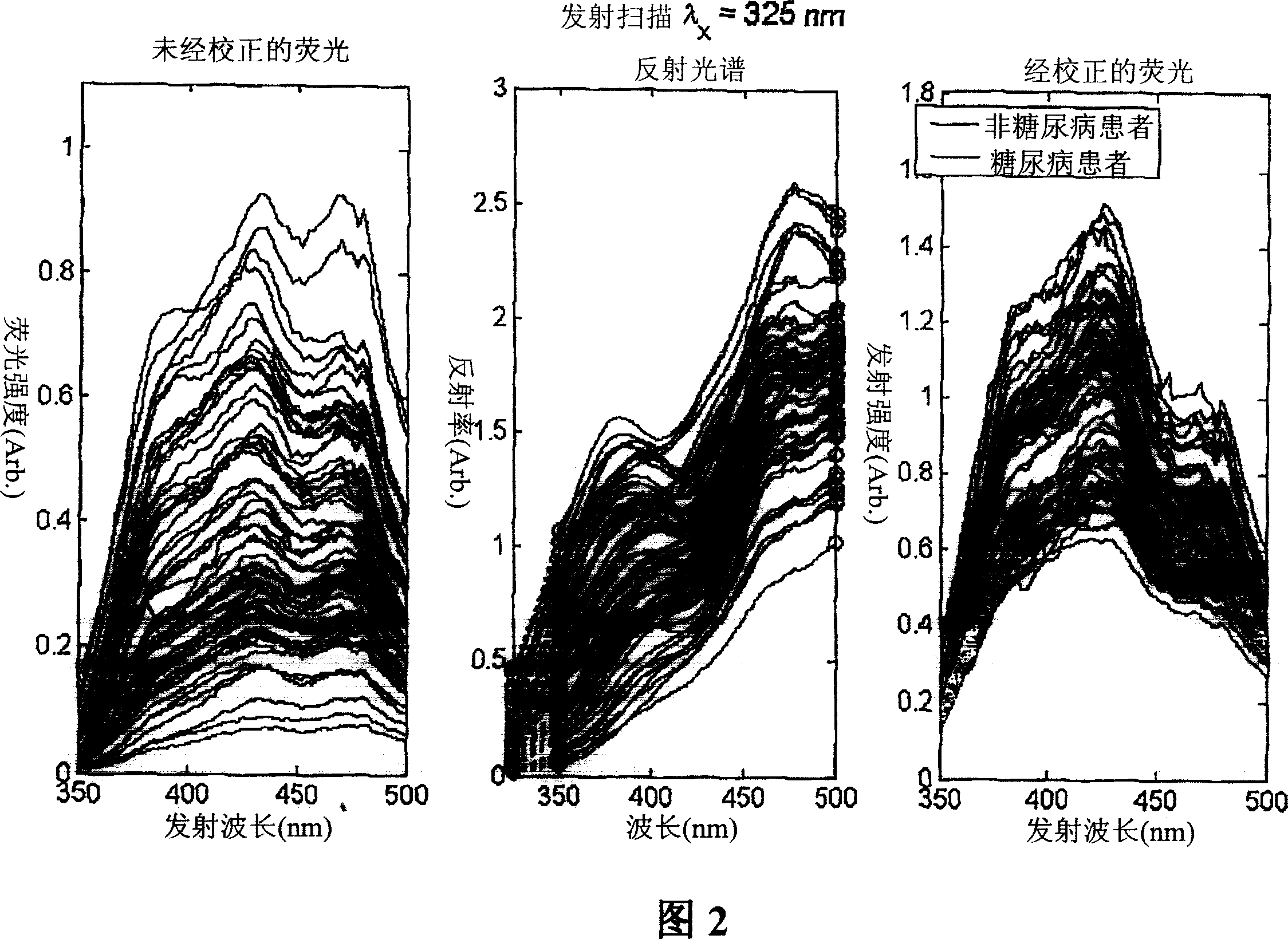
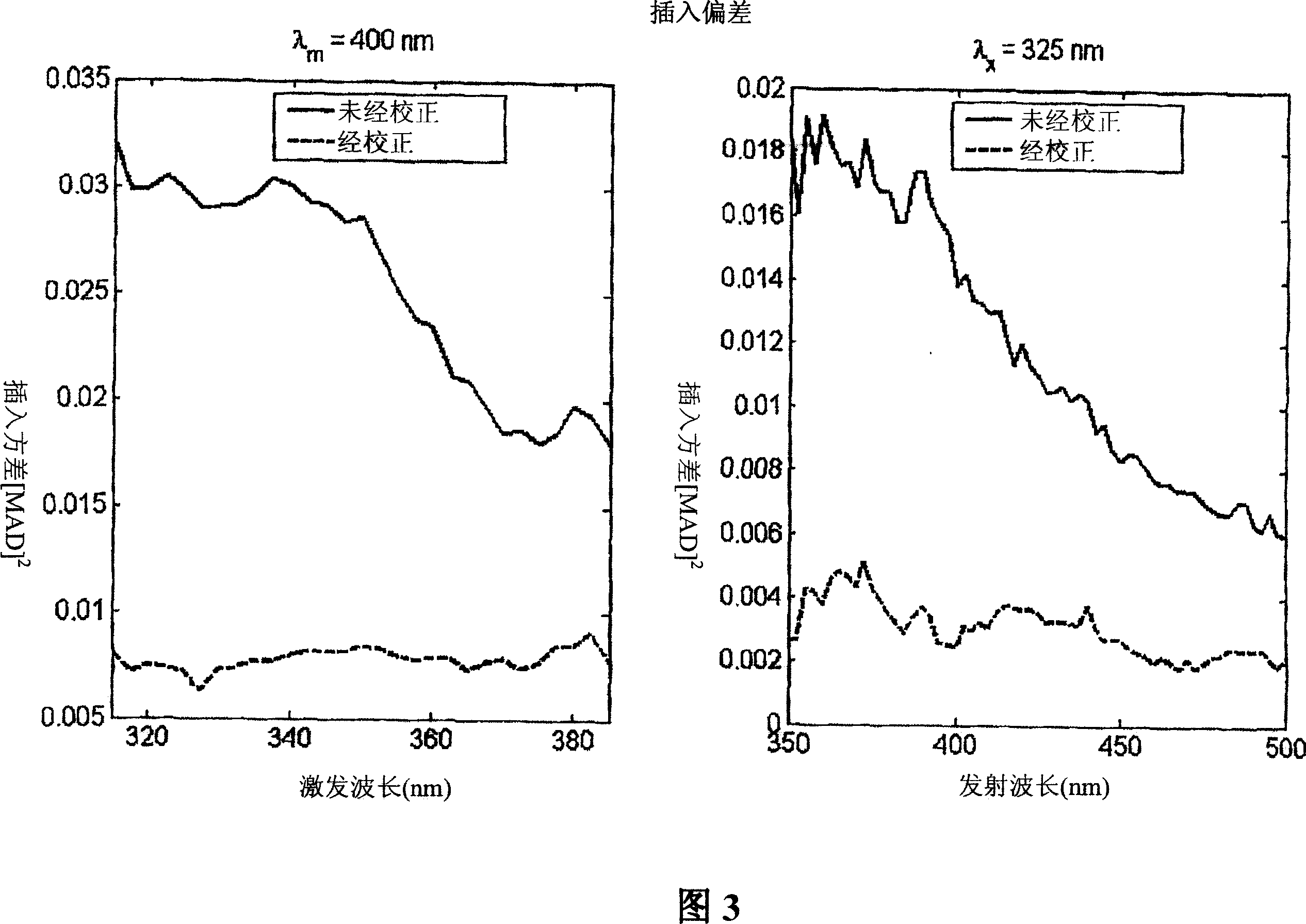
the structure of the environmentally friendly knitted fabric provided by the present invention; figure 2 Flow chart of the yarn wrapping machine for environmentally friendly knitted fabrics and storage devices; image 3 Is the parameter map of the yarn covering machine
Login to View More

PUM

No PUM Login to View More

Abstract

A method of determining a measure of a tissue state (e.g., glycation end-product or disease state) in an individual is disclosed. A portion of the individual's tissue is illuminated with excitation light from a light source subsystem (A) and light emitted by the tissue due to fluorescence of a chemical within the tissue responsive to the excitation light is detected by a detection subsystem (C). The detected light can be combined with a model stores in the signal processor (D), which relates fluorescence with a measure of tissue state to determine a tissue state. Correction techniques can be used to reduce errors due to the detection of non-fluorescent light, such as the reflectance of the tissue. Other biologic information can also be sued in combination with the fluorescence properties to aid in the determination of a measure of tissue state.

Description

[0001] CROSS-REFERENCE TO RELATED APPLICATIONS [0002] This application claims priority under 35 U.S.C § 120 to U.S. Patent Application No. 10 / 116,272, entitled "Apparatus And Method For Spectroscopic Analysis Of Tissue To Detect Diabetes In An Individual," filed April 4, 2002 (cited by Incorporated herein), and claiming that the U.S. Provisional Application No. 60 / 515,343, filed on October 28, 2003, entitled "Determination of a Measure of a Glycation End-Productor Disease State Using Tissue Fluorescence" (by reference manner incorporated herein). technical field [0003] The present invention generally relates to determination of tissue state from tissue fluorescence. More specifically, the present invention relates to a method and apparatus for determining a model relating tissue fluorescence to tissue state, a method and apparatus for determining tissue fluorescence properties, and a method and apparatus for determining tissue state through fluorescence properties and an...

Claims

the structure of the environmentally friendly knitted fabric provided by the present invention; figure 2 Flow chart of the yarn wrapping machine for environmentally friendly knitted fabrics and storage devices; image 3 Is the parameter map of the yarn covering machine
Login to View More

Application Information

Patent Timeline
18 Jul 2007
Publication
CN100998499A
IPC
A61B5/00
CPC
A61B5/0068; A61B5/0071; A61B5/0066; A61B5/0075
Inventors
L·爱德华·赫尔; 尼尔·埃迪吉尔·马伍德