Integrity monitoring method suitable for satellite lacking situation of global navigation satellite system (GNSS)
A technology for integrity monitoring and lack of stars, applied in the field of satellite navigation, it can solve the problem that the RAIM algorithm cannot realize fault monitoring, and achieve the effect of improving the integrity
- Summary
- Abstract
- Description
- Claims
- Application Information
AI Technical Summary
Problems solved by technology
Method used
Image

Examples
Embodiment 1
[0077] Since BD-1 has only 3 satellites, the lack of satellites for integrity monitoring is an inherent problem, and it has entered the aging stage, so the issue of integrity monitoring is particularly important. Therefore, taking BD-1 as a research example to further illustrate the method provided by the present invention, there are the following specific implementation steps:
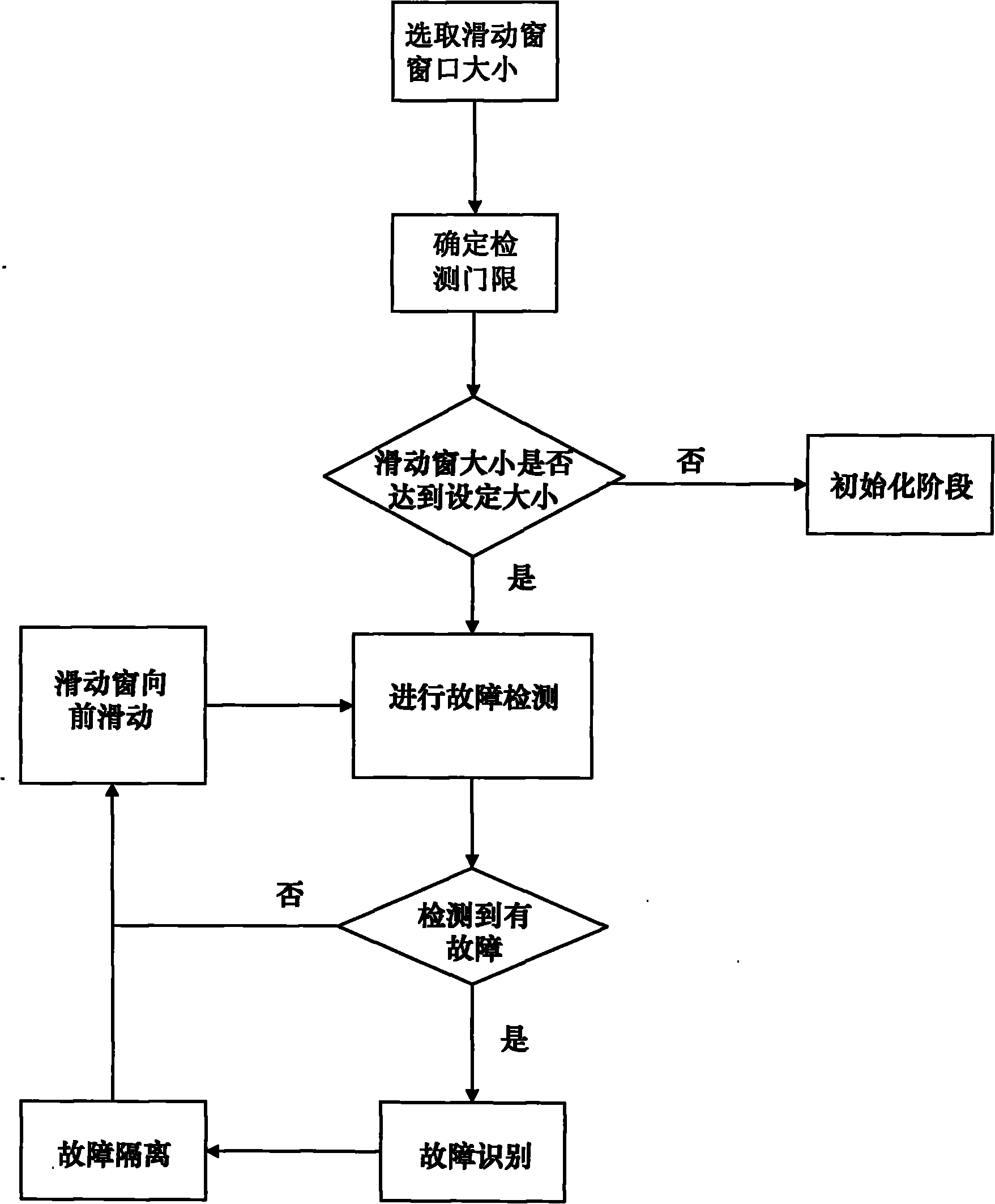
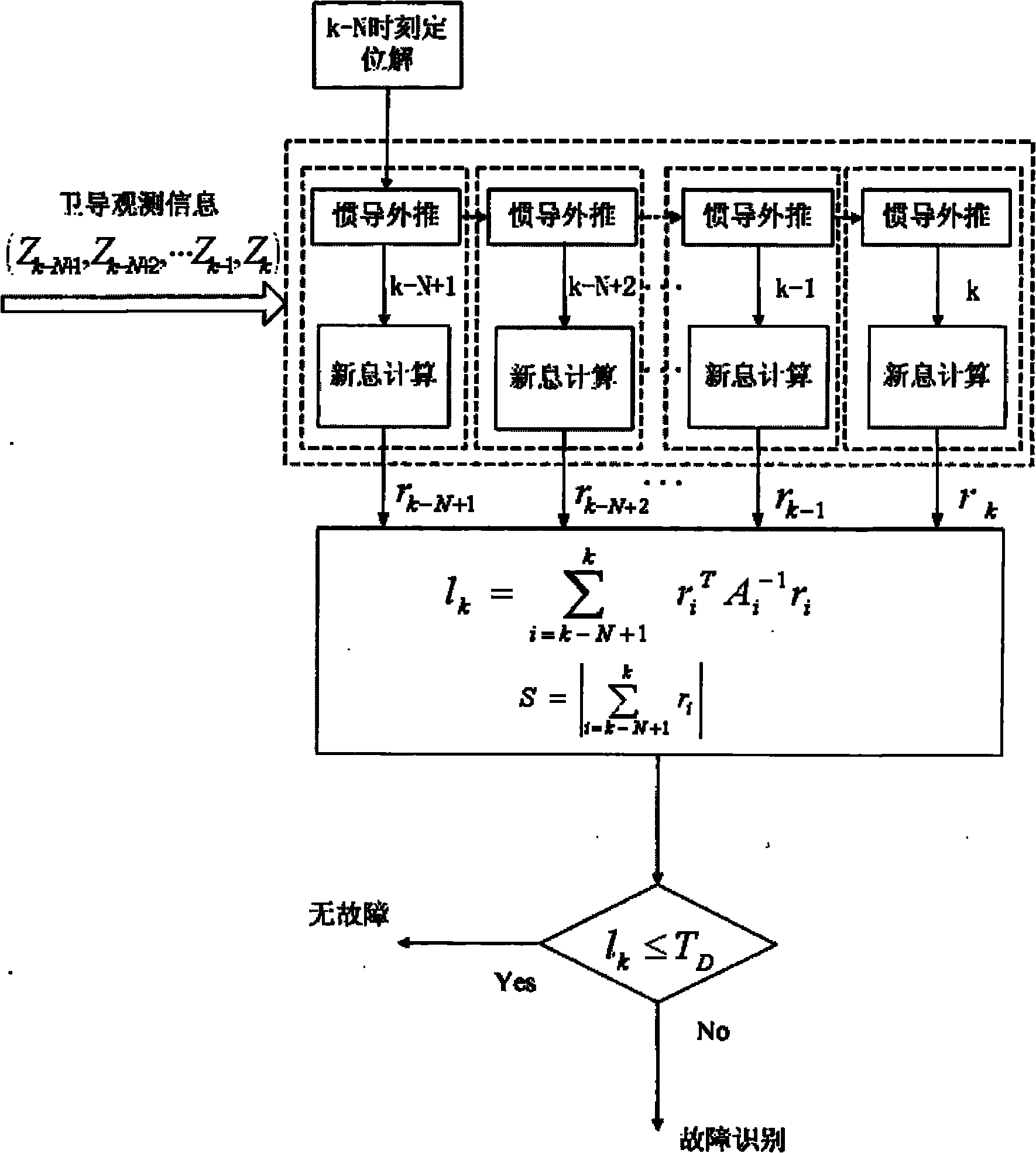
[0078] Step 1. Select the sliding window size and determine the detection threshold according to the integrity performance requirements of the satellite navigation system and the inertial navigation accuracy;
[0079] In this example, the inertial navigation accuracy is high and is damped by the barometric altimeter. The gyroscope zero bias is 0.02 degrees / hour, and the accelerometer zero bias is 100mg.
[0080] Integrity performance parameters are selected according to the Minimum Operational Performance Standards (MOPS) for GPS integrity assurance in civil aviation flight formulated by the Radio Tec...
Embodiment 2
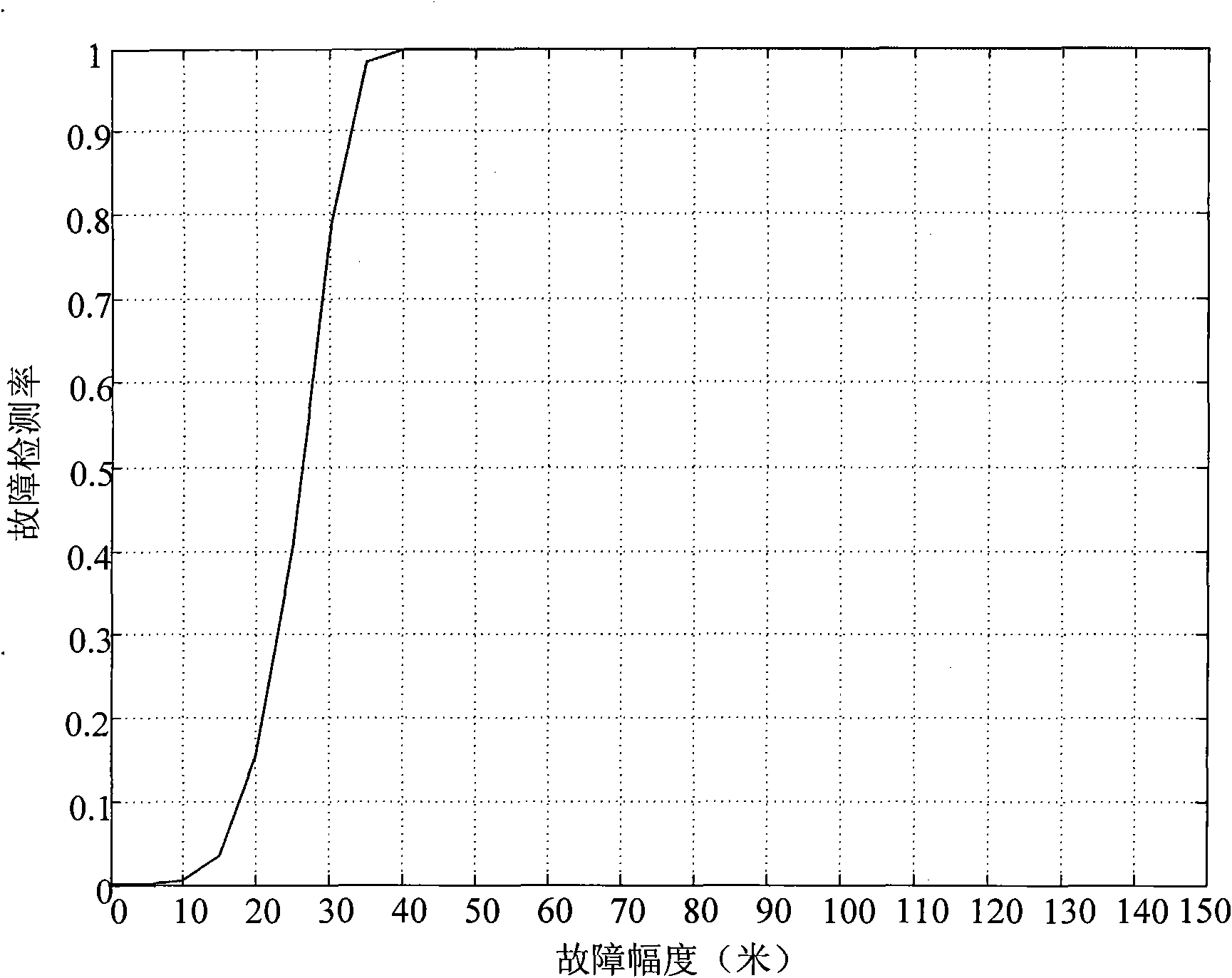
[0095] Select the BD-1 satellite as the faulty satellite, and set the faulty deviation from 0m to 150m with a step size of 10m. The user's location is set near Beijing (116° east longitude, 40° north latitude), and a 5-hour simulation is performed to obtain the fault detection rate curve as follows: image 3 As shown, the fault recognition rate curve is shown as Figure 4 shown.
[0096] Depend on image 3 It can be seen that after a fault deviation of 40 meters, the fault detection rate is approximately 100%. Depend on Figure 4 It can be seen that when the fault amplitude is greater than 100 meters, the recognition rate is approximately 100%. That is, after the fault amplitude is greater than 100 meters, this algorithm can complete the fault monitoring very well.
PUM
 Login to View More
 Abstract
Description
Claims
Application Information
 Login to View More
 - R&D
- Intellectual Property
- Life Sciences
- Materials
- Tech Scout
- Unparalleled Data Quality
- Higher Quality Content
- 60% Fewer Hallucinations
Browse by: Latest US Patents, China's latest patents, Technical Efficacy Thesaurus, Application Domain, Technology Topic, Popular Technical Reports.
© 2025 PatSnap. All rights reserved.Legal|Privacy policy|Modern Slavery Act Transparency Statement|Sitemap|About US| Contact US: help@patsnap.com