Unlock instant, AI-driven research and patent intelligence for your innovation.

Current-limiting circuit

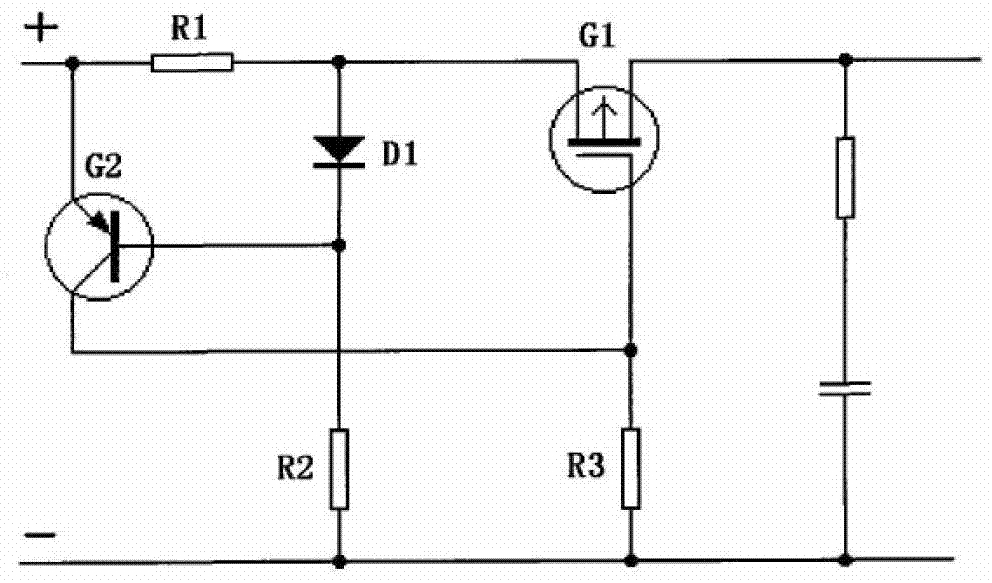
A current-limiting circuit and current-limiting technology, applied in circuit devices, emergency protection circuit devices for limiting overcurrent/overvoltage, emergency protection circuit devices, etc. Circuit current limiting protection and other issues

Active Publication Date: 2015-06-17
MORNSUN GUANGZHOU SCI & TECH
View PDF5 Cites 1 Cited by
  • Summary
  • Abstract
  • Description
  • Claims
  • Application Information

AI Technical Summary

Problems solved by technology

[0025] 1. The fuse in the prior art has the disadvantages of long fusing time and non-recovery after fusing;
[0026] 2. The self-recovery fuse reacts slowly when over-current, and there is still a large maintenance current after protection; after the working voltage changes, it is necessary to re-select the model, which is inconvenient to use;
[0027] 3. The electronic fuse using the sampling coil has a large volume and cannot perform current limiting protection on the DC circuit;
[0028] 4. Other current-limiting circuits used in DC circuits have large voltage drops and cause large losses. Only a large heat sink can be added to the device to work normally, and the cost is relatively high
[0029] So far, there is no low-cost low-dropout interception protection circuit

Method used

the structure of the environmentally friendly knitted fabric provided by the present invention; figure 2 Flow chart of the yarn wrapping machine for environmentally friendly knitted fabrics and storage devices; image 3 Is the parameter map of the yarn covering machine
View more

Image

Smart Image Click on the blue labels to locate them in the text.
Viewing Examples
Smart Image
  • Current-limiting circuit
  • Current-limiting circuit
  • Current-limiting circuit

Examples

Experimental program
Comparison scheme
Effect test

no. 1 example

[0063] Figure 5 It shows the schematic diagram of the original technical solution of the present invention, which is also the schematic diagram of the circuit of the first embodiment; the connection relationship of the circuit has been described in detail in the summary of the invention, and the working principle has also been described. Such as Figure 5 As shown, the load is connected to the + and - of the output terminal, + indicates the current limiting output positive terminal +, - indicates the current limiting output negative terminal -, in order to facilitate the understanding of the circuit connection relationship, the connection relationship is described again here, a current limiting circuit such as Figure 5 As shown, including the first resistor R1, the second resistor R2, the third resistor R3, the fourth resistor R4, the fifth resistor R5, the sixth resistor R6, the seventh resistor R7, the eighth resistor R8, the first capacitor C1, the A triode T1, a second...

no. 2 example

[0075] Figure 6 Shows the schematic circuit diagram of the second embodiment of the present invention; compared with the first embodiment, except that the ninth resistor R9 and the first Zener diode D1 are used instead of Figure 5 Except for the voltage stabilizing circuit 100 in , the connection relationship is exactly the same, Figure 6 The medium voltage stabilizing circuit is: a circuit composed of the ninth resistor R9 and the first voltage stabilizing diode D1, one end of the ninth resistor R9 is the voltage stabilizing input terminal 1 of the voltage stabilizing circuit, connected to the positive V+ input of the power supply; the other end of the ninth resistor R9 Connect the cathode of the first voltage stabilizing diode D1, the connection point forms the voltage stabilizing output terminal 3 of the voltage stabilizing circuit 100, and connects the other end of the eighth resistor R8; the anode of the first voltage stabilizing diode D1 is the voltage stabilizing gro...

no. 3 example

[0087] Figure 7 Shows the schematic circuit diagram of the third embodiment of the present invention; compared with the second embodiment, the first triode T1 is replaced by an NPN bipolar transistor with a MOS transistor, in order to protect the MOS transistor from being too large V GS If the voltage is damaged, a second Zener diode D2 is added to protect the first triode T1. In fact, some MOS manufacturers have put Figure 7 The second Zener diode D2 is integrated inside the MOS tube.

[0088]Replacing bipolar transistors with MOS transistors is a known technology, so the working principle of the third embodiment is still the same as that described in the summary of the invention, and will not be repeated here.

[0089] Here also provide a group of real test data to illustrate the beneficial effect of the present invention, Figure 7 The circuit is designed as an "electronic fuse" with a working voltage between 5V and 36V, a normal working current of 4A, and a current-l...

the structure of the environmentally friendly knitted fabric provided by the present invention; figure 2 Flow chart of the yarn wrapping machine for environmentally friendly knitted fabrics and storage devices; image 3 Is the parameter map of the yarn covering machine
Login to View More

PUM

No PUM Login to View More

Abstract

The invention discloses a current-limiting circuit which comprises a first resistor (R1), a second resistor (R2), a third resistor (R3), a fourth resistor (R4), a fifth resistor (R5), a sixth resistor (R6), a seventh resistor (R7), an eighth resistor (R8), a first capacitor (C1), a first triode (T1), a second triode (T2), a third triode (T3), a fourth triode (T4) and a voltage stabilizing circuit (100). The voltage stabilizing circuit provides bias to a base electrode of the fourth triode through the eighth resistor, voltage drop of the fifth resistor during normal running is small, the fourth triode can be conducted by slight voltage rise of the fifth resistor when in over current of an output end, then the third triode is in saturated conduction so as to cut off the second triode and the first triode, so that current limit protection is realized. Once circuit protection is started, the seventh resistor maintains the protection state of the circuit. The current-liming current is quick in response, capable of resetting automatically, is small in size, low in voltage drop, low in maintenance current and heating volume after being protected.

Description

technical field [0001] The invention relates to a current limiting circuit, in particular to a recoverable current limiting circuit in a direct current circuit. Background technique [0002] There are many kinds of current-limiting circuits or devices. The fuse invented by the American inventor Thomas Alva Edison (Thomas Alva Edison, 1847-1931) more than a hundred years ago is a current-limiting device. The fuse (fuse) is also called a current fuse. IEC127 The standard defines it as a "fuse-link". [0003] Table 1 shows the electrical characteristics of the ultra-fast-acting fuses in the prior art, which meet the certification standards of CCC in China and UL in the United States. [0004] Table I [0005] [0006] From Table 1, we can see the characteristics of the fuse in the prior art. When the current is 200% of the rated current, the fusing time is allowed to be as long as 1 second, and the actual measurement is above 300mS, that is, more than 0.3 seconds. Exclude...

Claims

the structure of the environmentally friendly knitted fabric provided by the present invention; figure 2 Flow chart of the yarn wrapping machine for environmentally friendly knitted fabrics and storage devices; image 3 Is the parameter map of the yarn covering machine
Login to View More

Application Information

Patent Timeline
no application Login to View More
Patent Type & Authority Patents(China)
IPC IPC(8): H02H9/02
Inventor 王保均
Owner MORNSUN GUANGZHOU SCI & TECH
Features
  • R&D
  • Intellectual Property
  • Life Sciences
  • Materials
  • Tech Scout
Why Patsnap Eureka
  • Unparalleled Data Quality
  • Higher Quality Content
  • 60% Fewer Hallucinations
Social media
Patsnap Eureka Blog
Learn More