

Steady state visual evoked potential brain-computer interface signal identification method
A steady-state visual induction and signal recognition technology, applied in the field of neural engineering, can solve problems such as myoelectric signal interference, classification errors, and unstable EEG signals
- Summary
- Abstract
- Description
- Claims
- Application Information
AI Technical Summary
Problems solved by technology
Method used
Image


Examples
Embodiment Construction
[0031] DETAILED DESCRIPTION OF THE PREFERRED EMBODIMENTS The preferred embodiments of the present invention will be described in more detail below with reference to the accompanying drawings of the present invention.
[0032] A brain-computer interface method based on active confirmation of steady-state visual evoked potentials, comprising the following steps:
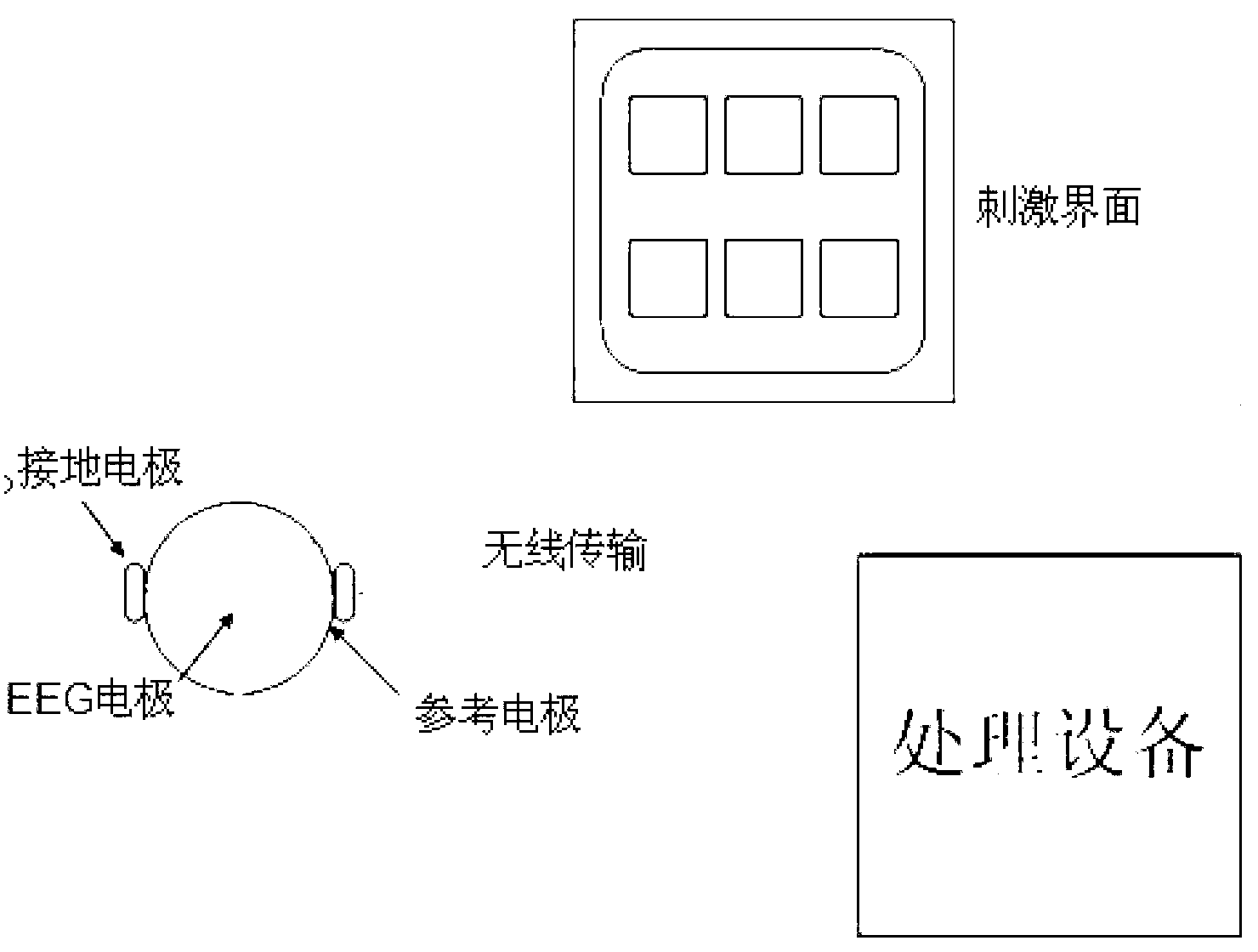
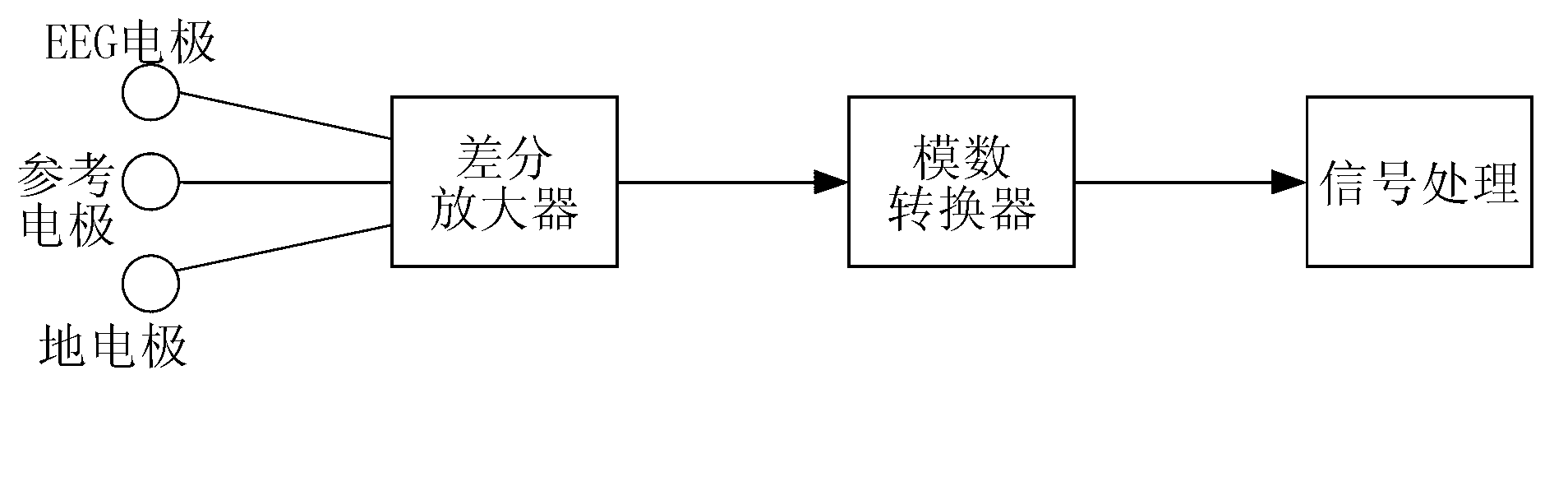
[0033] Step 1: In the occipital lobe O of the subject's head Z An electroencephalograph electrode (EEG electrode) is placed at the position, a reference electrode is placed at the position of one ear pinna, and a grounding electrode is placed at the position of the other ear pinna. signal (such as figure 2 and image 3 ), and use wireless devices and computers for data transmission, and use computers to store the collected EEG signals.
[0034] Step 2: Use the display screen to display the stimulus picture. First, the display screen will display a black screen for 10s. The purpose is to record the resting EEG signa...
PUM
 Login to View More
 Abstract
Description
Claims
Application Information
 Login to View More