
A kind of acid β-mannanase and its gene and application
A mannanase and acidic technology, applied in the field of genetic engineering, can solve problems such as poor thermal stability, low expression level, and inappropriate pH range
- Summary
- Abstract
- Description
- Claims
- Application Information
AI Technical Summary
Problems solved by technology
Method used
Image

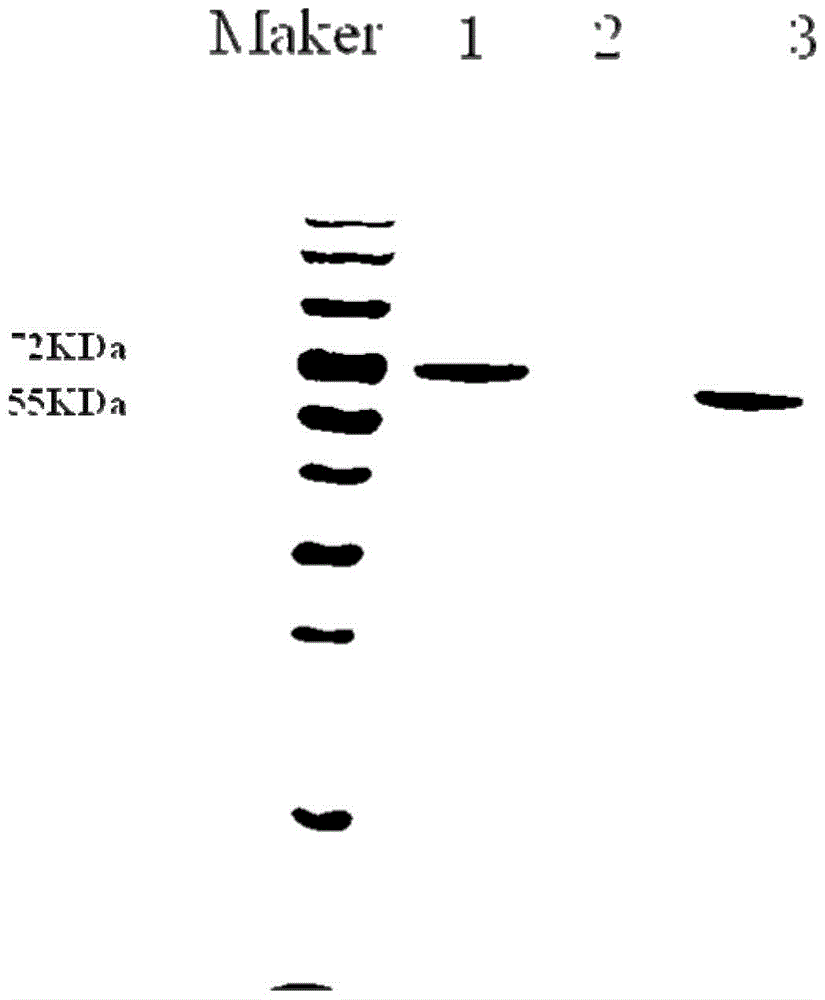
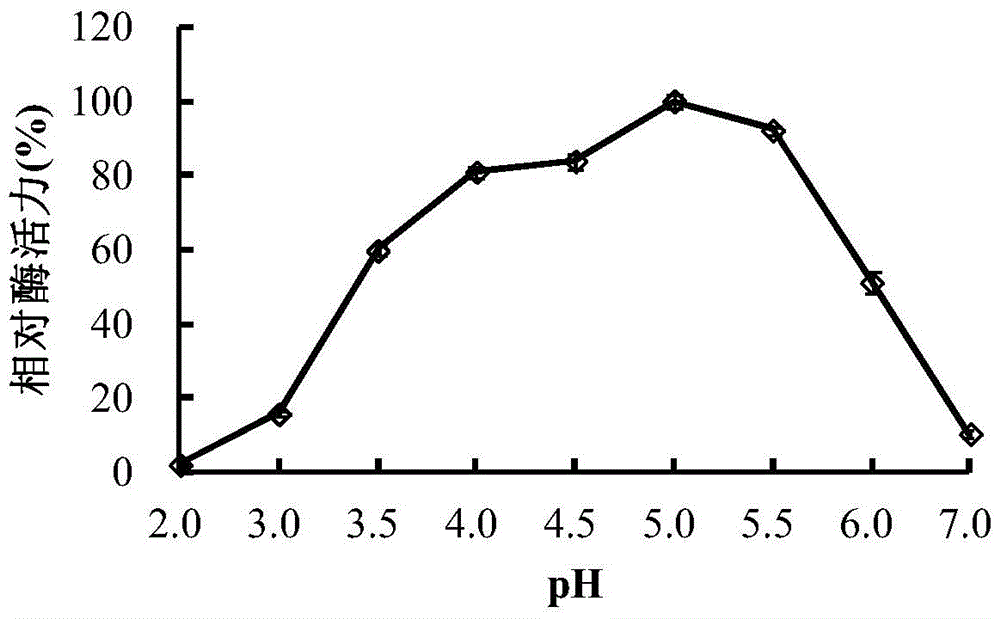
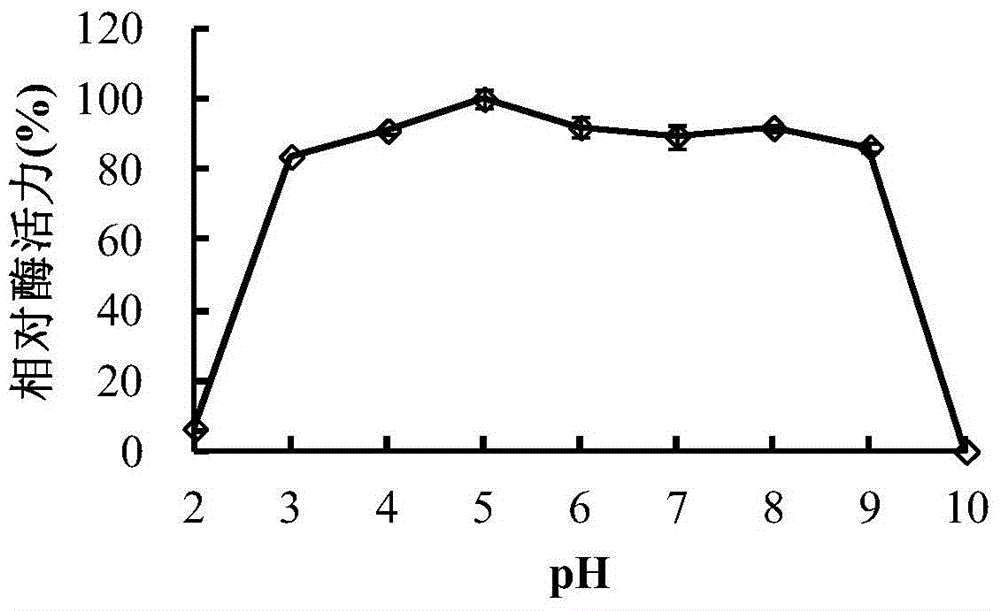
Examples
Embodiment 1
[0136] Cloning of embodiment 1β-mannanase encoding gene man5D
[0137] Extraction of Staphylotrichum coccosporum genomic DNA
[0138] Staphylotrichum coccosporum NBRC31817 was purchased from NBRC (NITE biological resource center) in Japan.
[0139] The bacteria cultured in the enzyme-producing medium for 3 days were centrifuged at 12,000 rpm for 10 minutes, and the collected mycelium was added to a high-temperature sterilized mortar, and quickly ground to powder with liquid nitrogen, and then the ground bacteria were transferred to a new 50mL centrifuge tube filled with 15ml CTAB lysate, gently invert up and down to mix, place in a 70°C water bath for 3 hours, every 20min, invert up and down and gently mix once to fully lyse the bacteria. Centrifuge at 12,000 rpm at 4°C for 10 min, pipette the supernatant into a new centrifuge tube, add an equal volume of chloroform for extraction, and place at room temperature for 5 min. Centrifuge at 12,000 rpm for 10 min at 4°C. Take the...
Embodiment 2
[0145] Example 2 Obtaining of β-mannanase cDNA
[0146] Extraction of Staphylotrichum coccosporum total RNA using Oligo(dT) 20 and reverse transcriptase to obtain a strand of cDNA, and then design primers F and R to amplify the open reading frame (see Table 1), amplify the single-stranded cDNA, obtain the cDNA sequence of mannanase, and amplify the product After recovery, they were sent to Sanbo Biotechnology Co., Ltd. for sequencing.
[0147] After comparing the genome sequence and cDNA sequence of mannanase, it was found that the gene contained 4 introns, the cDNA was 1362 bp long, encoded 453 amino acids and a stop codon, and the N-terminal 16 amino acids were its signal peptide sequence. The comparison proves that the gene encoding mannanase isolated and cloned from Staphylotrichum coccosporum is a new gene.
Embodiment 3
[0148] The construction of embodiment 3 β-mannanase engineering strains
[0149] (1) Construction of expression vector and expression in yeast
[0150] Using the correctly sequenced mannanase Man5DB cDNA as a template, the expression primers F and R with EcoR I and Not I restriction sites were designed and synthesized (see Table 1) for the coding region of the mature protein of Man5DB Amplify. And utilize EcoR I and Not I to digest the PCR product, connect into the expression vector pPIC9 (Invitrogen, San Diego), the sequence of β-mannanase Man5DB mature protein is inserted into the downstream of the signal peptide sequence of the above expression vector, and signal peptide The correct reading frame was formed, and the yeast expression vector pPIC9-man5DB was constructed to transform E. coli competent cell JM109. The positive transformants were subjected to DNA sequencing, and the transformants with the correct sequence were used for large-scale preparation of recombinant pl...
PUM
| Property | Measurement | Unit |
|---|---|---|
| molecular weight | aaaaa | aaaaa |
| molecular weight | aaaaa | aaaaa |
| molecular weight | aaaaa | aaaaa |
Abstract
Description
Claims
Application Information
 Login to View More