Check patentability & draft patents in minutes with Patsnap Eureka AI!

Furandicarboxylic acid-lactic acid-diol copolymer and preparation method thereof

A technology of furandicarboxylic acid diol ester and furandicarboxylic acid, which is applied in the field of furandicarboxylic acid-lactic acid-diol copolymer and its preparation, can solve the problems of reducing carboxylic acid activity, high reaction temperature, insignificant performance improvement, etc. problems, to achieve the effect of reducing utilization, reducing content, and improving thermal and mechanical properties

Inactive Publication Date: 2015-12-09
NANJING TECH UNIV
View PDF2 Cites 2 Cited by
  • Summary
  • Abstract
  • Description
  • Claims
  • Application Information

AI Technical Summary

Problems solved by technology

Olewnik et al. used terephthalic acid, lactic acid, and ethylene glycol as substrates to synthesize copolyesters, and improved the thermal and mechanical properties of polylactic acid by introducing aromatic rings, but the thermal properties were not significantly improved (the highest glass transition temperature was 62°C). The molecular weight of the polymer is not high (the highest weight-average molecular weight is around 7000) (Ewa Olewnik, Wojciech Czerwinski, Jacek Nowaczyk, et al. Synthesis and structural study of copolymers of L-lactic acid and bis (2-hydroxyethylterephthalate). European Polymer Journal, 2007, 43: 1009-1009-10 Wang et al. Formic acid, lactic acid, and butanediol are copolymerized to obtain copolyesters, and the performance is also not significantly improved (the highest glass transition temperature is 31.5°C) (Bingtao Wang, Yan Zhang, Pingan Song, et al. Biodegradable aliphatic / aromatic copolyesters based on terephthalic acid and poly (L-lactic acid): synthesis, characterization and hydrolytic degradation. ChineseJournalofPolymerScience, 2010,.28 (3): 405-415.), this may be that the conjugation of the benzene ring of terephthalic acid reduces the activity of the carboxylic acid, so that the polymerization requires a higher reaction temperature, and too high The reaction temperature will cause a large amount of lactic acid components to be thermally degraded into lactide, which is not conducive to the synthesis of copolyester
The copolyesters synthesized by Olewnik et al. and Wang et al. have no practical value due to the unsatisfactory glass transition temperature and relative molecular weight.

Method used

the structure of the environmentally friendly knitted fabric provided by the present invention; figure 2 Flow chart of the yarn wrapping machine for environmentally friendly knitted fabrics and storage devices; image 3 Is the parameter map of the yarn covering machine
View more

Image

Smart Image Click on the blue labels to locate them in the text.
Viewing Examples
Smart Image
  • Furandicarboxylic acid-lactic acid-diol copolymer and preparation method thereof
  • Furandicarboxylic acid-lactic acid-diol copolymer and preparation method thereof
  • Furandicarboxylic acid-lactic acid-diol copolymer and preparation method thereof

Examples

Experimental program
Comparison scheme
Effect test

Embodiment 1

[0028] Add 500g of 90% (mass fraction) L-lactic acid aqueous solution into a four-necked flask, heat it to 110°C for 2 hours under the protection of nitrogen at normal pressure, and then raise the temperature to 160°C for 2 hours, then keep this temperature and reduce pressure, at 100Pa The reaction was continued for 2 h to obtain oligomeric lactic acid (OLLA).

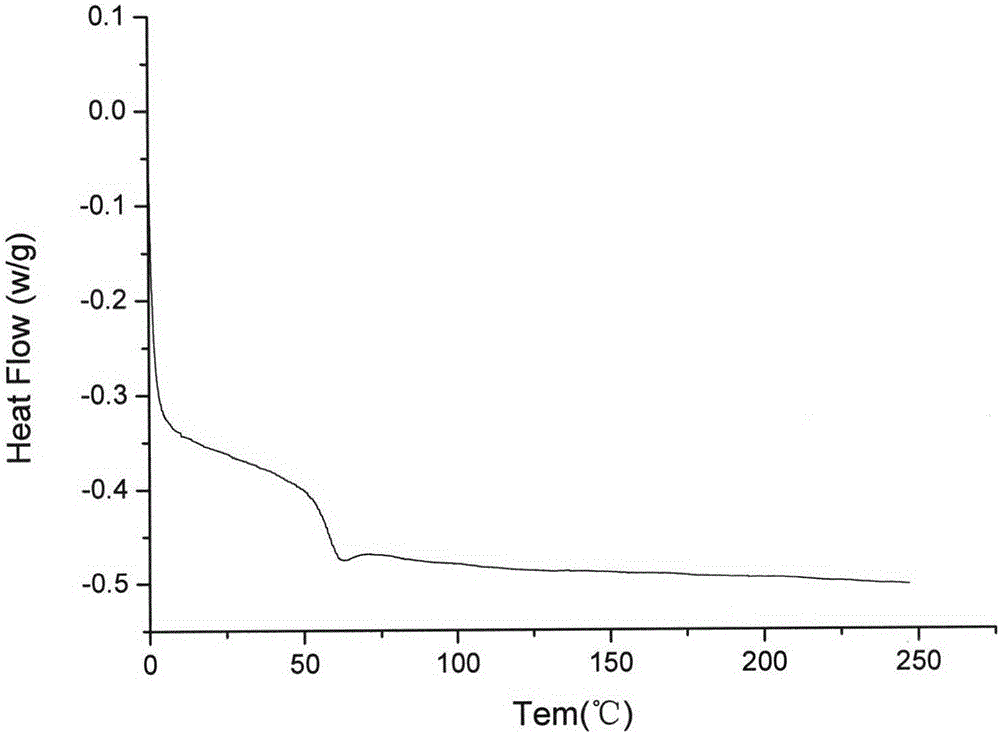
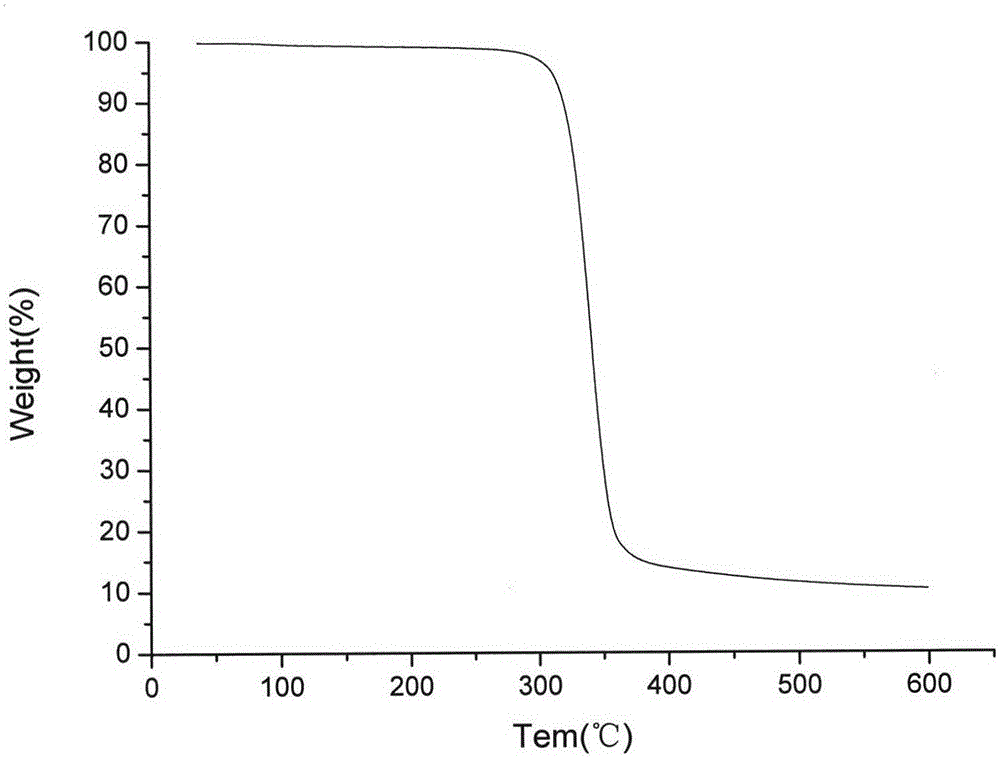
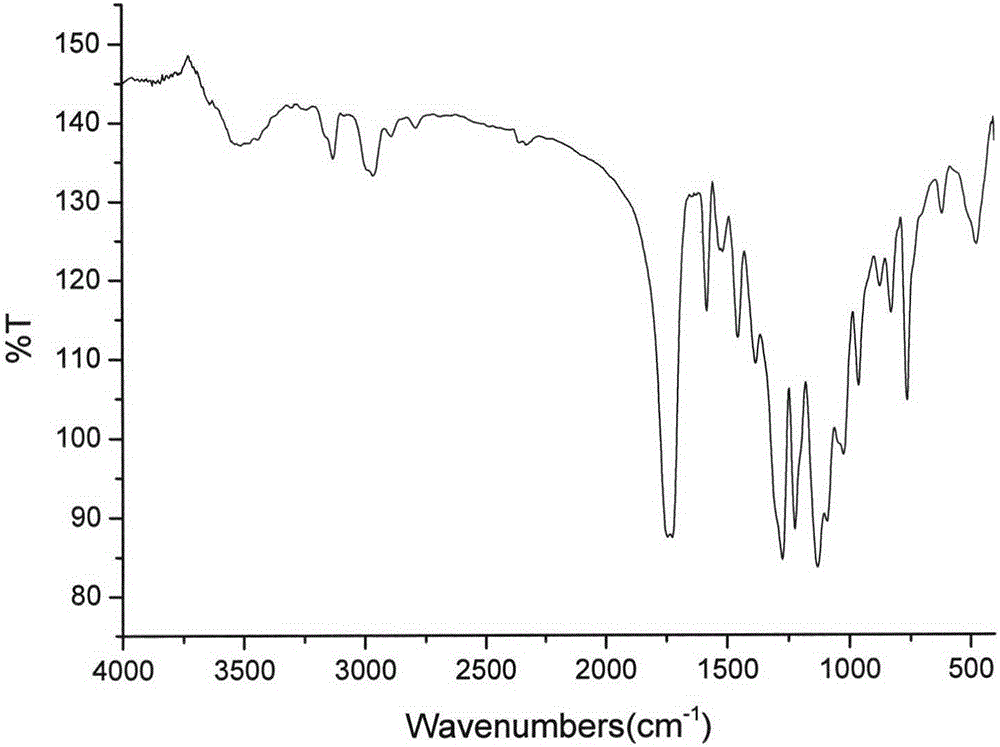
[0029] Furandicarboxylic acid (93.6g), ethylene glycol (94.5g), and tetrabutyl titanate (0.468g) were used as catalysts. In a nitrogen atmosphere, the reaction was mechanically stirred at 150°C under normal pressure for 5h until the solution became homogeneous and transparent. , to generate dihydroxyethylene furandicarboxylate, and then under the protection of nitrogen, add 265.8g OLLA and 0.28g trimethyl phosphate to the generated dihydroxyethylene furandicarboxylate, seal, vacuumize to 500Pa, at 160°C After the reaction, dissolve the obtained product in dichloromethane, then pour it into methanol, the amount of meth...

Embodiment 2

[0031] Add 400g of 80% (mass fraction) D-lactic acid aqueous solution into a four-necked flask, heat it to 120°C for 2 hours under the protection of nitrogen at normal pressure, then raise the temperature to 170°C for 3 hours, then keep this temperature and reduce the pressure, at 200Pa The reaction was continued for 4h to obtain oligomeric lactic acid (OLLA).

[0032] Furandicarboxylic acid (80g), 1,4-butanediol (79g), and tetraisopropyl titanate (0.68g) were used as catalysts. In a nitrogen atmosphere, the reaction was mechanically stirred at 170°C under normal pressure for 5h until the solution became Homogeneous and transparent, generate dihydroxybutylene furandicarboxylate, then under the protection of nitrogen, add 44.5g OLLA and 0.28g triethyl phosphate to the generated dihydroxybutylfurandicarboxylate, seal, vacuumize to 100Pa, React at 180°C for 4 hours. After the reaction is over, dissolve the obtained product in dichloromethane, and then pour it into methanol. The a...

Embodiment 3

[0034] Add 300g of 85% (mass fraction) D, L-lactic acid aqueous solution into a four-necked flask, heat it to 130°C for 2h under normal pressure under the protection of nitrogen, then raise the temperature to 180°C for 3h, then keep the temperature and reduce the pressure. The reaction was continued for 6h at 300Pa to obtain oligomeric lactic acid (OLLA).

[0035]Furandicarboxylic acid (60g), 1,5-pentanediol (70g), and titanium tetrachloride (0.002g) were used as catalysts, and mechanically stirred at 180°C under normal pressure for 6 hours in a nitrogen atmosphere until the solution became homogeneous Transparent, dihydroxypentylene furandicarboxylate is generated, and then under the protection of nitrogen, add 155g OLLA and 0.8g triphenyl phosphite to the generated dihydroxypentylene furandicarboxylate, seal, vacuumize to 300Pa, at 195 React at ℃ for 1 hour. After the reaction, dissolve the obtained product in dichloromethane, and then pour it into methanol. The amount of me...

the structure of the environmentally friendly knitted fabric provided by the present invention; figure 2 Flow chart of the yarn wrapping machine for environmentally friendly knitted fabrics and storage devices; image 3 Is the parameter map of the yarn covering machine
Login to View More

PUM

PropertyMeasurementUnit
glass transition temperatureaaaaaaaaaa
Login to View More

Abstract

The invention relates to a furan dioctyl phthalate-lactic acid-dihydric alcohol copolymer and a preparation method thereof. The preparation method comprises the following steps: firstly, preparing oligolactic acid in a lactic acid polymerization mode, subsequently preparing furan dioctyl phthalate dihydric alcohol ester by using furan dioctyl phthalate and dihydric alcohol, and finally copolymerizing the oligolactic acid with the furan dioctyl phthalate dihydric alcohol ester, thereby obtaining a target product, namely, the furan dioctyl phthalate-lactic acid-dihydric alcohol copolymer. The vitrification temperature of the copolymer of the series is 10-90 DEG C, and the weight-average molecular weight is 5000-150000. The copolymer prepared by using the method can be completely degraded, is good in thermal property and mechanical property, and has good application prospect in the fields of degradable plastics, degradable fibers, agricultural plastic mulching films, controlled-released medicine carriers and the like.

Description

technical field [0001] The invention belongs to the technical field of polymer materials, and in particular relates to a furandicarboxylic acid-lactic acid-diol copolymer and a preparation method thereof. Background technique [0002] Bio-based polymer polylactic acid (PLA) is a typical biodegradable material, which has a wide range of applications in the fields of slow-release medicine, artificial bones, surgical sutures, packaging materials, daily-use plastic products, pesticide mulch, textile fibers, etc. However, the glass transition temperature of polylactic acid is low (50-55°C), and its thermal and mechanical properties are not ideal, which restricts its application range. [0003] Therefore, many researchers have carried out research on the modification of polylactic acid. Olewnik et al. used terephthalic acid, lactic acid, and ethylene glycol as substrates to synthesize copolyesters, and improved the thermal and mechanical properties of polylactic acid by introduci...

Claims

the structure of the environmentally friendly knitted fabric provided by the present invention; figure 2 Flow chart of the yarn wrapping machine for environmentally friendly knitted fabrics and storage devices; image 3 Is the parameter map of the yarn covering machine
Login to View More

Application Information

Patent Timeline
no application Login to View More
Patent Type & Authority Patents(China)
IPC IPC(8): C08G63/42
Inventor 周佳栋曹飞文斌斌崔莉燕武红丽周华
Owner NANJING TECH UNIV
Features
  • R&D
  • Intellectual Property
  • Life Sciences
  • Materials
  • Tech Scout
Why Patsnap Eureka
  • Unparalleled Data Quality
  • Higher Quality Content
  • 60% Fewer Hallucinations
Social media
Patsnap Eureka Blog
Learn More