A kind of Klebsiella pneumoniae carbapenemase genotype detection method
A Klebsiella carbapenem and carbapenemase technology, which is applied in the directions of microorganism-based methods, biochemical equipment and methods, and microbial assay/inspection, etc., and can solve the problem of carbapenemase gene subtypes Problems such as unclear biological function, to achieve the effect of high detection throughput and low cost
- Summary
- Abstract
- Description
- Claims
- Application Information
AI Technical Summary
Problems solved by technology
Method used
Image

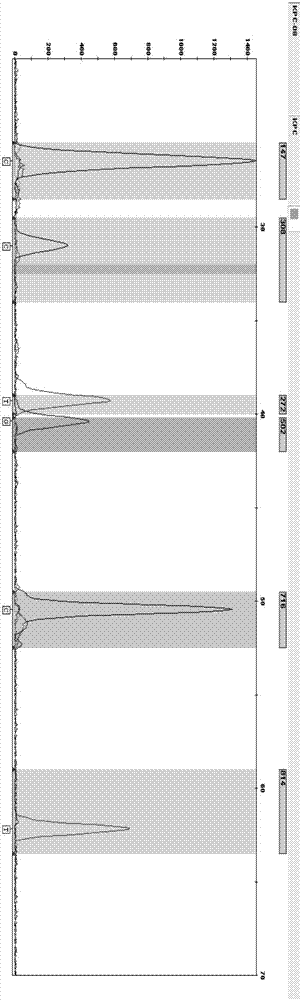
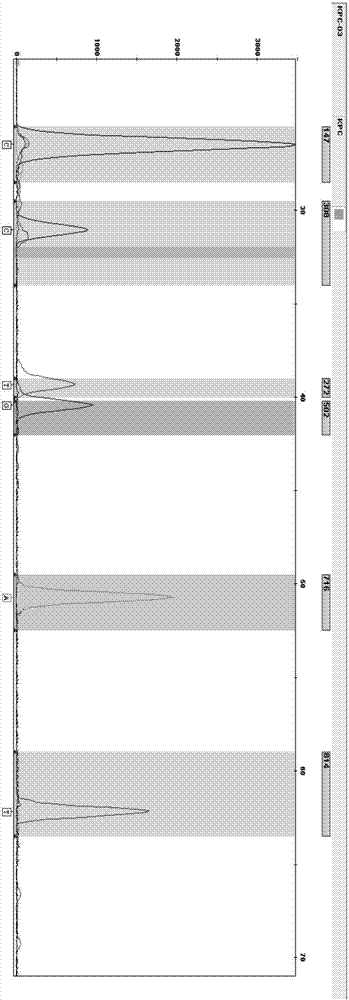
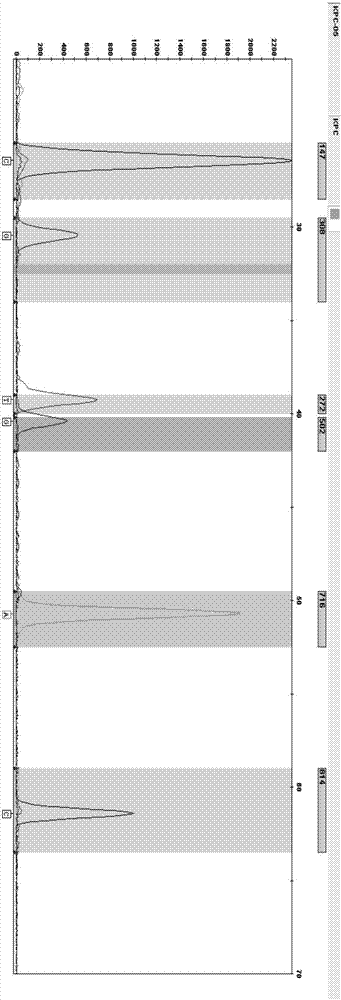
Examples
Embodiment 1
[0049] Example 1 Selection of typing sites of KPC1-15 and primer design
[0050] NCBI database download KPC 1-15 sequence (KPC-1: AF297554; KPC-2: GU086225; KPC-3: AF395881; KPC-4: FJ473382; KPC-4: AY700571; KPC-5: EU400222; KPC-6: EU555534 ; KPC-7: EU729727; KPC-8: FJ234412; KPC-9: FJ624872; KPC-10: GQ140348; ; KPC-15: KC433553). After the sequences were compared by ClusterX, 6 SNP sites (nt147, nt272, nt308, nt502, nt716 and nt814) were selected.
[0051] A pair of large-fragment primers was designed for template enrichment, and the amplified region contained the six SNP sites to be detected. Snapshot can detect multiple SNPs, select 6 sites to make a combination, and design primers for these target SNP sites. The primers designed for each SNP are extended ddNTPs, designed upstream or reverse downstream of the SNP site. See Table 1 for details. The classification of KPC1-15 is shown in Table 2.
[0052] Table 1. Large fragment amplification primers and SNaPshot PCR pri...
Embodiment 2
[0056] Embodiment 2, the detection of known bacterial strain
[0057] 1. The DNA of six different KPC subtype strains (KPC-2, KPC-3, KPC-4, KPC-5, KPC-8 and KPC-11) was provided by the Zhejiang Provincial Center for Disease Control and Prevention at a concentration of 1ng / μl. The typing results were verified by sequencing.
[0058] 2. Template enrichment, using large fragment primers (KPCF and KPCR) to amplify the template:
[0059] PCR amplification system:
[0060]
[0061] Amplification Thermal Cycling
[0062] (1) PCR amplification tube is placed on thermal cycler;
[0063] (2) Select the program recommended below to amplify;
[0064] (3) The amplified samples should be kept away from light;
[0065] Amplification program for thermal cycler:
[0066]
[0067] Handling of PCR products
[0068] Take 3μL + 0.7μL enzyme mixture (containing 2.5U CIAP (Bao biological alkaline phosphatase) and 5U Exo I) of the PCR amplification products of 6 strains, shake and mix, i...
Embodiment 3
[0083] Example 3 Clinical Sample SNaPshot Typing Detection
[0084] 1. Sample collection
[0085]Clinical isolates of Klebsiella pneumoniae from various hospitals in Haining City from 2008 to 2012 were collected. For further identification in this laboratory, separate and purify on the MacConkey medium plate, and identify as Klebsiella pneumoniae by French BioMérieux Vitek-compact automatic bacterial analysis, scrape the colony to a special magnetic bead storage tube Prepare a uniform bacterial suspension in the medium, blot the liquid, and store it in a low-temperature refrigerator at -70°C. Resuscitate and culture the strains on MacConkey medium plates, use K-B (also known as disc diffusion method), pick a certain amount of bacteria to prepare 0.5 McFarland turbidity bacteria liquid, spread evenly on MH plates, and dry at room temperature for 3~ 5min. Paste three kinds of paper sheets of imipenem, meropenem and ertapenem respectively. The center of each paper sheet should...
PUM
 Login to View More
 Abstract
Description
Claims
Application Information
 Login to View More
 - R&D
- Intellectual Property
- Life Sciences
- Materials
- Tech Scout
- Unparalleled Data Quality
- Higher Quality Content
- 60% Fewer Hallucinations
Browse by: Latest US Patents, China's latest patents, Technical Efficacy Thesaurus, Application Domain, Technology Topic, Popular Technical Reports.
© 2025 PatSnap. All rights reserved.Legal|Privacy policy|Modern Slavery Act Transparency Statement|Sitemap|About US| Contact US: help@patsnap.com