Turbine blade vibration reduction analysis optimization method
An optimization method, the technology of turbine blades, applied in the field of aero-engines, can solve the problems of increased calculation, limited flat-plate dampers, and inability to accurately describe the friction process
- Summary
- Abstract
- Description
- Claims
- Application Information
AI Technical Summary
Problems solved by technology
Method used
Image



Examples
Embodiment
[0062] The analysis and optimization method of turbine blade vibration reduction, the specific steps are as follows:
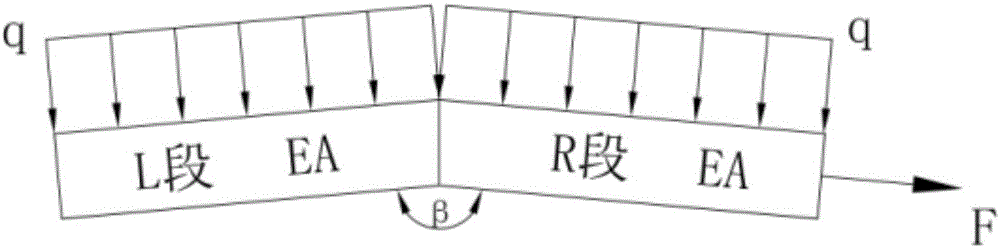
[0063] (1) The solid model of the damping plate is as follows figure 1 As shown, determine the shape data of the roof type damper such as: the width of the damping plate is 25mm, the angle is 10 degrees, the thickness is 3mm, the length is 50mm, and the elastic modulus is 2×10 11 N / m 2 ×10 11 N / m 2 . The friction coefficient is 0.3, given the excitation amplitude of the blade, the contact positive pressure load coefficient between the damper and the blade is determined to be 4000N / m;
[0064] (2) Establish blade finite element model in ANSYSY such as figure 2 As shown, the modal analysis is carried out on the blade, and the first-order natural frequency is 168 Hz, and the upper limit of the excitation frequency in the vibration analysis process is determined to be 160 Hz, and the lower limit is 210 Hz;
[0065] (3) Calculate the maximum damping force F ...
PUM
 Login to View More
 Abstract
Description
Claims
Application Information
 Login to View More