Current-equalizing standard difference matrix 2 norm-based parallel power supply system current-equalizing performance evaluation method

A power supply system and evaluation method technology, applied in the direction of electrical digital data processing, special data processing applications, instruments, etc., can solve problems such as the evaluation method of current equalization performance of parallel power supply systems that have not yet been found, and achieve fast calculation speed, improved life and reliability Effectiveness and practicality

CN106202692AInactive Publication Date: 2016-12-07WENZHOU UNIVERSITY
4 Cites 0 Cited by

Patent Information

Authority / Receiving Office
CN · China
Current Assignee / Owner
Publication Date
2016-12-07
Estimated Expiration
Not applicable · inactive patent

Smart Images

  • Figure 1
    Figure 1
  • Figure 2
    Figure 2
  • Figure 3
    Figure 3
Patent Text Reader

Abstract

The invention relates to a current-equalizing standard difference matrix 2 norm-based parallel power supply system current-equalizing performance evaluation method. The method comprises the steps of establishing the standard difference matrix between the actual current value of a power supply module of the parallel system under different load conditions (containing light load, half load, rated load and overload) and the expected current-equalizing value so as to calculate the 2 norm of the standard difference matrix, and evaluating the current-equalizing performance of the system according to the 2 norm. The method provided by the invention provides basis for optimal design of parallel power supply by establishing the current-equalizing difference matrix and calculating the 2 norm of, wherein the norm represents the distance between the relative overshoot of the current-equalizing dynamic response process of the parallel power supply system under all the load conditions and the ideal goal (namely 0 vector). The method provided by the invention can quickly judge whether the relative overshoot performance of the current-equalizing dynamic response process of the parallel power supply system is qualified by setting the maximum allowable boundary value Sigma max.
Need to check novelty before this filing date? Find Prior Art

Description

technical field

[0001] The invention relates to a method for evaluating the current sharing performance of a parallel power supply system based on the 2-norm of the current sharing standard deviation matrix, which is used for evaluating the current sharing performance of the parallel power supply system. The method is also applicable to the evaluation of the current sharing performance of other electronic equipment in parallel operation. Background technique

[0002] The high-power parallel power supply system is a parallel output structure of multiple power modules. It has a series of advantages such as strong compatibility, N+m redundant backup, strong reliability, high cost performance, low design difficulty, and easy management. It has become a solution One of the preferred solutions for high-power output power supply design. Current sharing technology has become the core technology for parallel power supply of switching power supply modules. The current sharing technol...

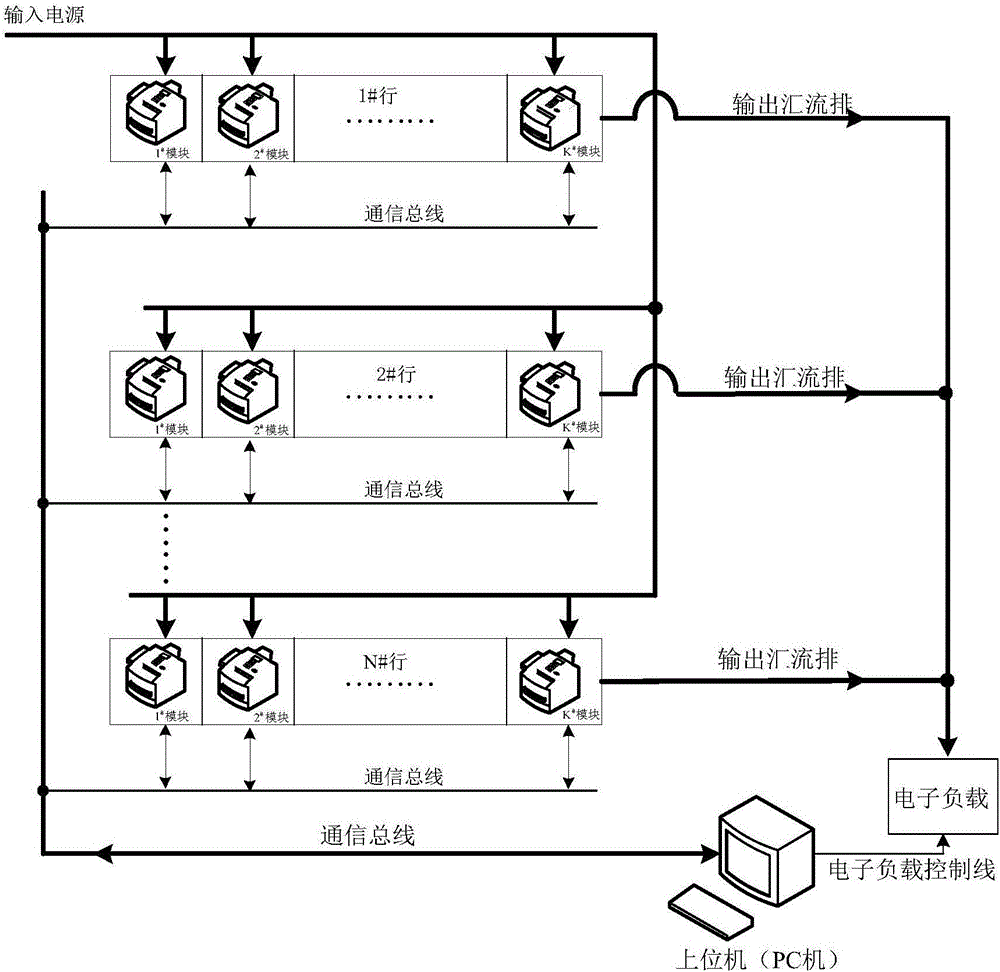
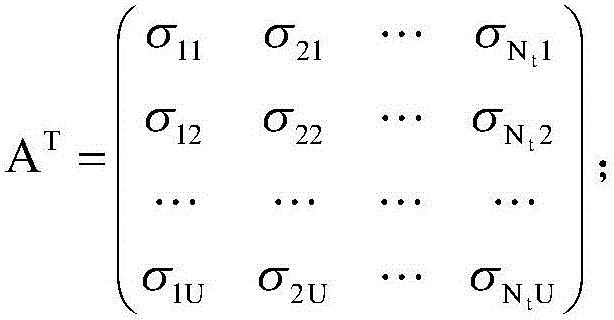
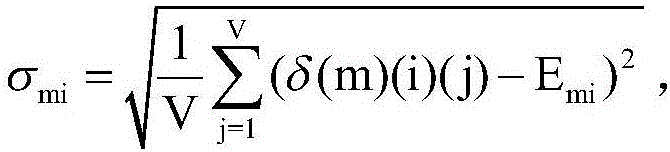
Examples

Embodiment Construction

[0026] Embodiments of the present invention will be further described below with reference to the accompanying drawings:

[0027] The present invention provides a parallel power supply system current sharing performance evaluation method based on the 2 norm of the current sharing standard deviation matrix, mainly based on the standard deviation matrix of the relative deviation between the actual current of the module and the ideal reference current under different load conditions in the following parallel power supply system 2-norm mathematical model: the diagram of the parallel power supply system is as follows figure 1 As shown, it mainly includes the upper computer (PC), program-controlled electronic load and power module. The main function of the host computer (PC) is to obtain the module IP address and module output current, control the operating current of the program-controlled electronic load, calculate the standard deviation matrix 2 norm of the current sharing, and o...