
Method for identifying a short circuit in a first light emitting diode element, and optoelectronic subassembly
A technology of light-emitting diodes and optoelectronics, applied in diode testing, electroluminescent light sources, short-circuit testing, etc., can solve problems such as high current density, electrode melting, heating, etc., and achieve the effect of simply identifying short-circuits
- Summary
- Abstract
- Description
- Claims
- Application Information
AI Technical Summary
Problems solved by technology
Method used
Image

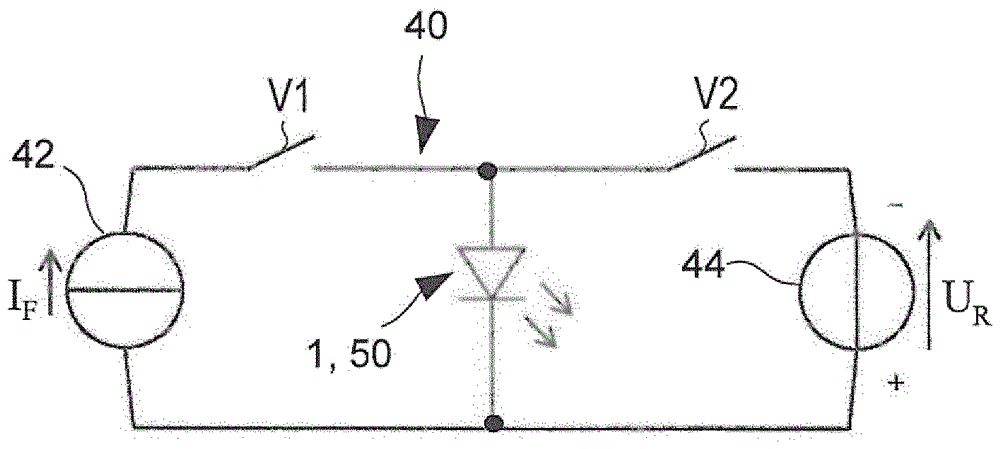
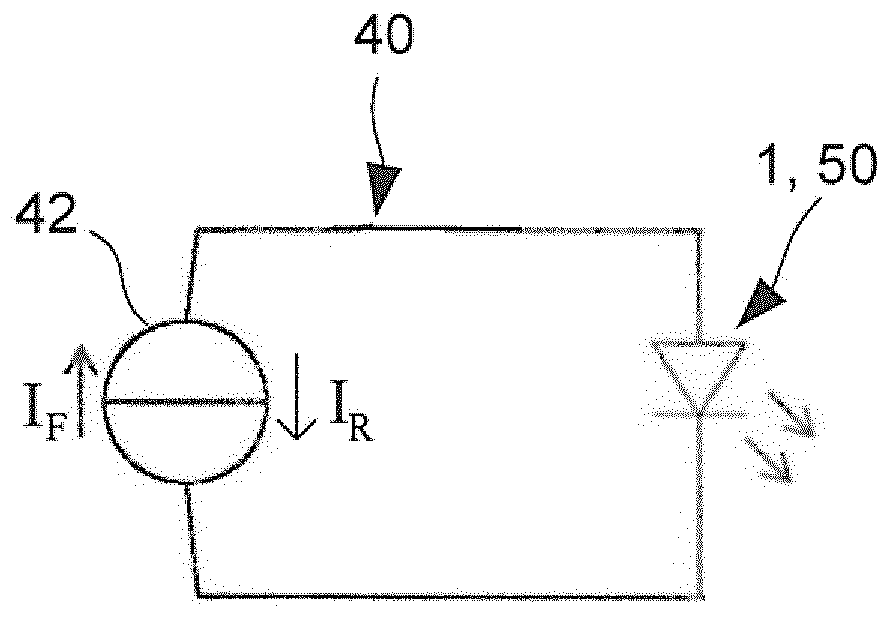
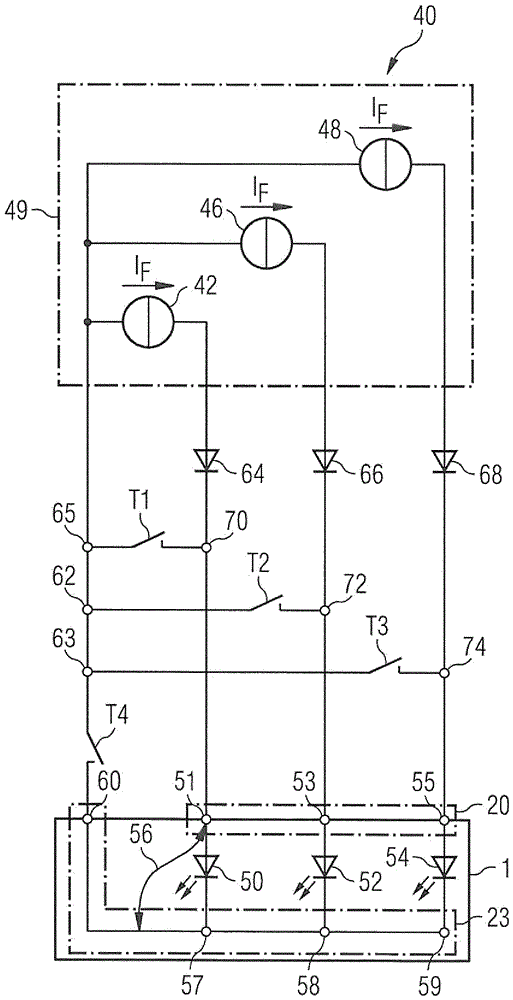
Examples
Embodiment Construction
[0052] In the ensuing detailed description, reference is made to the accompanying drawings, which form a part hereof, and in which specific embodiments are shown for purposes of illustration, in which specific The present invention can be implemented in an embodiment. In this respect, directional terms such as "above", "below", "in front of", "behind", "in front of", "behind" etc. are used with respect to the orientation of the depicted figures Wait. Because components of an embodiment may be positioned in a number of different orientations, the directional terms are used for clarification and are not limiting in any way. It is easy to understand that other embodiments can be used and structural or logical changes can be made without departing from the protection scope of the present invention. It is easy to understand that: unless otherwise specified, the features of different embodiments described here can be combined with each other. Therefore, the ensuing detailed descr...
PUM
 Login to View More
 Abstract
Description
Claims
Application Information
 Login to View More