Video recognition and tracking system and method based on depth sensor

A technology of depth sensor and video recognition, which is applied to TV system components, biometric recognition, character and pattern recognition, etc. It can solve problems such as affecting effects, low real-time performance, and diverting audience attention.

CN107066975BActive Publication Date: 2019-09-13HEFEI UNIV OF TECH
6 Cites 1 Cited by

Patent Information

Authority / Receiving Office
CN · China
Patent Type
Patents(China)
Current Assignee / Owner
Publication Date
2019-09-13

Smart Images

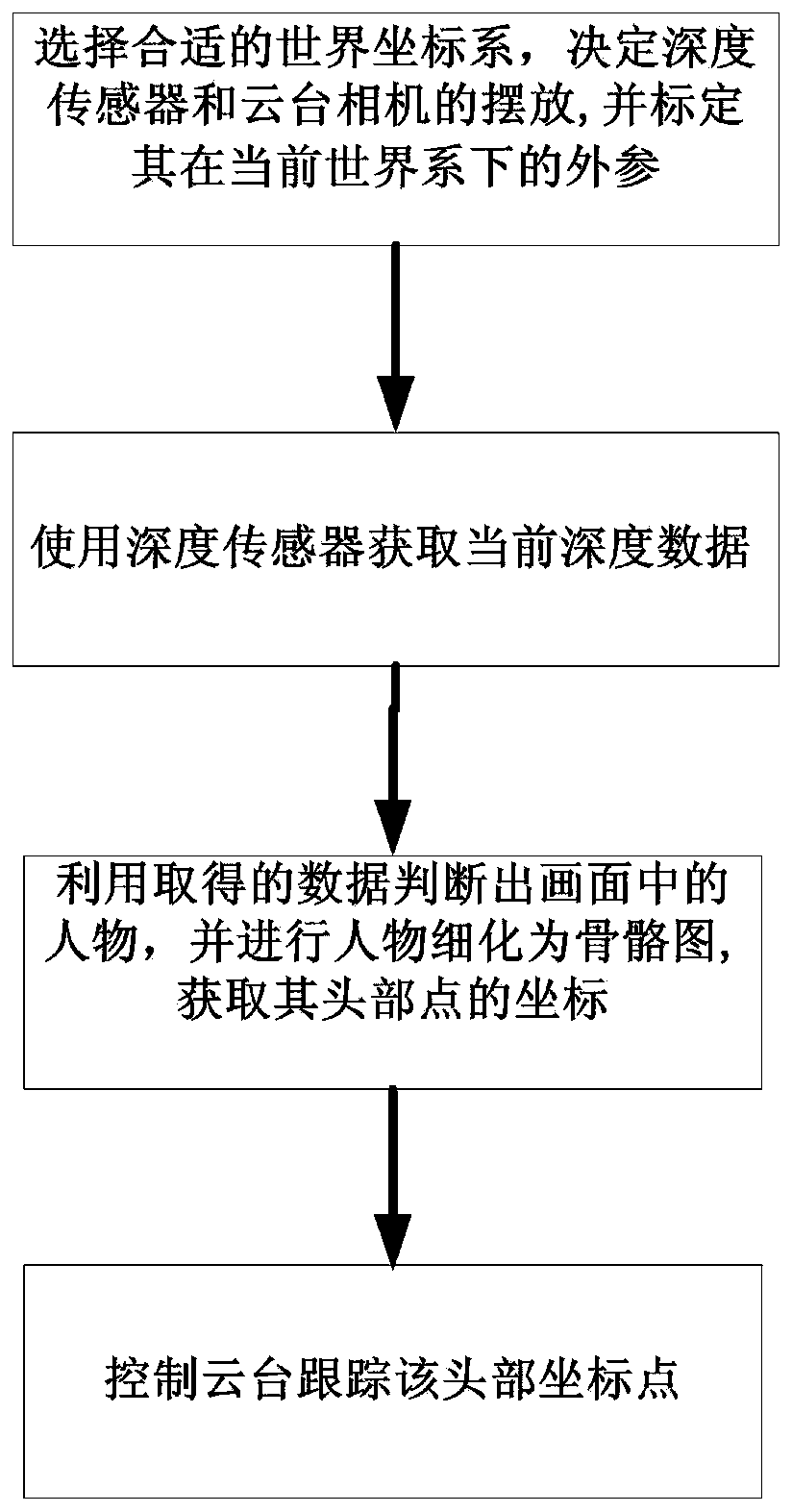
  • Figure 1
    Figure 1
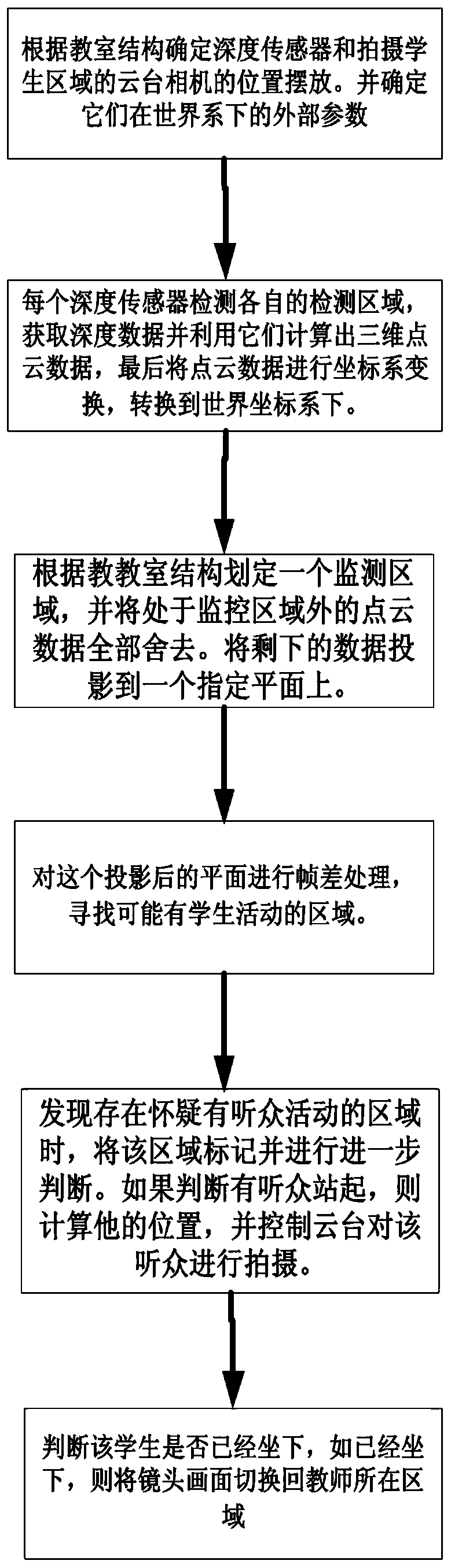
  • Figure 2
    Figure 2
  • Figure 3
    Figure 3
Patent Text Reader

Abstract

The invention discloses a depth sensor-based video recognition and tracking system and method thereof, which are characterized by comprising: a pan / tilt camera control module, a tracking module, an identification module, and a recording module; and applied to n+1 depth sensors, two In a classroom environment composed of a PTZ camera, a master and n slaves; place a depth sensor around the speaker area, and place two PTZ cameras above the speaker area and the audience area , where one PTZ camera faces the direction of the speaker area, and the other PTZ camera faces the direction of the audience area, and the remaining n depth sensors are evenly arranged on both sides of the audience area and correspond to the n slave machines respectively. The present invention can automatically identify and track the movement of the speaker, and at the same time, monitor the audience area, automatically identify and switch the audience interacting with the speaker, thereby realizing fully automatic classroom and conference recording.
Need to check novelty before this filing date? Find Prior Art

Description

Technical field

[0001] The invention relates to the field of video recording, in particular to a video recognition and tracking system based on a depth sensor and a method thereof. Background technique

[0002] At present, most of the methods for taking pictures of courses and meetings at home and abroad are to directly invite photographers to take pictures. Or install a fixed camera in the classroom to shoot. Entrusting photographers to record in classrooms and meetings not only consumes human and material resources, but also diverts the audience's attention and affects the effect. That is, the current video recording has the problem of insufficient automation.

[0003] Traditional single-camera tracking methods such as optical flow method, time difference method, or Gaussian background modeling method for people tracking have poor anti-noise performance, easy to confuse the foreground and background, easy to track wrong targets, and difficult to apply to the full frame Real-ti...

Examples

Embodiment Construction

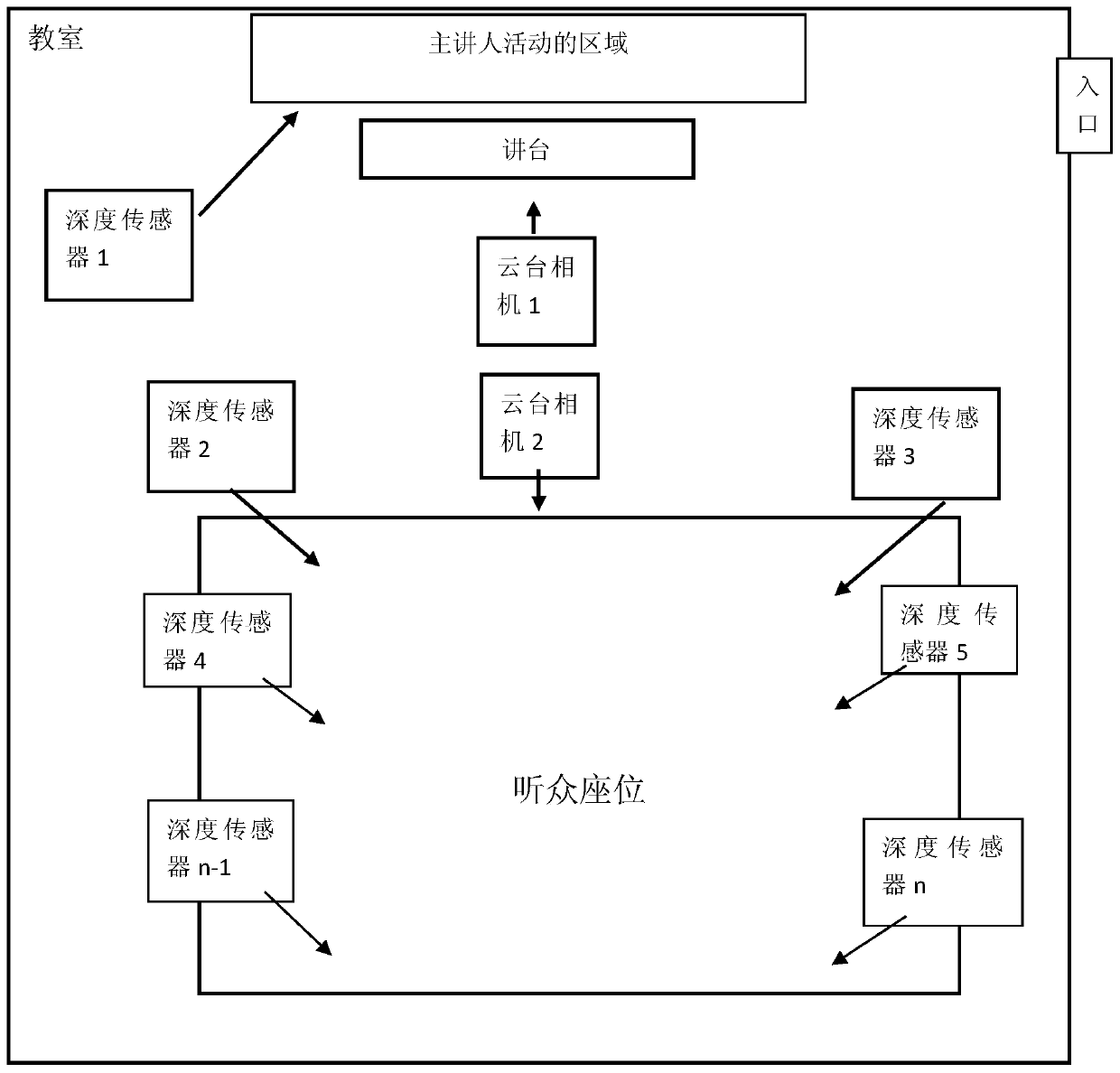
[0062] In this embodiment, a depth sensor-based video recognition and tracking system is applied to a classroom environment composed of n+1 depth sensors, two pan-tilt cameras, a host and n slaves; image 3 As shown, the classroom environment is divided into a lecturer area and an audience area; splitting the classroom into two areas facilitates programming, and different program operations can be performed simultaneously on the speaker area and the audience area respectively. The speaker area is the range from the podium to the blackboard; the audience area is the range of all the seats of the audience; a depth sensor is placed around the speaker area, which is recorded as the No. 1 sensor. This sensor can completely cover the range of the speaker’s activities. Coverage; two gimbal cameras are placed above the speaker area and the audience area. One gimbal camera faces the speaker area, and it is recorded as the gimbal camera in the speaker area, and the gimbal camera is the sp...