
Benzodiazaborole derivative and organic light-emitting diodes using the same
A benzodiazepine and heterocyclopentadiene technology, applied in the field of light-emitting materials and light-emitting elements, can solve problems such as decreased stability, and achieve the effects of improving thermal stability, good thermal stability and good optical effect
- Summary
- Abstract
- Description
- Claims
- Application Information
AI Technical Summary
Problems solved by technology
Method used
Image

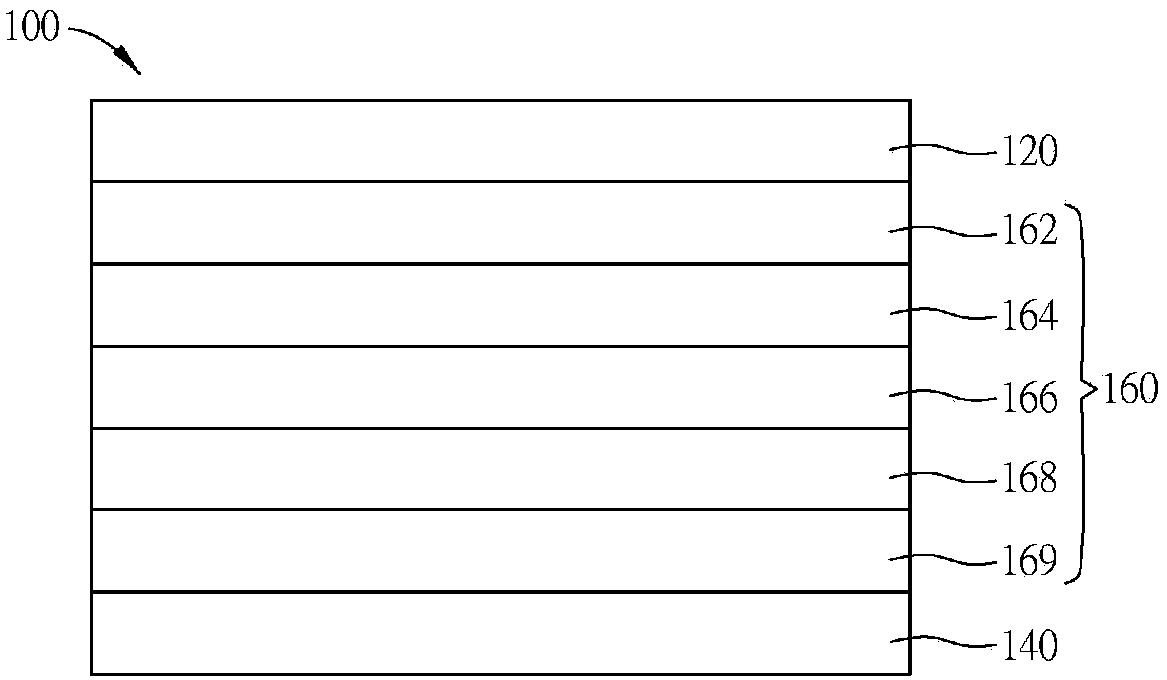
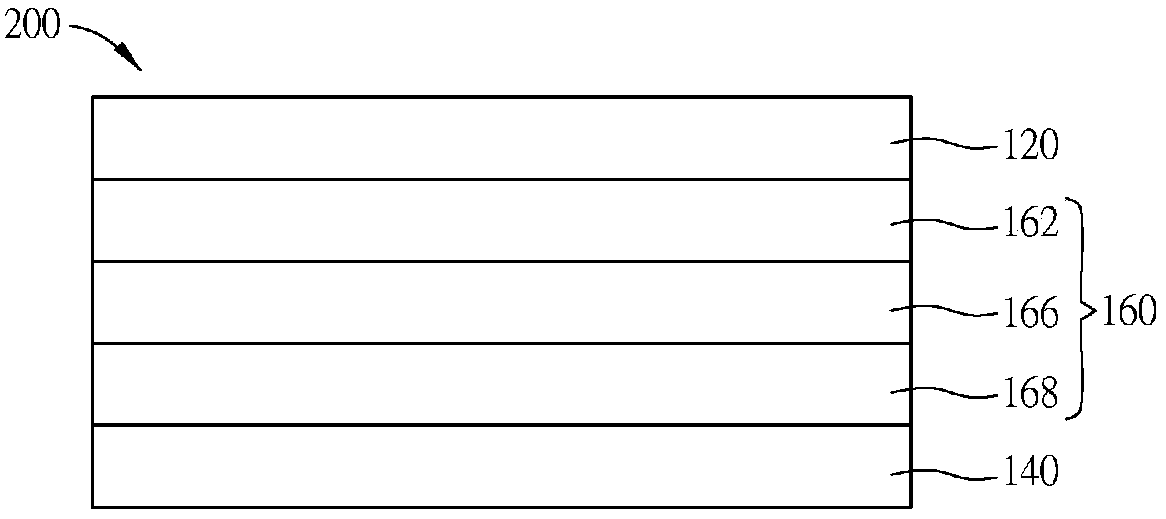
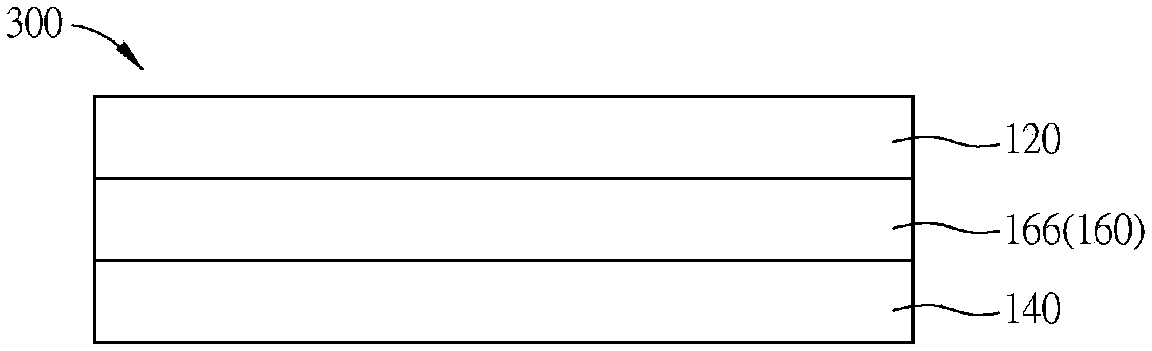
Examples
Synthetic example 1
[0091] Synthesis Example 1: Preparation of Compound 1
[0092] Get 1,2-dibromobenzene (1,2-dibromobenzene, 1.50 g, 6.40 mmol), palladium acetate (Palladiumacetate, Pd(OAc) 2 , 0.04 g, 0.178 mmol), tri-tert-butylphosphonium tetrafluoroborate (Tri-tert-butylphosphonium tetrafluoroborate, 0.15 g, 0.52 mmol), sodium tert-butoxide (Sodium tert-butoxide, NaO t Bu, 1.82 g, 18.95 mmol) in a 50 ml double-necked flask, after pumping argon three times, inject toluene (Toluene, 20 ml) and aniline (Aniline, 1.70 ml, 18.65 mmol) that have dehydrated and deoxygenated, Reflux and react for 18 hours. After returning to room temperature, filter through diatomaceous earth and collect the filtrate, add ammonium chloride aqueous solution for extraction, dry the organic layer with anhydrous magnesium sulfate, and then suck it dry. Using n-hexane: dichloromethane = 4:1 as the eluent to perform column chromatography, 1.45 g of compound 1 was obtained as a white solid with a yield of 87%. The foreg...
Synthetic example 2
[0095] Synthesis Example 2: Preparation of Compound 2
[0096] Get 2,3-dichlorobromobenzene (1-bromo-2,3-dichlorobenzene, 1.00 g, 4.43 mmol), phenylboronic acid (Phenylboronic acid, 0.56 g, 4.60 mmol), potassium carbonate (Potassium carbonate, K 2 CO 3 , 1.38 g, 10.00 mmol), palladium chloride (Palladium (II) chloride, PdCl 2 , 4.00 mg, 0.02 mmol) were placed in a 100 ml single-necked bottle, and ethanol (Ethanol, 5 ml) and 15 ml of deionized water were added. After stirring at room temperature for half an hour, it was extracted with dichloromethane and potassium carbonate aqueous solution. The organic layer was dried over anhydrous magnesium sulfate and sucked dry. Column chromatography was performed using n-hexane as the eluent to obtain 0.80 g of compound 2 as a transparent liquid with a yield of 82%. The foregoing reaction is shown in reaction formula (2).
[0097] data analysis: 1 H NMR (400MHz, CDCl 3 ):δ7.44-7.37(m,6H),7.25-7.21(m,2H); 13 C NMR (100MHz, CDCl 3 ...
Synthetic example 3
[0099] Synthesis Example 3: Preparation of Compound 3
[0100]Take compound 2 (0.75 g, 3.38 mmol), three (dibenzylideneacetone) dipalladium (Bis (dibenzylideneacetone) palladium (0), Pd (dba) 2 , 0.19 g, 0.33 mmol), tri-tert-butylphosphonium tetrafluoroborate (Tri-tert-butylphosphonium tetrafluoroborate, 0.19 g, 0.66 mmol), sodium tert-butoxide (Sodium tert-butoxide, NaO t Bu, 0.95 g, 0.99 mmol) was placed in a 25 ml double-necked flask, and after argon was replaced three times, toluene (Toluene, 16 ml) and aniline (Aniline, 0.90 ml, 9.87 mmol) were injected , heated to 110° C. and reacted for 18 hours. After returning to room temperature, filter through diatomaceous earth and collect the filtrate, add ammonium chloride aqueous solution for extraction, dry the organic layer with anhydrous magnesium sulfate, and then suck it dry. Column chromatography was carried out using n-hexane:dichloromethane=4:1 as the eluent to obtain 0.83 g of compound 3 as a white solid with a yield ...
PUM
| Property | Measurement | Unit |
|---|---|---|
| thickness | aaaaa | aaaaa |
| thickness | aaaaa | aaaaa |
| thickness | aaaaa | aaaaa |
Abstract
Description
Claims
Application Information
 Login to View More