A Method for Predicting Dynamic Changes of Carbon Dioxide Drive Gas Front

A dynamic change, carbon dioxide technology, applied in the fields of carbon dioxide flooding to enhance oil recovery and dynamic prediction of gas fronts, can solve the problems such as the large gap between the predicted results and the actual situation, the high cost of gas tracer testing, and the large workload. Data collection and processing simple effects

CN110863806BActive Publication Date: 2021-07-23XI'AN PETROLEUM UNIVERSITY
0 Cites 0 Cited by

Patent Information

Authority / Receiving Office
CN · China
Patent Type
Patents(China)
Current Assignee / Owner
Publication Date
2021-07-23

Smart Images

  • Figure 1
    Figure 1
  • Figure 2
    Figure 2
  • Figure 3
    Figure 3
Patent Text Reader

Abstract

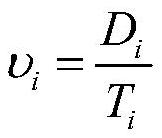
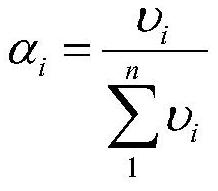
The invention relates to the technical field of carbon dioxide flooding enhanced oil recovery in oil and gas field development, and discloses a method for predicting the dynamic change of the carbon dioxide flooding gas front, including the following process: comprehensive suction profile results, injection-production well spacing and oil well effective judgment of injection-production correspondence Split the gas injection volume in different effective oil well directions, calculate the split coefficient of gas injection volume and the gas injection volume in different oil well directions according to the gas injection effective speed, and calculate the dynamics of the gas drive front position under different gas injection volumes with the fan blade model To realize the dynamic change prediction of carbon dioxide flooding gas front. The present invention only needs basic data such as production dynamic data, suction profile data, and injection-production well spacing, and data collection and processing are simple, and through dynamic prediction of the gas drive front, it is beneficial to grasp CO 2 The propulsion speed and predicted gas breakthrough time can be combined with the pressure profile to quantitatively calculate the dynamic change of the miscible range, which is the CO 2 Provide basis for dynamic tracking evaluation and optimization and adjustment of injection-production parameters.
Need to check novelty before this filing date? Find Prior Art

Description

technical field

[0001] The invention relates to the technical field of carbon dioxide flooding enhanced oil recovery in the development of oil and gas fields, in particular to the technical field of dynamic prediction of gas fronts, in particular to a method for predicting dynamic changes of carbon dioxide flooding gas fronts. Background technique

[0002] Carbon dioxide flooding enhanced oil recovery and sequestration technology has been paid more and more attention as an effective method for resource utilization of greenhouse gases. Since the position of the gas front changes dynamically at any time during the gas drive process, the prediction of the gas front position becomes a difficult point in the tracking of the gas drive state. At present, the position of the gas front is usually expressed by the distance from the gas front to the gas injection well. Knowing the dynamic change of the position of the carbon dioxide flooding gas front is not only helpful for understand...

Examples

Embodiment Construction

[0050] The present invention will be further described below in conjunction with the accompanying drawings and embodiments.

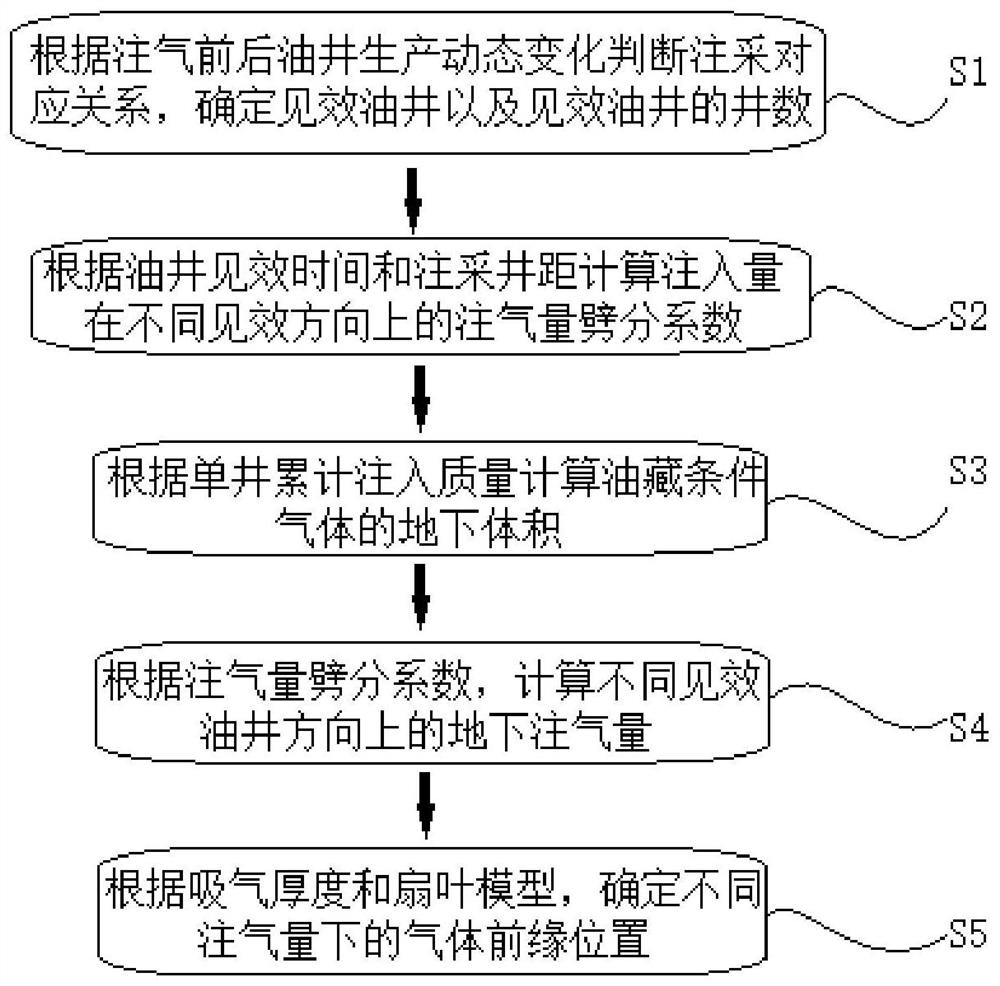
[0051] refer to figure 1 , The method for predicting the dynamic change of the carbon dioxide drive gas front of the present invention is a new method for predicting the dynamic change of the gas drive gas front position using the injection-production correspondence relationship of the suction profile test, the injection-production well spacing, and the oil well effect judgment. It mainly includes five parts: one is to judge the corresponding relationship between injection and production according to the production dynamic changes of oil wells before and after gas injection, and determine the effective oil wells and the number of effective oil wells; The third is to calculate the underground volume of reservoir-conditioned gas based on the cumulative injection quality of a single well; the fourth is to calculate the underground gas injection volume in d...