
Three-axle bogie
A bogie and frame technology, which is applied in the directions such as the device for lateral relative movement between the bogie, the bottom frame and the bogie, and the installation of the axle box, can solve the problems such as the inability to meet the needs of the vehicle's own weight and load, and achieve a simple structure, The friction coefficient is stable and the synchronization is good.
- Summary
- Abstract
- Description
- Claims
- Application Information
AI Technical Summary
Problems solved by technology
Method used
Image

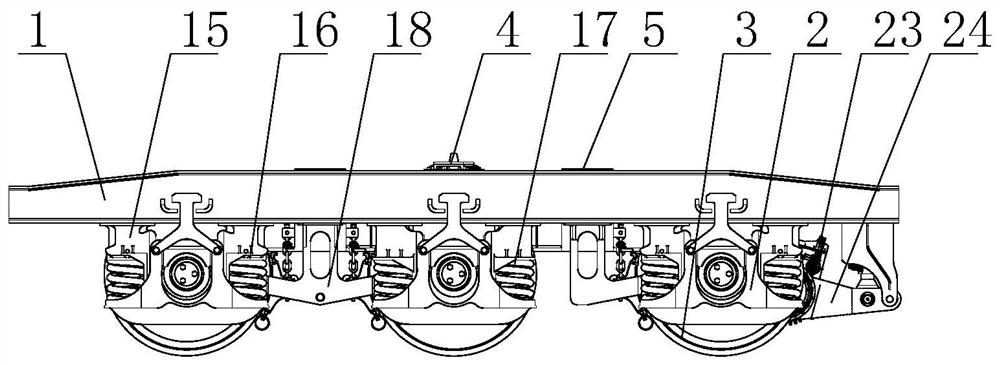
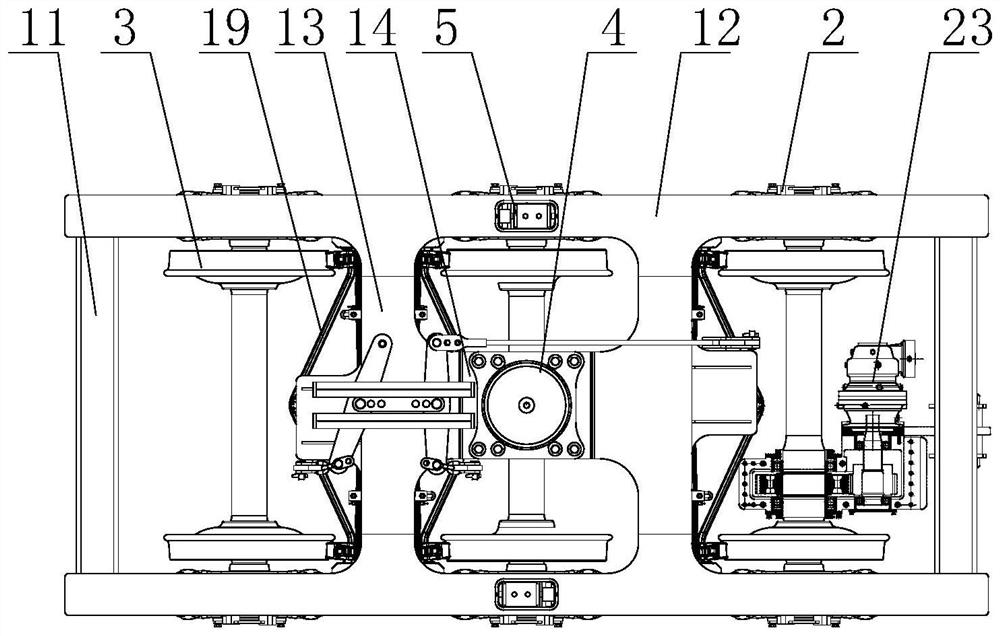
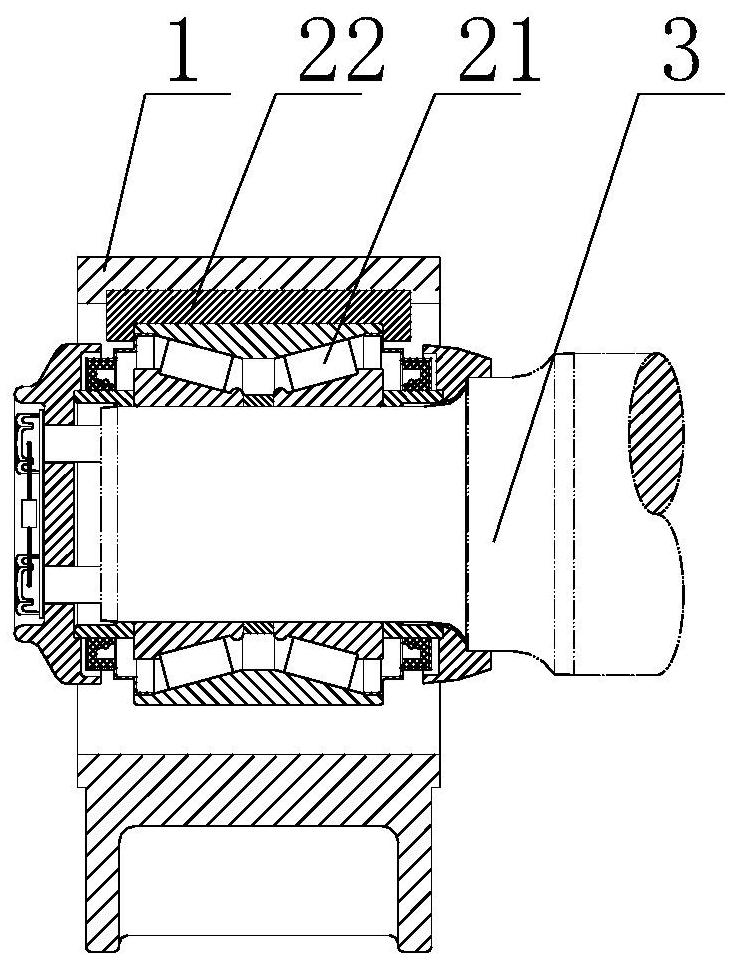
Examples
Embodiment Construction
[0030] The following describes in detail the embodiments of the present invention, examples of which are illustrated in the accompanying drawings, wherein the same or similar reference numerals refer to the same or similar elements or elements having the same or similar functions throughout.
[0031] In the description of the present invention, it should be noted that for orientation words, such as the terms "center", "horizontal (X)", "longitudinal (Y)", "vertical (Z)", "length", " Width, Thickness, Top, Bottom, Front, Back, Left, Right, Vertical, Horizontal, Top, Bottom, Inside ", "outside", "clockwise", "counterclockwise" and other indications of orientation and positional relationship are based on the orientation or positional relationship shown in the drawings, and are only for the convenience of describing the present invention and simplifying the description, rather than indicating or implying The device or element referred to must have a specific orientation, be constr...
PUM
 Login to View More
 Abstract
Description
Claims
Application Information
 Login to View More