Check patentability & draft patents in minutes with Patsnap Eureka AI!

SAR image classification algorithm combining graph convolutional network and Markov random field

A Markov random field and convolutional network technology, applied to biological neural network models, calculations, computer components, etc., can solve the problem of reduced complexity of network models, inaccurate graph structures, and areas where misclassification points have not been further corrected and other problems, to achieve the effect of clear edge and detail texture, good smoothing effect, and high classification accuracy

Pending Publication Date: 2021-10-08
南京中科智慧应急研究院有限公司
View PDF0 Cites 0 Cited by
  • Summary
  • Abstract
  • Description
  • Claims
  • Application Information

AI Technical Summary

Problems solved by technology

However, there is coherent speckle noise in the SAR image, which leads to the inaccurate structure of the initially constructed graph, that is, the edge weights between pixels cannot accurately express their intrinsic similarity
In addition, in these algorithms, the neighborhood size of the central pixel is also fixed, and it is impossible to flexibly use the spatial information of different local areas to improve the classification accuracy
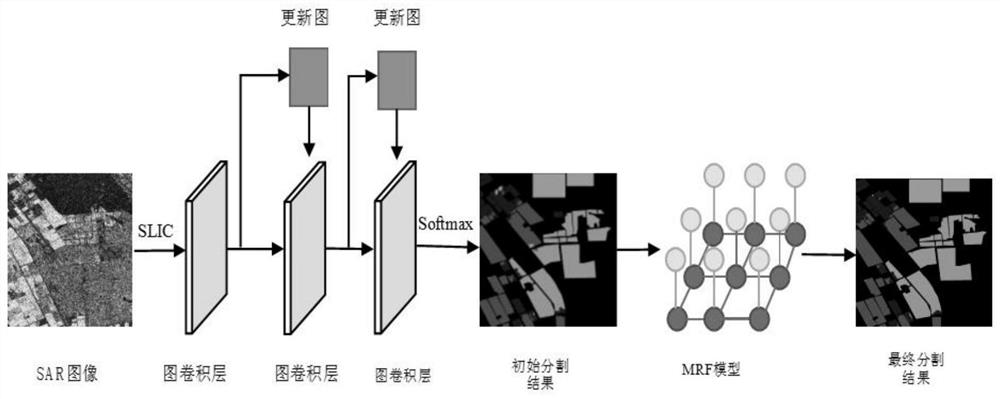
[0006] In view of the above problems, on the basis of previous research, an improved graph convolutional network model is proposed. The algorithm uses superpixel segmentation SAR image as the initial input, which can greatly reduce the complexity of the network model; then use all layers The output features of the superpixels can improve the graph structure in real time, so that accurate node feature representation can be obtained in the next layer to ensure good classification performance; the smoothing effect of superpixels corrects the misclassified pixels in the homogeneous area, but Region misclassified points at borders without further correction

Method used

the structure of the environmentally friendly knitted fabric provided by the present invention; figure 2 Flow chart of the yarn wrapping machine for environmentally friendly knitted fabrics and storage devices; image 3 Is the parameter map of the yarn covering machine
View more

Image

Smart Image Click on the blue labels to locate them in the text.
Viewing Examples
Smart Image
  • SAR image classification algorithm combining graph convolutional network and Markov random field
  • SAR image classification algorithm combining graph convolutional network and Markov random field
  • SAR image classification algorithm combining graph convolutional network and Markov random field

Examples

Experimental program
Comparison scheme
Effect test

Embodiment Construction

[0047] GCN is a multi-layer neural network model that generates new node feature representations by aggregating the features of all nodes in the neighborhood of nodes in the graph, Shuman (Shuman D I, Narang S K, Frossaed P, et al. Theemerging field of signal processing on graphs: Extending high-dimensional dataanalysis to networks and other irregular domains[J]. IEEE signal processing magazine, 2013, 30(3):83-98) applied Fourier transform to graph data for the first time, and defined The convolution operation of the graph structure data, the convolution operation is the node feature vector x of the graph and the filter g θ Multiply, as shown in formula (1),

[0048]

[0049] In the formula: U is the normalized Laplacian operator A matrix of eigenvectors. Λ is defined by the eigenvalue g θ Diagonal matrix consisting of, g θ (Λ) is g θ The result of the Fourier transform, but this method greatly increases the complexity of the model. In order to reduce the calculation ...

the structure of the environmentally friendly knitted fabric provided by the present invention; figure 2 Flow chart of the yarn wrapping machine for environmentally friendly knitted fabrics and storage devices; image 3 Is the parameter map of the yarn covering machine
Login to View More

PUM

No PUM Login to View More

Abstract

The invention discloses an SAR image classification algorithm combining a graph convolutional network and a Markov random field, and the algorithm comprises the steps: constructing a dynamic graph convolutional network, reconstructing a node relation through the output of all graph convolutional layers, and updating a current layer graph structure in real time through the reconstructed node relation, so as to enable the current layer graph structure to accurately describe the internal similarity of paired pixels, the influence of speckle noise is reduced; secondly, constructing a Markov random field based on a boundary strength punishment mechanism, and performing post-processing optimization by fully utilizing a spatial context relationship; and finally, performing experiments on the two groups of real SAR images, performing comparison by adopting a plurality of algorithms, performing quantitative analysis, and verifying the effectiveness of the improved network of the paper on SAR image classification by experimental results.

Description

technical field [0001] The invention relates to the technical field of SAR image classification, in particular to a SAR image classification algorithm combined with a graph convolutional network and a Markov random field. Background technique [0002] Synthetic Aperture Radar (SAR) has been favored by people because of its ability to penetrate clouds and rain, all-weather, all-time and high-resolution imaging capabilities regardless of day and night. A large amount of SAR image data has also been acquired and widely used It is used in areas such as terrain classification, object detection, and image change detection. SAR image classification is the process of dividing SAR images into different terrain categories, which has broad application prospects. [0003] So far, a variety of methods have been applied to SAR image classification. Among the traditional SAR classification methods, Zhang (Zhang Y, He C, Xu X, et al. Attributed scattering center feature extraction of high ...

Claims

the structure of the environmentally friendly knitted fabric provided by the present invention; figure 2 Flow chart of the yarn wrapping machine for environmentally friendly knitted fabrics and storage devices; image 3 Is the parameter map of the yarn covering machine
Login to View More

Application Information

Patent Timeline
no application Login to View More
Patent Type & Authority Applications(China)
IPC IPC(8): G06K9/62G06N3/04G06N3/08
CPCG06N3/08G06N3/045G06F18/24
Inventor 陈鲸朱久荣靳媛张彧辰
Owner 南京中科智慧应急研究院有限公司
Features
  • R&D
  • Intellectual Property
  • Life Sciences
  • Materials
  • Tech Scout
Why Patsnap Eureka
  • Unparalleled Data Quality
  • Higher Quality Content
  • 60% Fewer Hallucinations
Social media
Patsnap Eureka Blog
Learn More