
Method for distributing resource in large scale storage system
A technology for resource allocation and mass storage, applied in memory systems, transmission systems, instruments, etc., to solve problems such as failure to optimize storage system performance and disk damage.
- Summary
- Abstract
- Description
- Claims
- Application Information
AI Technical Summary
Problems solved by technology
Method used
Image

Examples
Embodiment Construction
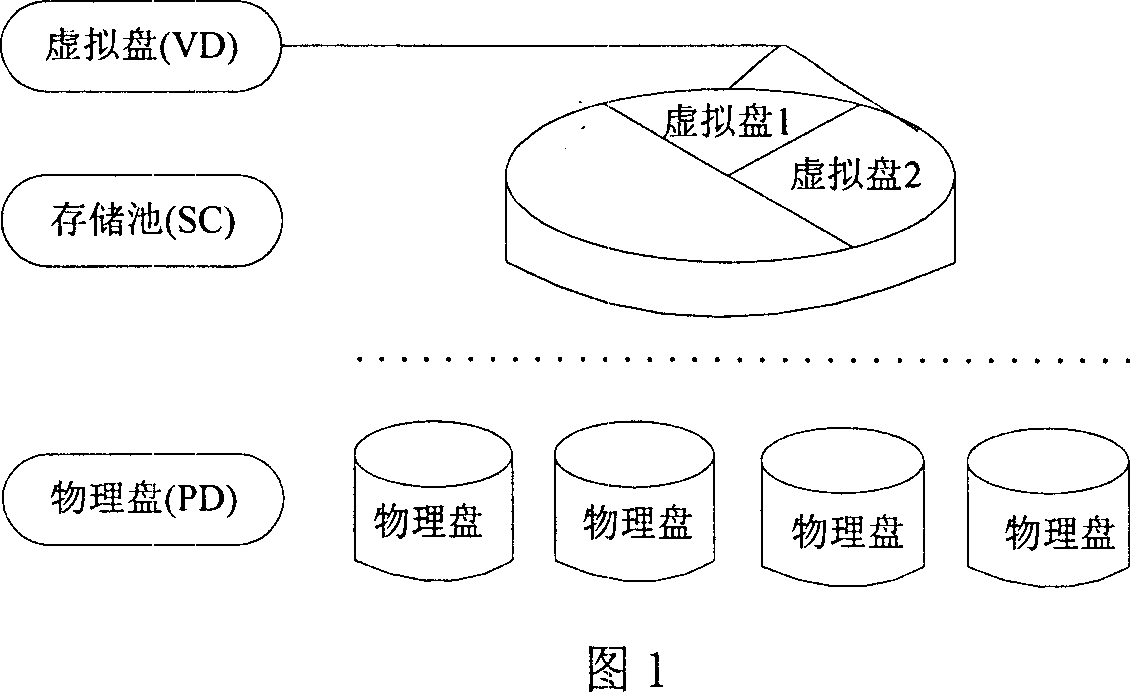
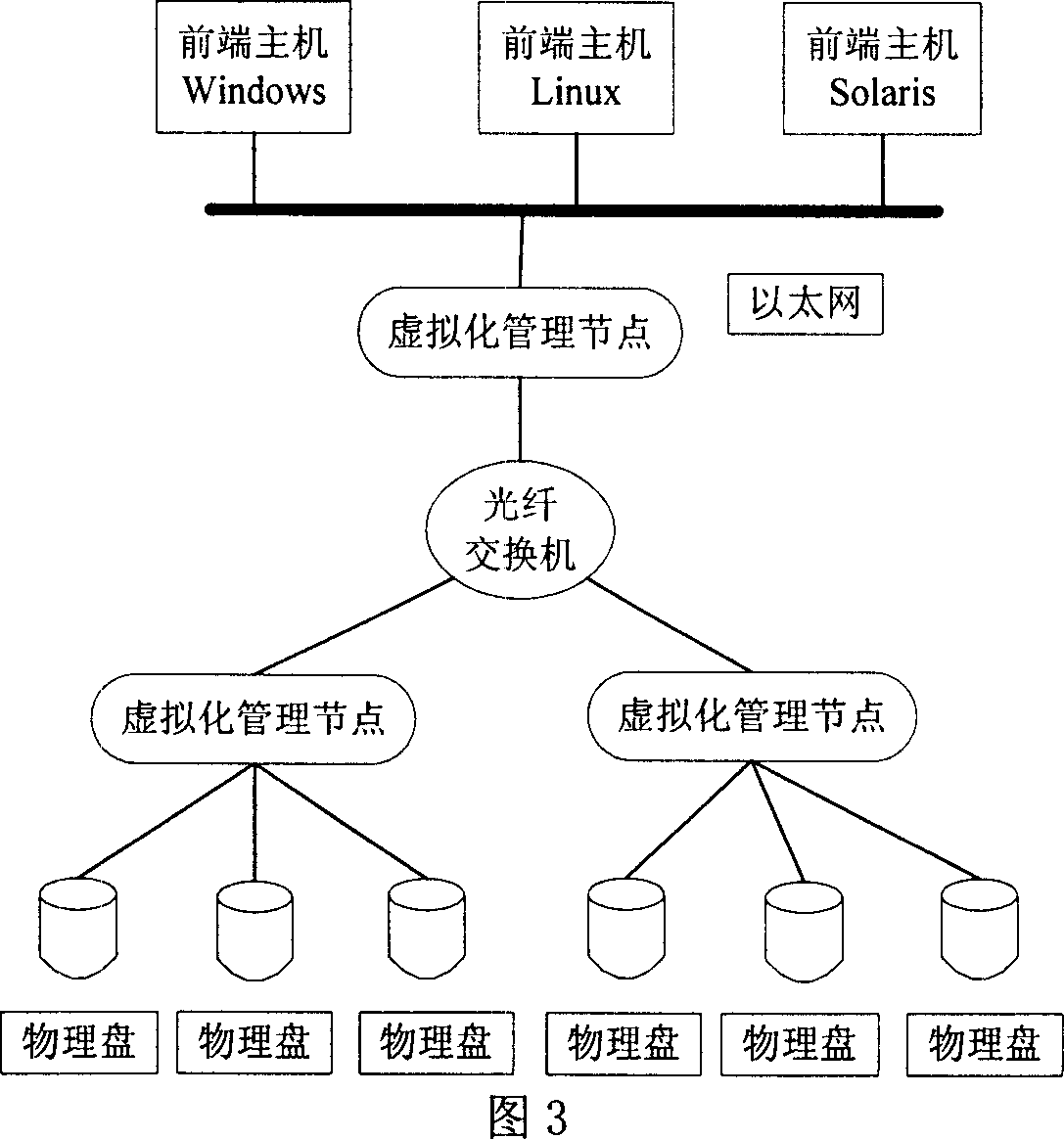
[0070] The core of the present invention is to maintain a set of storage resource configuration information through dedicated virtualization processing nodes to centrally manage various storage device resources in the storage network and perform resource allocation. The virtualization processing node is a server running a Linux operating system. At the same time, it provides completely transparent storage services to the front-end host through the SCSI middle layer for command analysis and processing. The specific implementation architecture includes the following two main parts:
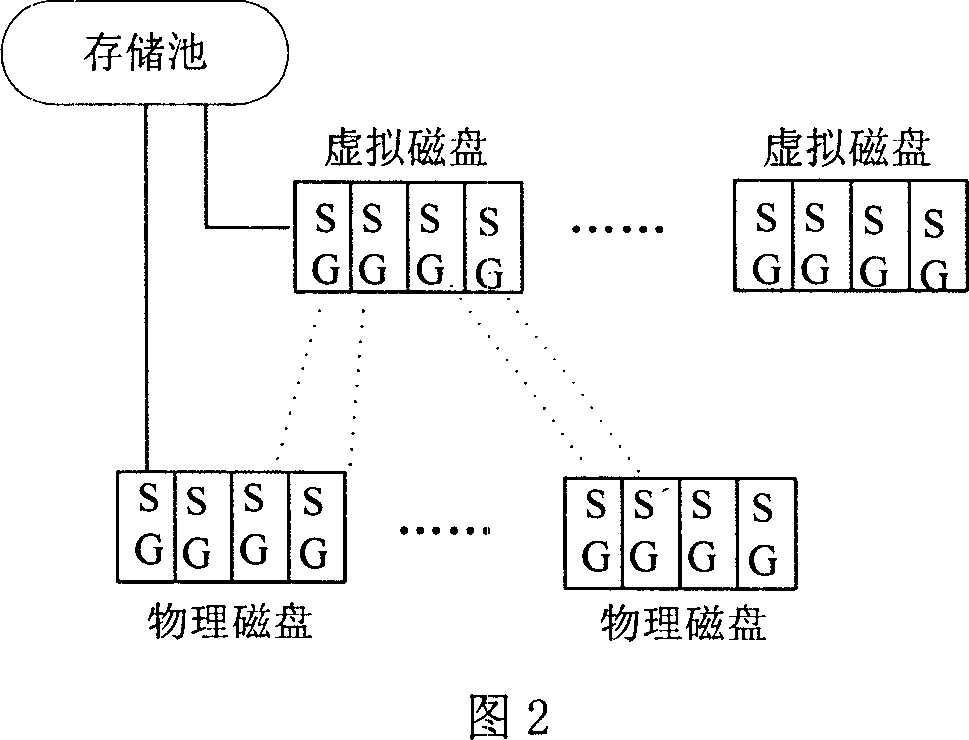
[0071] 1. The configuration information list of all storage devices (including physical devices and virtual devices) is maintained on the virtualization processing node: for each PD, record its various attributes and space lists, that is, the SG table; Resource allocation, and create a structure for each VD, record various attributes and space mapping methods.
PUM
 Login to View More
 Abstract
Description
Claims
Application Information
 Login to View More