
Piston head assembly for radio controlled cars shock absorber and method
a technology of shock absorber and piston head, which is applied in the field of piston head assembly of radio controlled cars, can solve the problems of complex devices that do provide performance improvement, prone to being less robust than desirable, and inconsistent devices, and achieve the effect of improving the speed of the ra
- Summary
- Abstract
- Description
- Claims
- Application Information
AI Technical Summary
Benefits of technology
Problems solved by technology
Method used
Image

Examples
Embodiment Construction
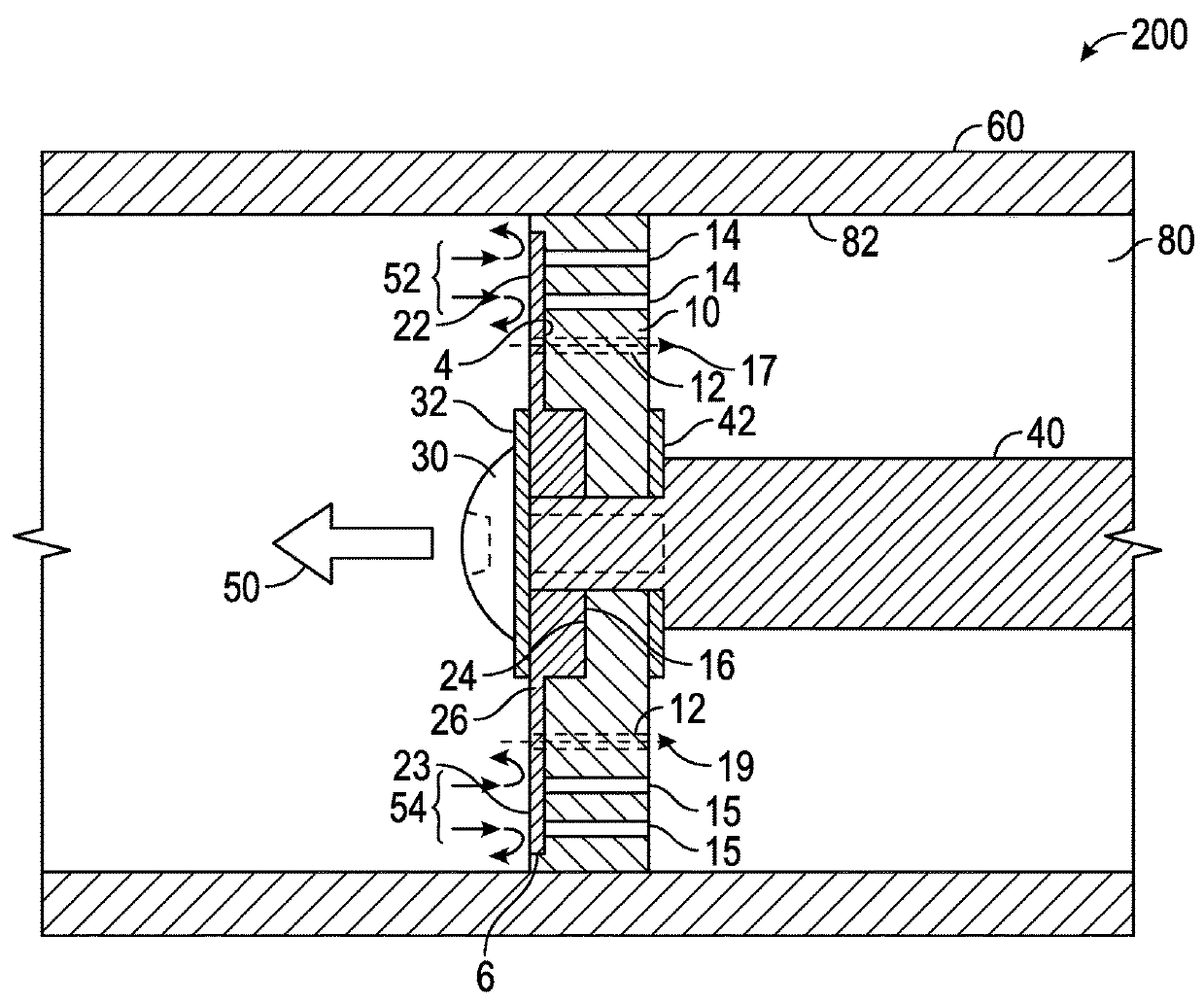
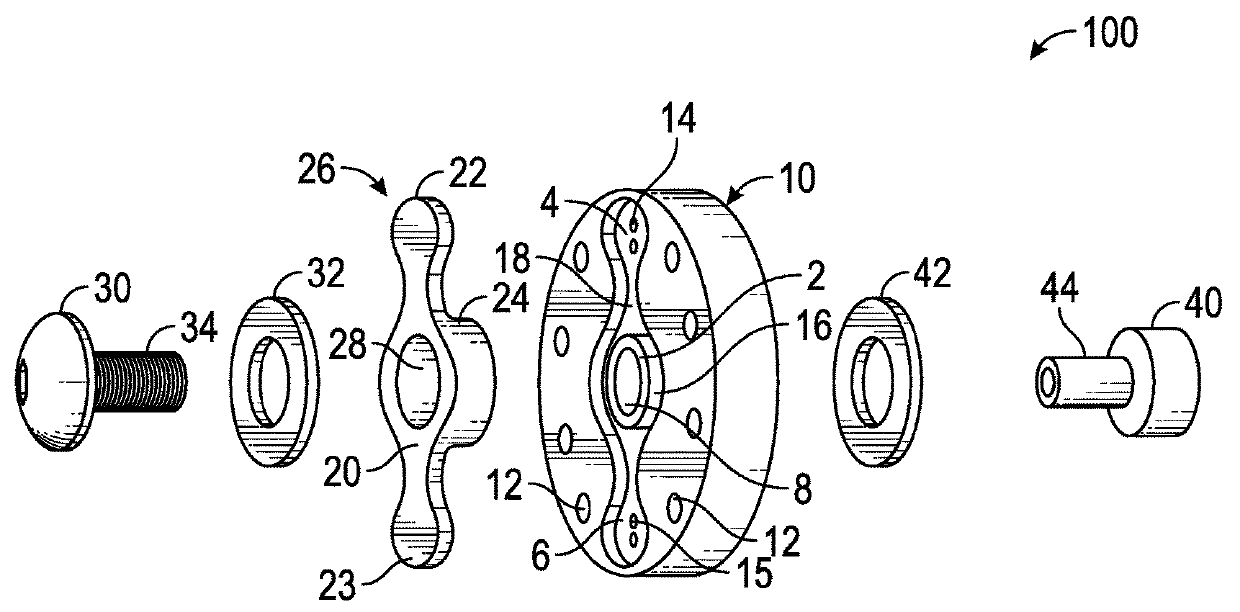
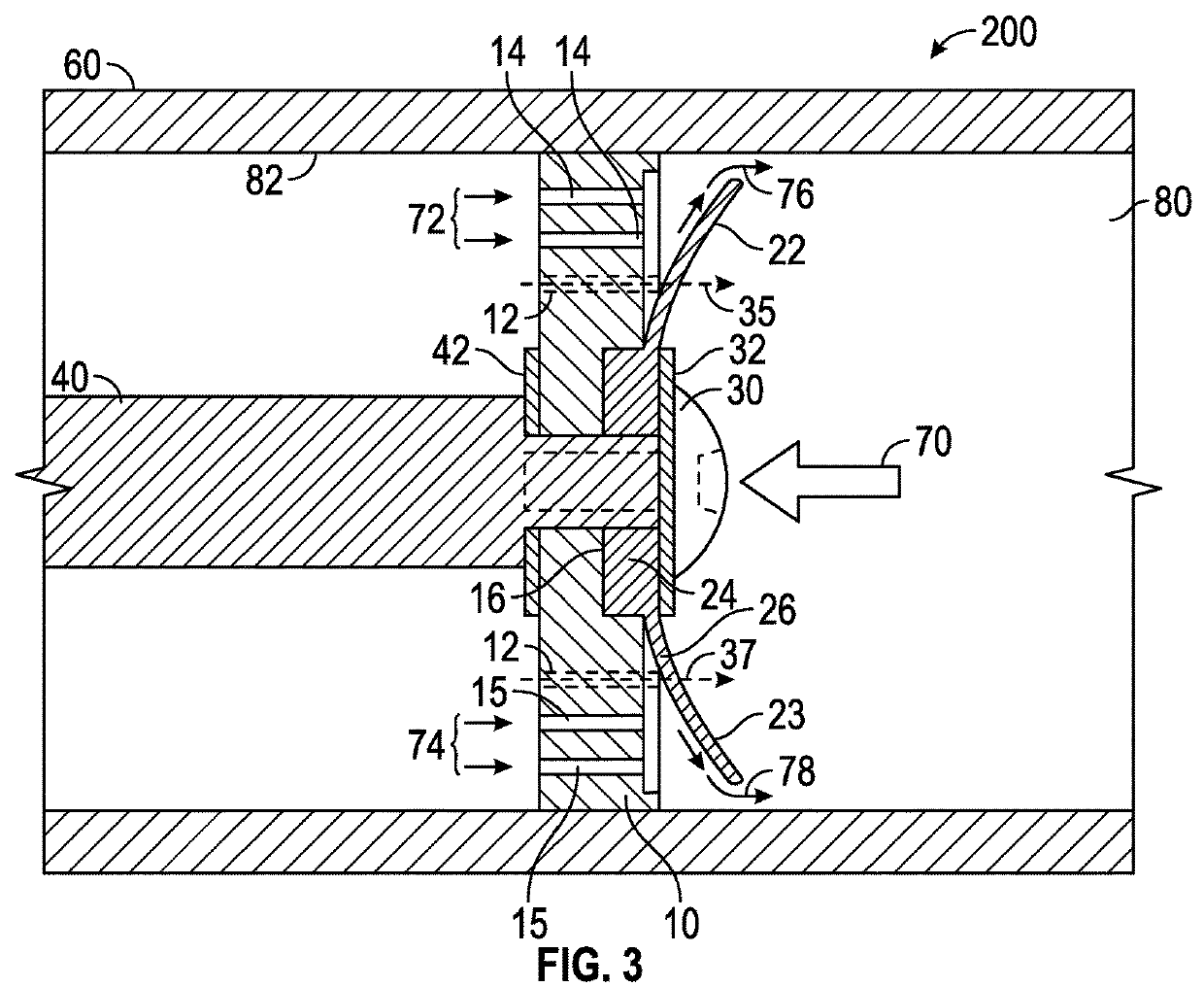
[0046]Turning now to the drawings, and more particularly FIG. 1, there is depicted an exploded perspective view of piston head assembly 100 for an R / C shock absorber in accord with one possible non-limiting embodiment of the present invention. Generally speaking, piston head assembly 100 comprises sealing member 26 positioned on one side of piston head 10, with both sealing member 26 and piston head 10 attached to piston rod 40 by fastener 30. In this non-limiting embodiment, sealing member 26 is mounted on a side of piston head 10 opposite to piston rod 40. Bolt stem 34 is inserted through washer 32, sealing member hole 28, central aperture 8, and washer 42 before connecting with piston rod connection 44. Fastener 30 may comprise various fasteners suitable for connecting with rod 40, including, but not limited to screws, nuts, and the like. In this embodiment, washers 32 and 42 are placed between fastener 30 and sealing member 26, and piston head 10 and piston rod 40, respectively....
PUM
 Login to View More
 Abstract
Description
Claims
Application Information
 Login to View More