

Novel radiosurgery methods that utilize stereotactic methods to precisely deliver high dosages of radiation especially to the spine
a radiosurgery and spine technology, applied in the direction of patient positioning for diagnostics, angiography, therapy, etc., can solve the problems of delayed systemic treatment, limiting further treatment options such as chemotherapy, radiation cannot be administered over previously irradiated segments, and cannot be immediately adjacent to previously irradiated segments, etc., to avoid or minimize the delivery of radiation. , the effect of reducing the number of patients
- Summary
- Abstract
- Description
- Claims
- Application Information
AI Technical Summary
Benefits of technology
Problems solved by technology
Method used
Image

Examples
Embodiment Construction
[0098] Model Protocols According to the Invention
[0099] A. Induction, Positioning and Placement of Spinal Fiducials
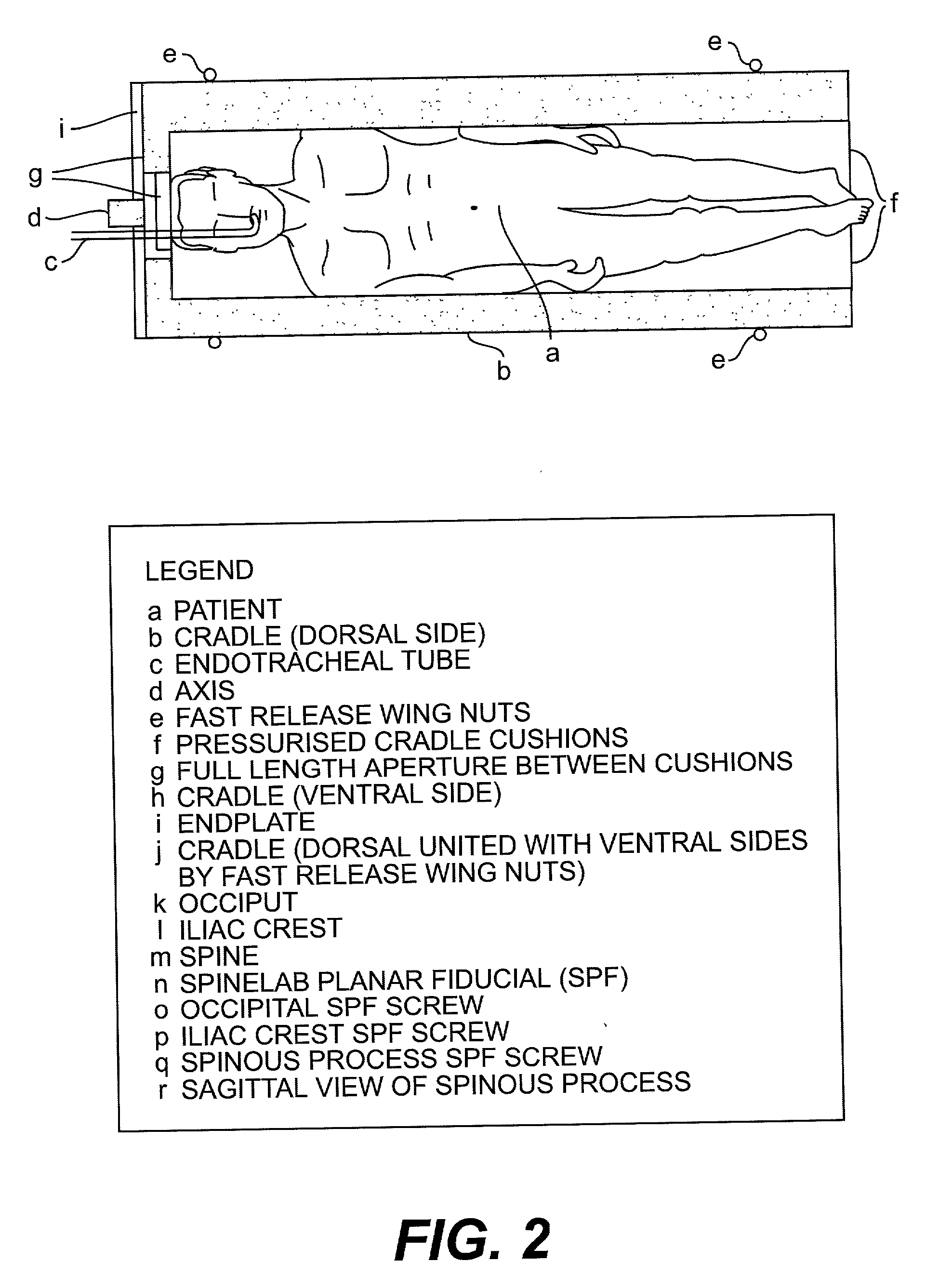
[0100] 1. Place the patient in the specially designed cradle in the supine position (FIG. 2).
[0101] 2. Insert the I.V. lines.
[0102] 3. Intubate the patient orotracheally or nasotracheally and induce the patient (anaesthesia); apply jet ventilation.
[0103] 4. Place the Foley catheter, begin warming of the patient to prevent hypothermia
[0104] 5. Administer the I.V. Contrast, double dose
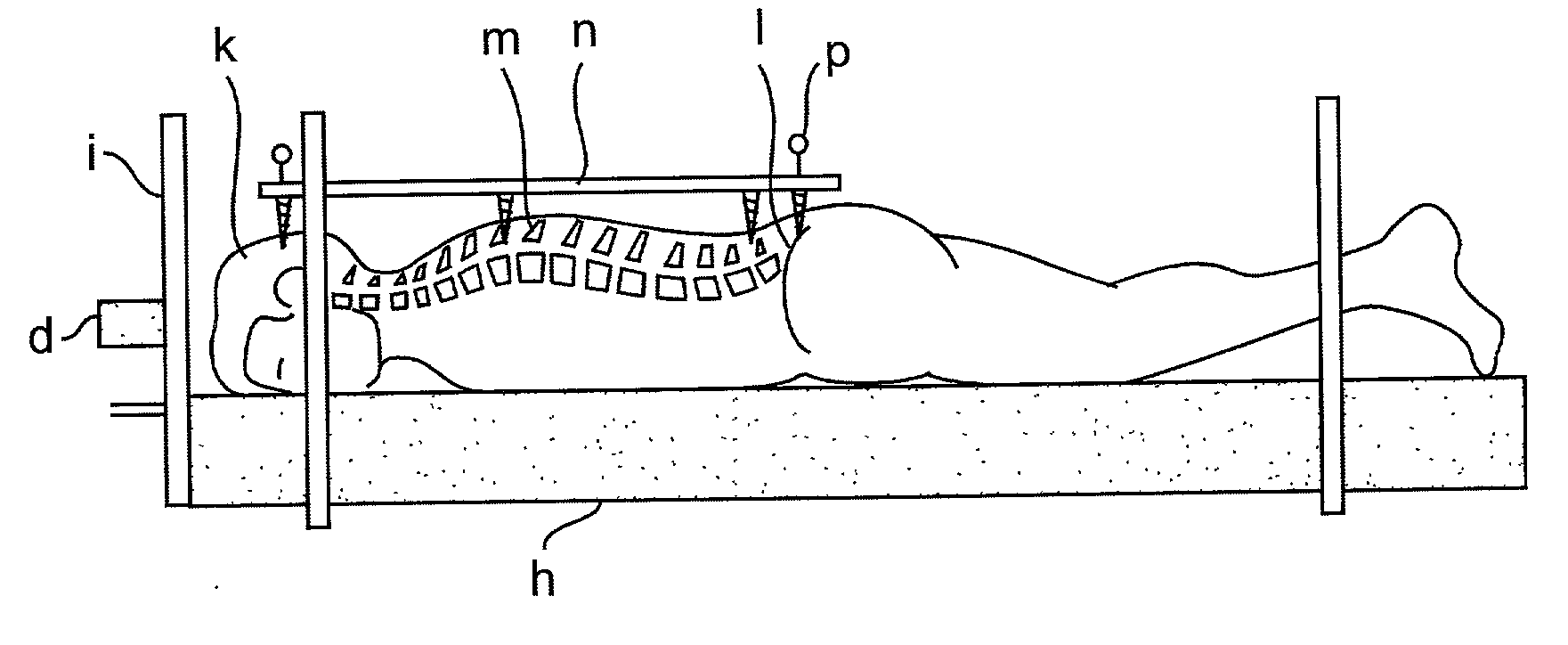
[0105] 6. Place the ventral lid of the cradle over the patient (FIG. 3)
[0106] 7. Tighten the Ziplock.RTM. / wing nuts to firmly appose the dorsal and ventral cradles and restrain the anesthetized patient.
[0107] 8. Pressurize (upper) ventral cradle, to conform to the patient habitues, allowing the Patient's abdomen to remain free (so as to allow normal diaphragmatic inspiration / expiration)
[0108] 9. Rotate the cradle into the prone position, and stabilize the cradle with the lock pin or Wedge (...
PUM
 Login to View More
 Abstract
Description
Claims
Application Information
 Login to View More